Some links on PCFix411 may earn a commission from GearReady, software partners, or Amazon Associates at no extra cost to you.
Updated November 14, 2026. Street Fighter games in order begin with Capcom’s 1987 arcade cabinet and reach Street Fighter 6 across PlayStation, Xbox, PC and Nintendo Switch 2, showing how the franchise evolved alongside game hardware. This research guide separates original games, arcade balance revisions, platform-specific conversions, compilations and downloadable content so that similarly named releases are not mistaken for the same product. The goal is to show what each version changed, where it appeared and why its era mattered.
Cover image: original AI-assisted editorial illustration created for PCFix411. It is not official Capcom game artwork, packaging or a screenshot. Individual historical gameplay images below are separately identified and attributed.
Release order is not the fictional story order. The playable release history moves from the original through II, Alpha, III, IV, V and 6, with EX, movie games and crossover branches alongside it. The 2026 live-action film reached theaters on October 16, 2026; the movie chronology and trailers belong in our PopWatcher companion guide. On PCFix411, the focus is the games, their machines and historically precise footage.
Quick answer: Six numbered eras, many more distinct releases
Capcom’s official 30th Anniversary Collection names twelve foundational arcade games. That is not the total number of Street Fighter-branded releases, because each era produced console ports, revised combat systems and other branches. The catalog below documents major identifiable products through November 2026 rather than counting every virtual-console storefront reissue as a fresh game.
Street Fighter consoles by era: the quick-reference chart
Looking for a specific machine rather than a particular release title? The table below puts the central platform changes side by side. It shows historical highlights, not a claim that every listed edition was exclusive to that hardware.
| Era | Important hardware | Representative Street Fighter releases | Why the hardware matters |
|---|---|---|---|
| 1987–1990 | Arcade, home computers, NEC PC Engine CD, NES | Street Fighter, Fighting Street, Street Fighter 2010 | First cabinets, CD adaptation and unusual action-platformer spin-off |
| 1991–1994 | Arcade CPS-1/CPS-2, Super Nintendo, Sega Genesis/Mega Drive, PC Engine | Street Fighter II, Champion Edition, Hyper Fighting, Special Champion Edition, Super II, Super Turbo | 16-bit console competition and frequently revised arcade releases |
| 1995–1999 | PlayStation, Sega Saturn, Dreamcast, arcade CPS-2/CPS-3 | Alpha 1–3, EX, Street Fighter III, X-Men vs. Street Fighter, Pocket Fighter | CD consoles, anime-style 2D graphics, polygonal fighting and early tag combat |
| 2000–2007 | PlayStation 2, original Xbox, Dreamcast, Game Boy Advance, PSP | EX3, Alpha 3 Upper, Hyper II, Alpha 3 MAX, Alpha Anthology | Portable fighting, console anthologies and experimentation with early online services |
| 2008–2015 | Arcade, PS3, Xbox 360, Windows PC, Nintendo 3DS, smartphones | Street Fighter IV, Super IV, Ultra IV, 3rd Strike Online, mobile IV releases | HD visuals, digital distribution, internet competition and touchscreen play |
| 2016–2022 | PS4, PC, Nintendo Switch, Xbox One collections | Street Fighter V, SFV Arcade/Champion editions, Ultra Street Fighter II, 30th Anniversary Collection | Live updates, modern online fighting and classic-game preservation |
| 2023–2026 | PS5, Xbox Series X|S, PS4, Windows, Nintendo Switch 2, VR attractions, mobile | Street Fighter 6, its Switch 2 edition, Street Fighter: Duel, Street Fighter VR | Multiple play modes, cross-generation access, newer input choices and specialized experiences |
How to Read This Street Fighter Catalog: What Counts as a Game?
These 84 documented entries are not Capcom’s official worldwide title count. Capcom’s 2023 Integrated Report (page 11) counted 94 Street Fighter series titles as of March 31, 2023. Capcom did not provide a line-by-line release ledger or counting methodology in that report, so these figures are not directly comparable. This PCFix411 guide separately profiles 84 historically meaningful game releases, revisions, collections, localized hardware variants, spin-offs and licensed adaptations that we can describe with useful platform history. It is a curated, expanding research inventory, not a claim that Capcom has released only 84 titles or that every regional edition has already been verified.
Classification key: Original arcade and numbered games introduced new mainline experiences; revisions changed balance or rosters; console and handheld editions adapted an existing game to new hardware; compilations collected existing games; crossovers mixed Street Fighter characters with other franchises; licensed adaptations include puzzle, mobile, VR, physical pinball and promotional experiences. Compilation menus, DLC passes and hardware bundles are not the same thing as original fighting-game releases. Entries that have no independently authenticated television commercial or trailer will be identified as lacking verified advertising footage rather than shown with a substitute video that belongs to another title.
How to use the media in each game entry: The preferred reader-first sequence is exact-game image → original trailer or commercial → gameplay preview → longer gameplay. A verified release-era commercial or publisher trailer should be a short 30–120-second viewing experience; a gameplay preview is a separate 30–120-second excerpt of the actual named game, and the full-gameplay sample should ideally run about five minutes to show its controls, stages, fighting systems or hardware limitations. The media must identify the specific edition and system, not just a similar-looking game in the same series. If an authentic historical trailer cannot be located, the entry should disclose that gap rather than calling an attract-mode loop, review or unrelated promotional montage an official release trailer. For rare editions, surviving footage may come from modern archival captures rather than launch-era broadcasts. Each recording is labeled to make the original game and its historical context clear, and viewers can open the creator’s source recording for a longer look.
Build a Street Fighter gaming setup
The hardware history below spans arcade cabinets, older consoles and modern systems. If you want to play rather than just read about these versions, start with the machine and controller you intend to use, then check the game’s exact platform compatibility. GearReady is part of our own retail ecosystem; eligible purchases through affiliate links may support PCFix411 at no additional cost to you.
All major Street Fighter games and editions in release order
🎮 Your Street Fighter reference desk — Bookmark this guide and jump back to a game whenever you need its original year, console history, still image, promotional footage or short gameplay sample. Dates identify the specific edition, not the order of the fictional storyline.
Arcade and 16-bit: 1987 original · Street Fighter II · Genesis Special Champion Edition · Super II · Tiger Barcodzz rarity
Alpha, EX and III: Alpha / Zero · Alpha 2 · X-Men crossover · Street Fighter III · Alpha 3 · 3rd Strike
HD and crossovers: Alpha Anthology · Street Fighter IV · Super IV · Street Fighter X Tekken
Modern era: Street Fighter V · 30th Anniversary Collection · Street Fighter 6 · Nintendo Switch 2 edition · 2026 playable trailer
Jump to an era: 1987–1994: Arcade and 16-bit · 1995–1999: PlayStation, Saturn and Dreamcast · 2000–2015: PS2, HD and Xbox · 2016–2026: Modern console generations
1987–1994: Arcade origins, home computers and the 16-bit console war
1. Street Fighter (1987)
Edition: Original arcade game. Platforms: Arcade; later 1988 home-computer ports.
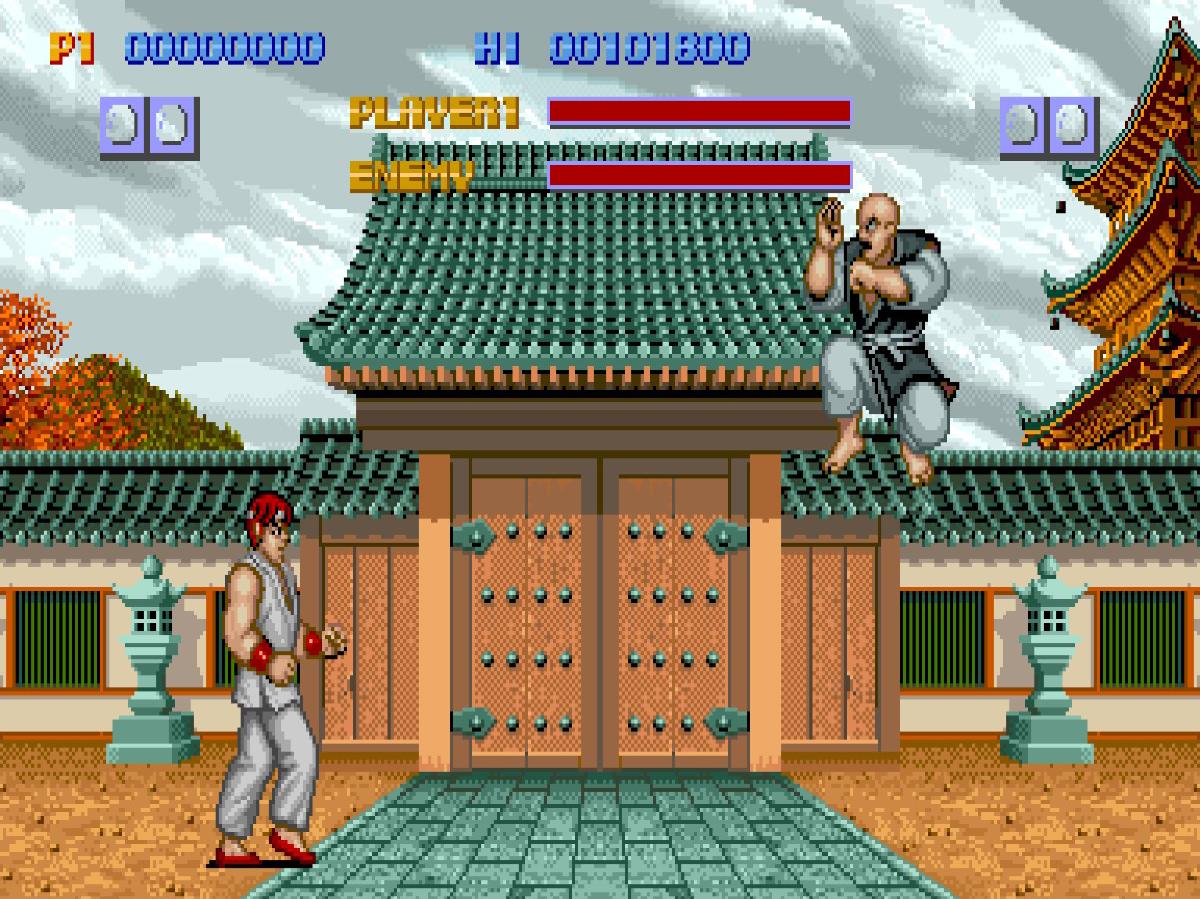
In August 1987, Capcom put Street Fighter in arcades as an experiment in tournament fighting rather than the fully developed one-on-one contest players associate with the sequel. Ryu is the principal playable fighter in the original solo campaign, with Ken available when a second player joins. The original cabinet was produced with pressure-sensitive attack pads, while a more conventional six-button layout became part of the game’s legacy. Players traveled through a sequence of opponents and could trigger difficult command-based moves that eventually became the franchise’s signature attacks. The game appeared on home computers including the Commodore 64, Amiga, Atari ST, ZX Spectrum and Amstrad CPC in 1988, while NEC’s CD adaptation appeared separately as Fighting Street. Those releases make 1987 the arcade starting point, not the beginning of a Super Nintendo franchise.
The 1987 arcade screenshot displays the original compact health bars, stage artwork and fighter proportions, all markedly different from the 1991 sequel. Players encountered a slower fighting system with difficult execution of the early fireball and dragon-punch inputs. The authentic arcade recording makes these visual and control differences recognizable. The original release also experimented with pressure-sensitive cabinet controls before conventional six-button arrangements became standard. Comparing its image and gameplay with Street Fighter II shows how significantly Capcom improved the genre in four years.
Original arcade gameplay
For more 1987 gameplay, see the full original arcade recording by Media Pool.
2. Fighting Street (1988)
Edition: Named home adaptation. Platforms: PC Engine CD / TurboGrafx-CD.
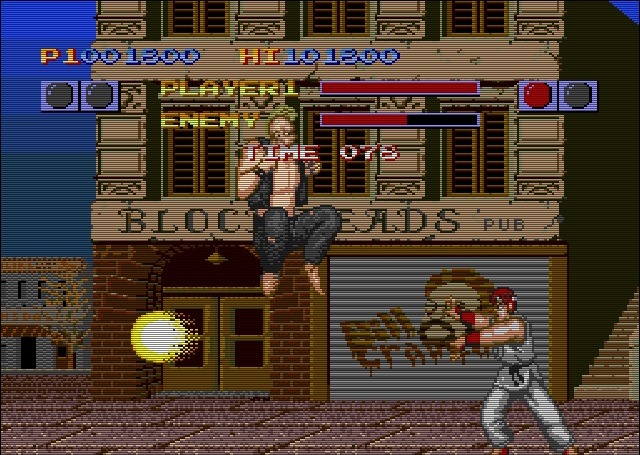
NEC’s Fighting Street repackaged the original 1987 Street Fighter as an early CD-console game. This was the CD-format adaptation of the original Street Fighter rather than the debut of a separate tournament game. Its different name can make it look like a missing installment when scanning cartridge or disc catalogs. The conversion appeared on PC Engine CD-ROM² in Japan and TurboGrafx-CD in North America. It belongs to NEC’s CD-based console ecosystem rather than the Super Nintendo era.
The renamed Fighting Street release carried the original arcade game’s Ryu and Ken-era fighting system onto NEC’s CD-ROM hardware. Compared with the arcade cabinet, its home presentation depended on the new disc system and a conventional console controller. That distinction mattered because the PC Engine CD-ROM² was among the earliest home optical-disc gaming platforms in 1988. American TurboGrafx-CD owners encountered the title under its alternative name rather than as a new Street Fighter II product. Both labels describe the franchise’s first fighting game, while the home conversion gives historians a separate piece of early CD-console history.
Original console menu and soundtrack
Original PC Engine CD introduction: View the original Fighting Street home-game opening. For more complete fighting action, the source below contains a longer North American game playthrough.
Original NEC home-version gameplay: Watch NintendoComplete’s original Fighting Street PC Engine / TurboGrafx-CD playthrough. The complete recording includes several runs, so it is offered as an optional full archive instead of an oversized in-page player.
3. Street Fighter 2010: The Final Fight (1990)
Classification: Street Fighter-named action-platformer. Platforms: Nintendo Entertainment System. Research: Release/source reference.
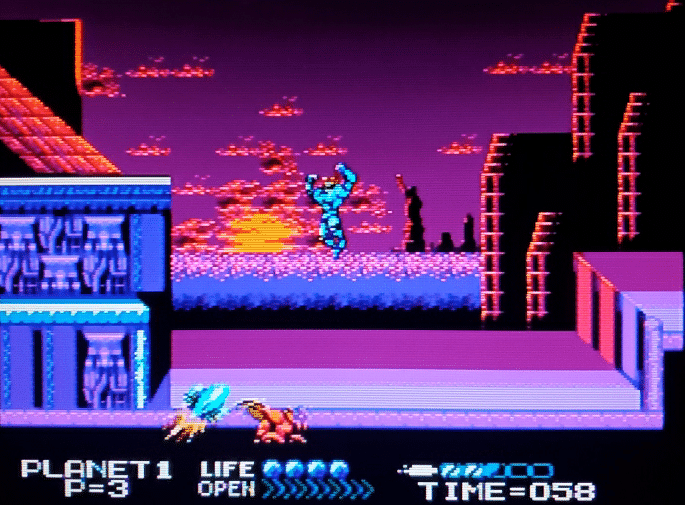
Capcom released Street Fighter 2010: The Final Fight for Nintendo’s 8-bit NES in 1990, between the first two arcade Street Fighter games. It is an action-platform game rather than a one-on-one tournament fighter. Its North American localization connects the main character with the Street Fighter name, while its Japanese presentation has a different emphasis. The game uses stages, enemies and movement systems quite unlike the arcade matches associated with the series. For complete franchise history it is a historical sidebar, not a missing Street Fighter II revision.
The NES screenshot captures the side-scrolling science-fiction combat of Street Fighter 2010 rather than a Ryu-versus-Ken match. Players fought stage enemies and navigated platform hazards instead of taking part in a traditional arcade tournament. Its localization and use of the franchise name explain why the unusual game appears in a comprehensive Street Fighter catalog. The separate NES gameplay recording demonstrates the different genre clearly. Collectors can study the product as a 1990 Capcom console release without confusing it with the numbered fighting series.
Original 1990 advertising — print archive: Capcom promoted Street Fighter 2010: The Final Fight in period magazines, including NESWorld’s historical magazine advertisement archive and the October 1990 GamePro advertisement record at MobyGames. These are authentic contemporaneous print promotions, not TV commercials or video trailers. The available historical evidence documents print advertising for this particular NES release; a separate contemporary television commercial is not established by these sources.
Try the original game: Capcom also makes Street Fighter 2010: The Final Fight playable on Capcom Town. You can experience the original side-scrolling controls in your browser, although Capcom notes that game progress resets when you leave the page.
Gameplay footage
4. Street Fighter II: The World Warrior (1991)
Edition: Major arcade sequel. Platforms: Arcade; Super Nintendo 1992; multiple home-computer ports, Game Boy and regional Master System later.
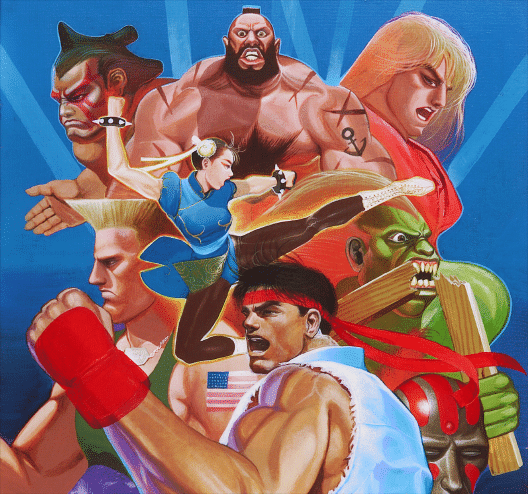
Street Fighter II: The World Warrior arrived in arcades in 1991 and changed the series from a limited early experiment into a defining competitive fighting game. Players could now choose among eight World Warriors, each with distinctive fighting styles, visual identities and international stages. The six-button system and reliable special-move language gave matches enough depth for repeated challenges and rivalries. This was originally a coin-operated arcade release, not a Super Nintendo game, although the SNES conversion in 1992 became one of the defining products of the 16-bit generation. Computer versions later brought the game to Amiga, Atari ST, Commodore 64 and other home systems, while some later portable and regional ports appeared on very different hardware. The arcade-first release chronology is essential to explaining both Capcom’s success and Nintendo’s role in bringing that success into homes.
The original 1991 Street Fighter II: The World Warrior limited the playable roster to eight fighters, with four boss opponents reserved for later battles. Champion Edition changed that selection and introduced several additions the original did not have. Hyper Fighting then increased the speed, while Super II and Super Turbo introduced further differences. The arcade image in this section reflects the earlier roster and interface rather than those subsequent releases. The 1992 Super Nintendo conversion made this fighting-game system widely accessible in homes but was still a separate version.
Original arcade introduction
Original arcade match archive: Watch RETRO DANUART’s full 1991 World Warrior arcade playthrough. The link leads to the uploader’s complete recording for readers who want a longer look at Guile, E. Honda, Ken and the bonus rounds.
5. Street Fighter II: Champion Edition (1992)
Edition: Arcade revision. Platforms: Arcade; PC Engine/TurboGrafx-16, Sega Genesis Special Champion Edition, Sharp X68000.
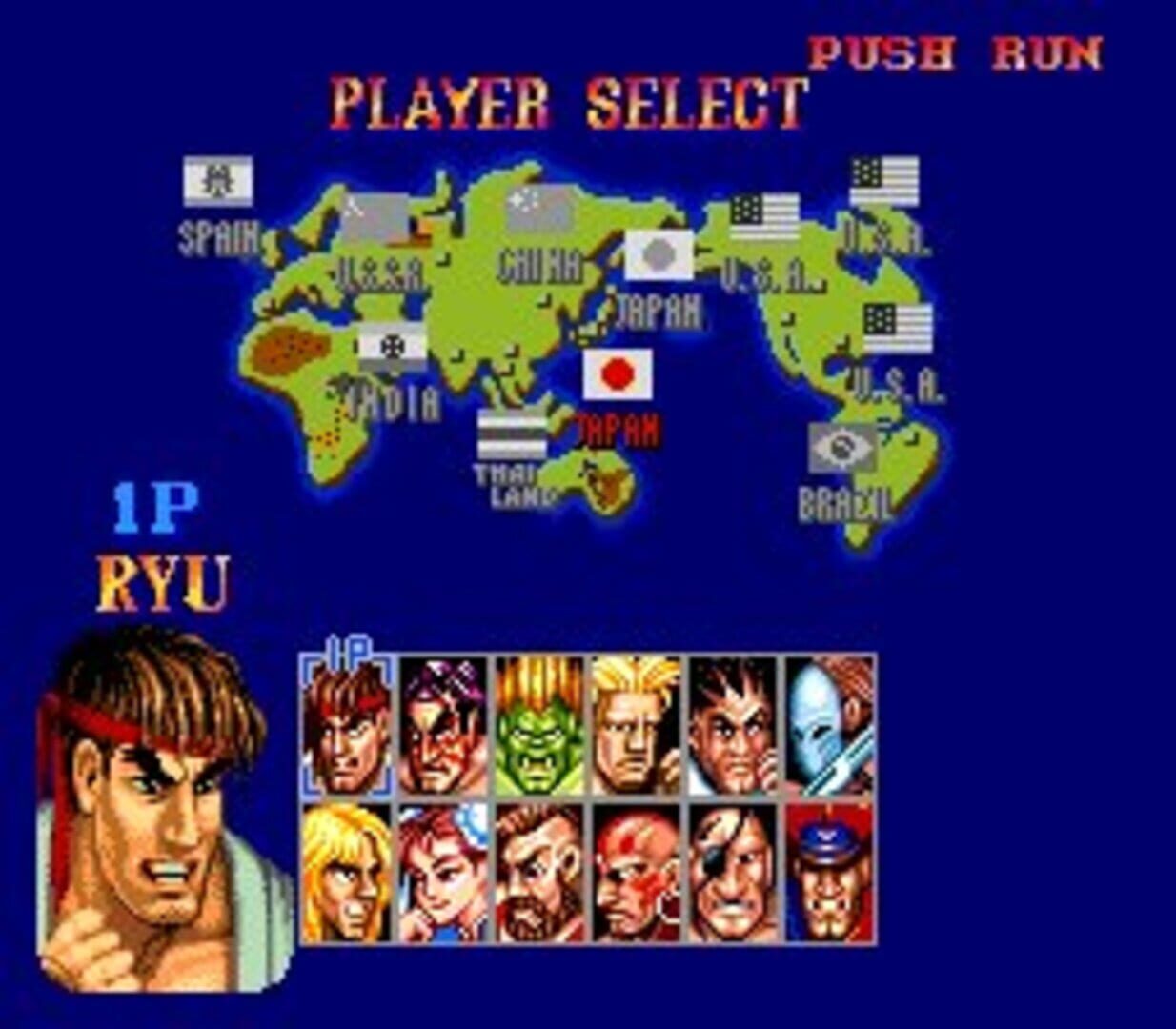
Capcom released Street Fighter II: Champion Edition for arcades in 1992 as a substantial revision of The World Warrior, not as Street Fighter III. The key change was making the four former bosses—Balrog, Vega, Sagat and M. Bison—playable, expanding the selectable roster to twelve. Players could also choose the same character in competitive matches, making mirror battles possible. Small adjustments to attacks, balance and character visuals gave experienced arcade players new tactical choices. Home adaptations eventually appeared through NEC’s PC Engine hardware, the Sharp X68000 computer and Sega’s specially named Genesis edition. Because those editions have different titles and technology, our release history treats the arcade Champion Edition and console variants as related but not automatically identical software.
Champion Edition is easiest to recognize through its expanded character-select screen and its ability to match two of the same fighter. A screenshot of a playable boss is also more informative than an unrelated picture of Ryu throwing a Hadouken. This game still operates at a different pace from the later Hyper Fighting revision, so a fast Turbo clip should not be mislabeled as Champion Edition footage. Sega’s Special Champion Edition combined several later elements for its Genesis audience, illustrating why console packaging should be identified precisely. The game also captures Capcom’s strategy of refining an already popular arcade formula instead of replacing the characters and stages every year. Readers searching for an exact Sega or NEC cartridge should consult the specific conversion entries elsewhere in the timeline.
Gameplay footage
6. Street Fighter II: Hyper Fighting (1992)
Edition: Arcade revision. Platforms: Arcade; Super NES through Street Fighter II Turbo; later Xbox 360 and collections.
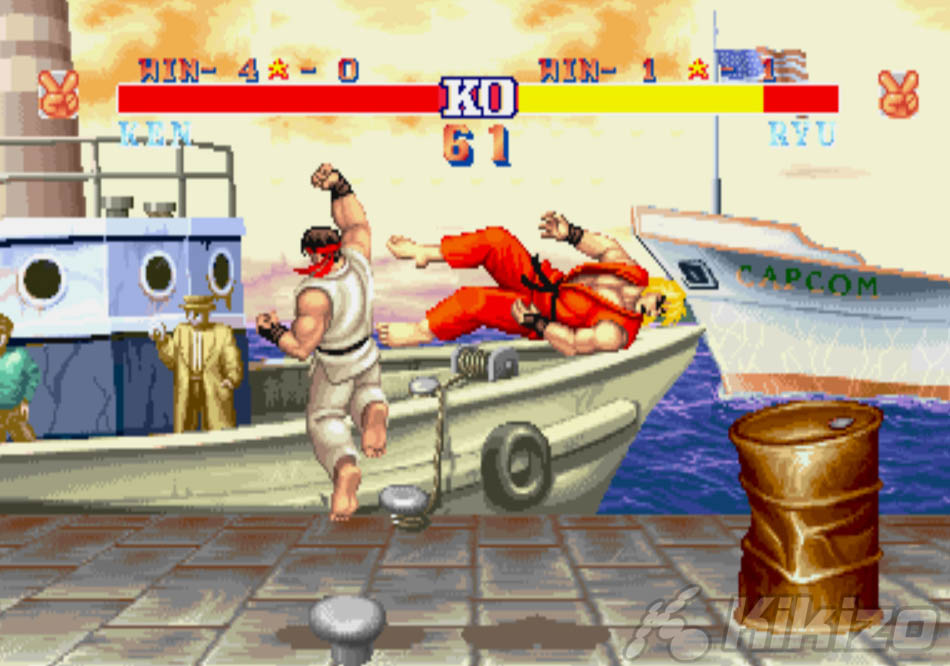
Street Fighter II: Hyper Fighting appeared in arcades in 1992 and dramatically increased the speed of the Champion Edition foundation. Faster movement and altered special moves changed the decisions players could make during a single round. This was not the debut of Cammy, Dee Jay, Fei Long or T. Hawk; those characters would arrive with The New Challengers in 1993. Capcom’s 1993 Super Nintendo Street Fighter II Turbo: Hyper Fighting brought the accelerated experience to the SNES generation with its own selectable modes. Later Xbox 360 digital distribution also gave this classic arcade version a second life during the online-console era. The speed upgrade makes the arcade release distinct enough to deserve its own gameplay video even when its backgrounds resemble other Street Fighter II versions.
A match captured from the original Hyper Fighting arcade hardware should feel noticeably quicker than World Warrior or Champion Edition footage. The best illustrations show special moves, speed and the recognizable gauge and character layout of the exact 1992 revision. Players researching Street Fighter II Turbo for Super Nintendo need to understand that the similarly titled cartridge is a later home adaptation, not a second 1992 arcade board. The game also demonstrates how Capcom’s competitive community shaped revisions to timing and movement. It belongs before the 1993 Super Street Fighter II overhaul rather than after it. When the short gameplay footage is identified, its source must confirm the actual arcade build or clearly label the SNES conversion.
Gameplay footage
7. Street Fighter II — Gottlieb Pinball Machine (1993)
Classification: Licensed physical electronic pinball game; separate from video-game releases. Hardware: Premier/Gottlieb solid-state arcade pinball cabinet, System 3 hardware. Release verification.
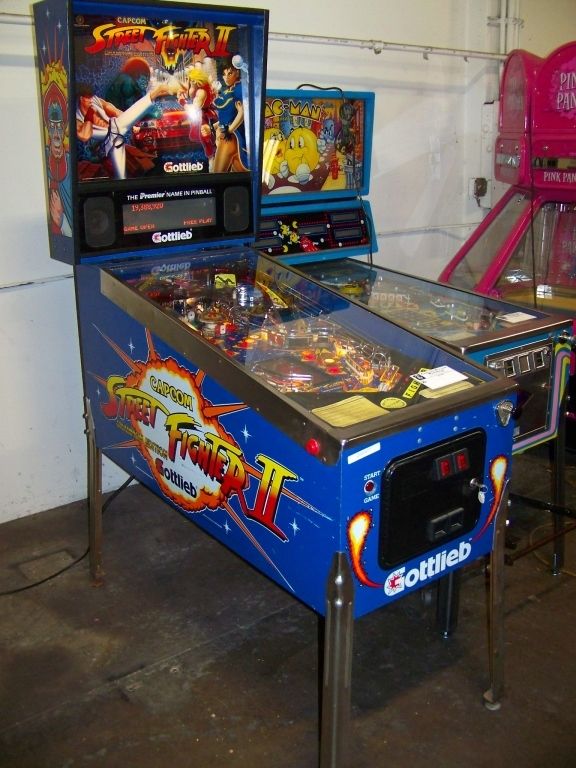
Gottlieb introduced an officially licensed Street Fighter II pinball machine in March 1993. It was a physical arcade pinball product rather than Capcom’s video fighting game converted into a cartridge. The cabinet uses a three-level playfield, multiple ramps and five flippers. It allows up to four people to take turns and features Street Fighter characters on its artwork and electronic display. Pinball records identify the model as Gottlieb System 3 and document an initial production run of approximately 5,550 machines.
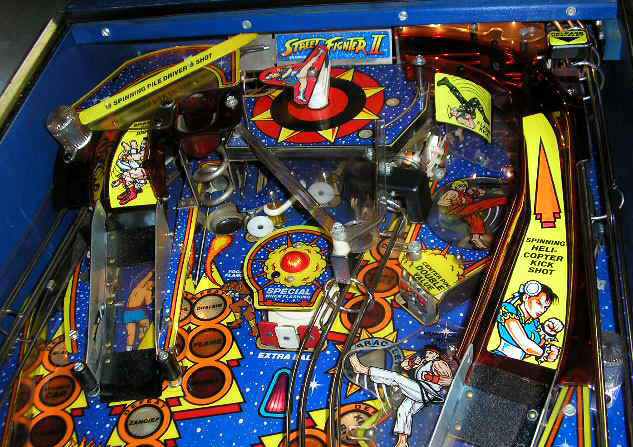
Gottlieb’s 1993 Street Fighter II pinball machine is a real coin-operated amusement table. Its playfield, bumpers, flippers and scoring mechanisms are fundamentally different from the arcade fighting game’s controls. The original cabinet art translates familiar Capcom characters into a physical pinball environment. The period-appropriate machine demonstration in this section preserves real ball movement and table sounds. Documenting this product separately from the 2008 Pinball FX crossover prevents a common mix-up between mechanical and digital pinball.
Gameplay footage
Extended pinball gameplay — 3 minutes 52 seconds. This separate demonstration shows the real 1993 Gottlieb Street Fighter II mechanical pinball table, not a digital video-game adaptation. The footage is an archival collector recording, not a period TV commercial.
8. Street Fighter II: Special Champion Edition (1993)
Edition: Distinct console edition. Platforms: Sega Genesis / Mega Drive.
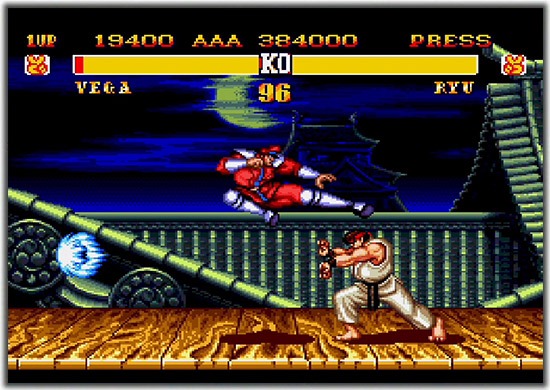
Street Fighter II: Special Champion Edition was Sega’s 1993 response to the enormous success of Capcom’s fighting game on rival Super Nintendo hardware. Rather than releasing a cartridge simply titled Champion Edition, Sega offered an edition that combined Champion-style rules with access to faster Turbo-style play. The game was developed for the Genesis and Mega Drive, not for the original Street Fighter II arcade board. It made the six-button controller particularly attractive because punches and kicks could map more naturally to the arcade system. The Genesis machine’s different graphics, audio and controller hardware meant its presentation was not identical to Nintendo’s Street Fighter II Turbo cartridge. The September 1993 North American release makes it an important reference for anyone studying the 16-bit console competition.
Sega’s 1993 Street Fighter II: Special Champion Edition employed its own Genesis and Mega Drive graphics and sound. The home cartridge combined recognizable Champion Edition and faster Hyper Fighting-style options while remaining a distinct Sega product. A six-button Genesis controller made arcade-style special move input more practical for home players. The archived 1993 television commercial demonstrates how the release was marketed during the 16-bit console rivalry. Its separate Genesis gameplay clip illustrates the real console presentation rather than a modern re-release.
Gameplay footage
9. Street Fighter II Turbo: Hyper Fighting (1993)
Edition: Distinct SNES edition. Platforms: Super Nintendo Entertainment System / Super Famicom.
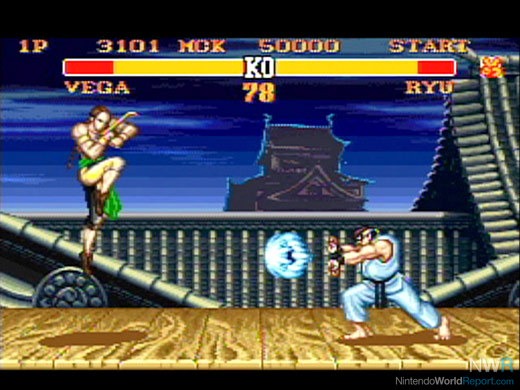
Nintendo’s Street Fighter II Turbo arrived in 1993 as a faster home follow-up to World Warrior. The SNES edition brought Turbo play and selectable speed settings into homes. It offered a recognizable 16-bit answer to Capcom’s increasingly fast arcade competition. The SNES and Super Famicom cartridge supplied these speed-selection options. The release is often shortened to Street Fighter II Turbo, which causes it to be mixed with the arcade Hyper Fighting title.
The Super Nintendo’s Street Fighter II Turbo: Hyper Fighting arrived during a period when the speed of home fighting games became a major selling point. Its adjustable game speed let players approach the fighting rhythm differently from the earlier SNES World Warrior cartridge. Familiar characters gained a more demanding feel as special moves and faster exchanges changed the timing of matches. The cartridge also showed how strongly Nintendo’s six-button controller suited Capcom’s arcade-derived input system. It represents a distinct 1993 home edition, not the 1994 Super Street Fighter II Turbo arcade sequel.
Gameplay footage
10. Super Street Fighter II: The New Challengers (1993)
Edition: Major arcade revision. Platforms: Arcade; SNES, Genesis/Mega Drive, X68000, FM Towns, Amiga and PC.
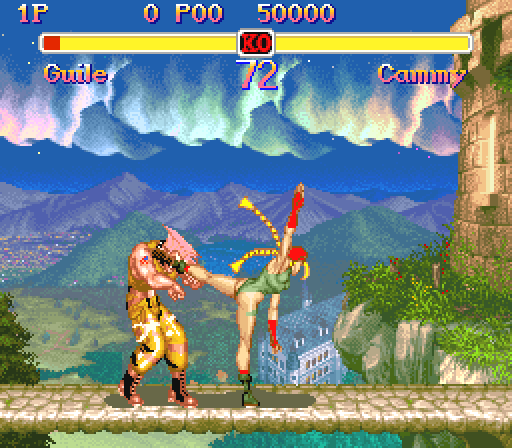
Super Street Fighter II: The New Challengers arrived in arcades in 1993 with four new selectable fighters: Cammy, Dee Jay, Fei Long and T. Hawk. The expanded roster changed matchup variety far more visibly than the speed adjustments of the previous year. Capcom also refreshed character portraits, some animations and the audio presentation for newer arcade hardware. Players could bring the experience home through major 16-bit consoles including Super Nintendo and Sega Genesis, in addition to computer conversions. Those SNES and Genesis cartridges are important parts of the Nintendo-versus-Sega competition, but the original 1993 title was an arcade release. The New Challengers must not be confused with 1994’s Super Street Fighter II Turbo, which added new mechanics and a hidden opponent.
The 1993 match image illustrates the era of Cammy, Dee Jay, Fei Long and T. Hawk, whose fighting styles increased the variety of matchups. Super Street Fighter II introduced those four challengers before the 1994 Super Turbo revision added Super Combos and Akuma. Arcade players experienced Capcom’s revised CPS-2 character artwork and sound, while owners of Sega Genesis and Super Nintendo systems encountered separately adapted home editions. Those console differences mattered for controller layouts, visual effects and audio quality. The original arcade gameplay excerpt and period console advertisements offer a useful comparison without pretending the different builds are identical.
Gameplay footage
11. Super Street Fighter II: The Tournament Battle (1993)
Classification: Special linked-cabinet arcade variant. Platforms: Arcade — four connected CPS-2 cabinets for eight players. Research: Release/source reference.
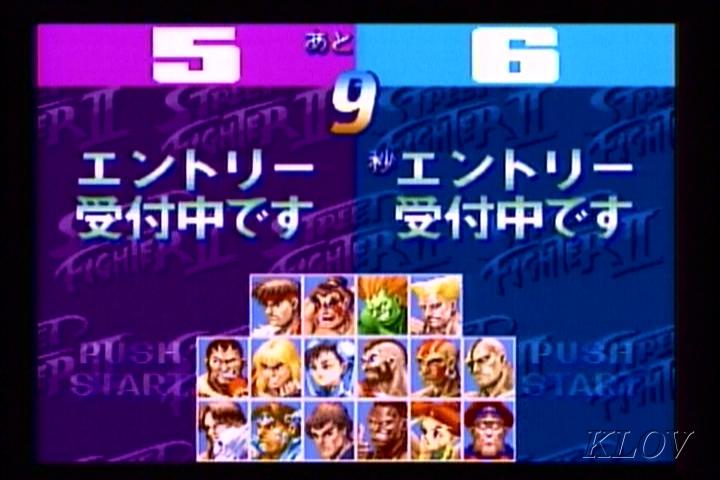
Capcom’s Super Street Fighter II: The Tournament Battle was a specialized 1993 arcade configuration. Its feature was an eight-player single-elimination event played through four linked cabinets. Each cabinet hosted one match at a time before the tournament advanced to the next stage. Between matches, players were directed to different cabinets according to results. It was not a 1993 Super Nintendo cartridge or a separate modern online tournament mode.
Super Street Fighter II: The Tournament Battle was a specialized 1993 arcade installation built around four linked cabinets. It could accommodate an eight-player tournament while each match remained a two-person fight on one display. The tournament bracket and transition interfaces were the identifying features, not the normal New Challengers character art alone. The unusual multi-cabinet configuration made this version harder to document than an ordinary single-machine conversion. It belongs in the chronology as a distinct arcade setup rather than as a completely different fighting engine.
Gameplay footage
12. Super Street Fighter II: The New Challengers — Tiger LCD Handheld (1994)
Classification: Dedicated Tiger Electronics LCD fighting game. Hardware: Tiger Electronics standalone electronic handheld (1994). Release verification.
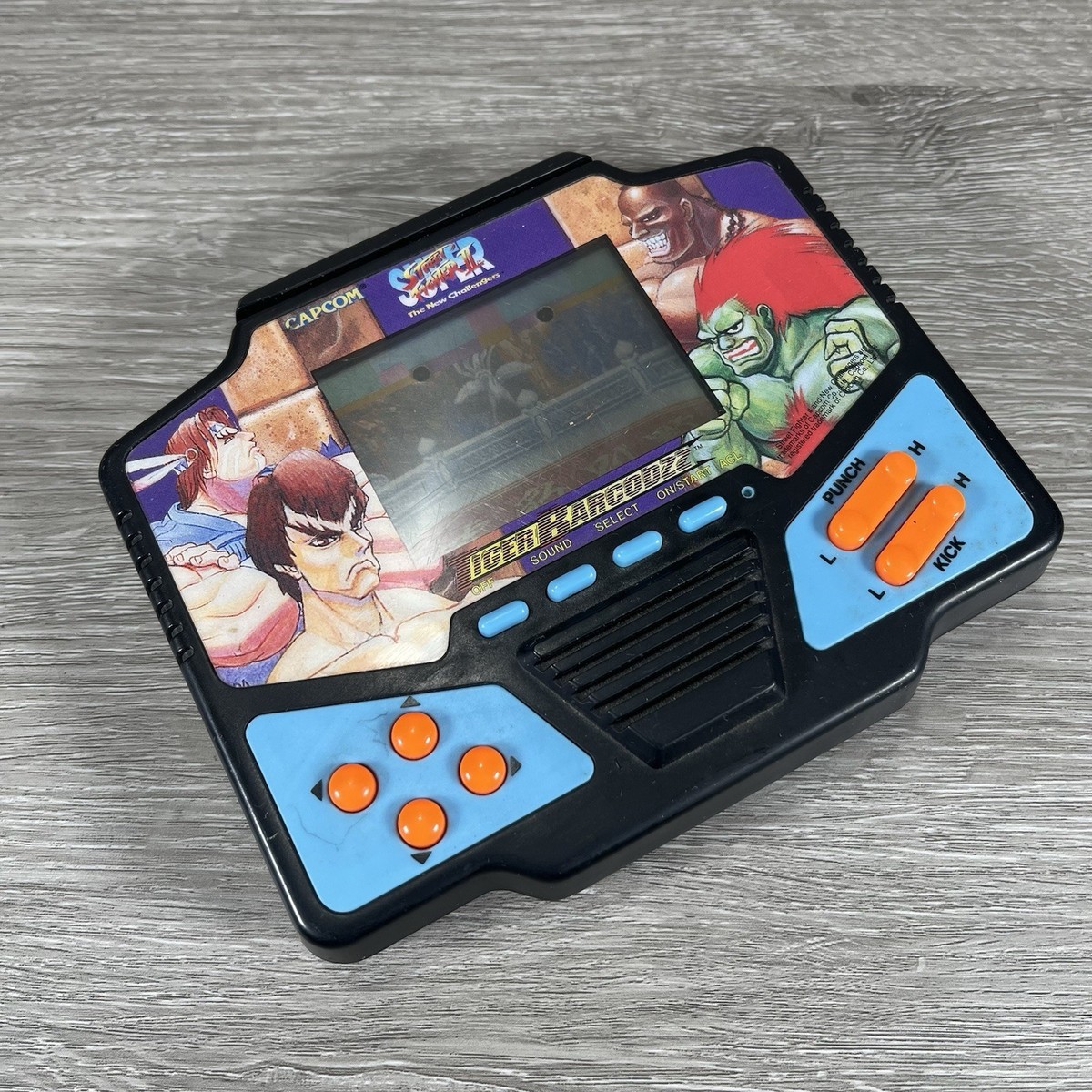
Tiger Electronics released a dedicated Super Street Fighter II: The New Challengers LCD handheld in 1994. Its fixed electronic display is unlike the scrolling sprite scenes on SNES and Sega Genesis. The game uses a compact three-button control layout on its built-in housing. The playable roster and special moves are simplified to suit fixed-screen portable hardware. This is a separately manufactured standalone electronic game rather than an emulator port of Capcom’s arcade code.
Tiger Electronics’ 1994 talking LCD handheld used a fixed-segment screen and self-contained controls instead of a conventional console cartridge. The little machine simplified fights, graphics and audio to suit its compact hardware. Its dedicated display looks unlike the animated sprites from the original arcade game. It is also a different product from the barcode-scanning Barcodzz handheld, whose cards provide another form of interaction. An authentic recorded demonstration of the actual talking LCD device now documents this obscure branch of the Street Fighter licensing story.
Gameplay footage
13. Super Street Fighter II: The New Challengers — Tiger Barcodzz (1994)
Classification: Dedicated Tiger electronic LCD and barcode-card game. Hardware: Tiger Electronics Barcodzz dedicated handheld (1994). Release verification.
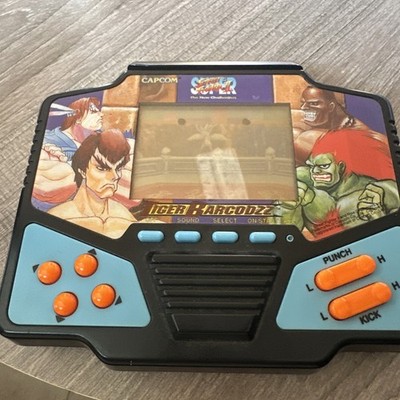
Tiger Electronics also produced a Super Street Fighter II edition for its Barcodzz handheld system in 1994. The product is a distinct electronic fighting game from the regular Tiger LCD edition. It uses physical barcode cards to change or enhance matches. Contemporary package descriptions include twenty-four collectible barcode cards. Its selected fighters include Fei Long, T. Hawk, Dee Jay and Blanka rather than a complete recreation of Capcom’s arcade roster.
The actual Barcodzz hardware pictured above illustrates why this edition should not be represented by a Super Nintendo or arcade screenshot: the toy has its own fixed LCD screen and barcode-scanning slot. Tiger’s packaging describes twenty-four barcode cards and special moves or performance changes tied to scanned selections, a feature absent from the ordinary Tiger LCD adaptation. The four prominently marketed fighters—Fei Long, T. Hawk, Dee Jay and Blanka—also underline how restricted its dedicated electronic format was compared with the full arcade roster. A clear in-play LCD photograph or a short demonstration including an actual barcode scan is still required to show how the physical input system affects matches. No original television commercial has been authenticated for this exact Barcodzz model, so period packaging and contemporary collector documentation must not be mislabeled as a video advertisement. Including the device as a distinct 1994 release expands this history beyond cartridge consoles into licensed toy-electronics experiments.
14. Super Street Fighter II Turbo (1994)
Edition: Major arcade revision. Platforms: Arcade; 3DO; later PC, Amiga, Dreamcast and compilation ports.
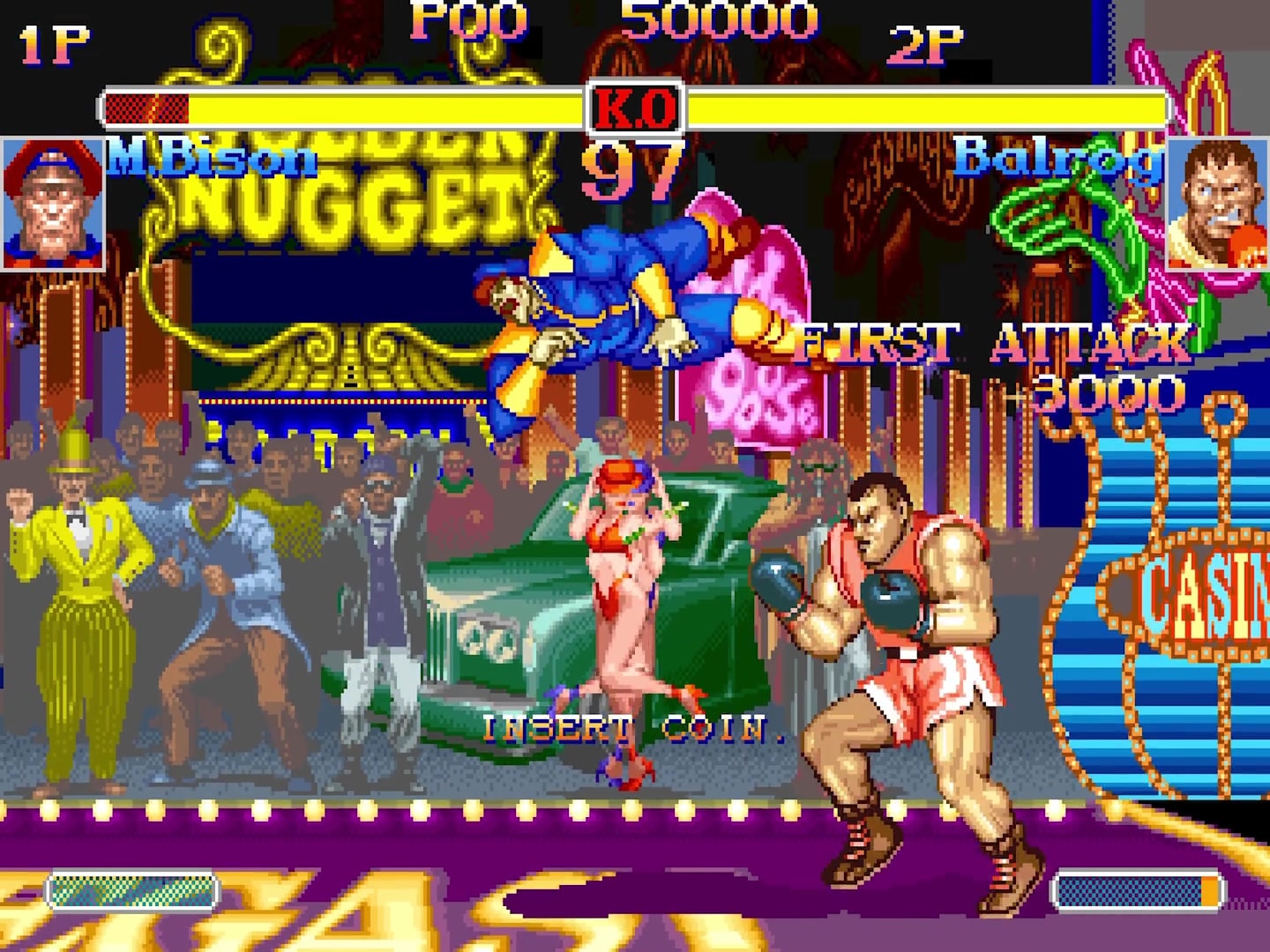
Super Street Fighter II Turbo appeared in arcades in 1994 as the most influential final revision of the classic Street Fighter II arcade lineage. It added powerful Super Combos and a revised game-speed system while introducing the mysterious Akuma, known as Gouki in Japan. These changes reshaped how players thought about meter management, defensive mistakes and comeback potential. Capcom released a home version for the 3DO, while later computer and disc-based formats offered other ways to experience the game. The Japan-only Dreamcast Super Street Fighter II X for Matching Service became an especially unusual online-console chapter years later. Modern players can also encounter the original arcade version through the Street Fighter 30th Anniversary Collection, but that preservation package should not be confused with the 1994 debut.
Super Street Fighter II Turbo introduced the Super Combo meter and refined the faster arcade fighting experience in 1994. It also made Akuma a hidden opponent, adding one of the most famous surprises in the franchise’s early history. Its original CPS-2 interface and character selection distinguish the classic edition from the later HD Remix release. Players have continued competing in Super Turbo for decades because of its demanding speed and precise matchups. The 3DO home conversion and later anthology appearances demonstrate how widely this arcade version was eventually preserved.
Gameplay footage
1995–1999: Alpha, EX, Street Fighter III and the disc-console era
15. Street Fighter Alpha: Warriors’ Dreams (1995)
Edition: Alpha-series debut. Platforms: Arcade; PlayStation, Sega Saturn, Game Boy Color and Windows in later releases.
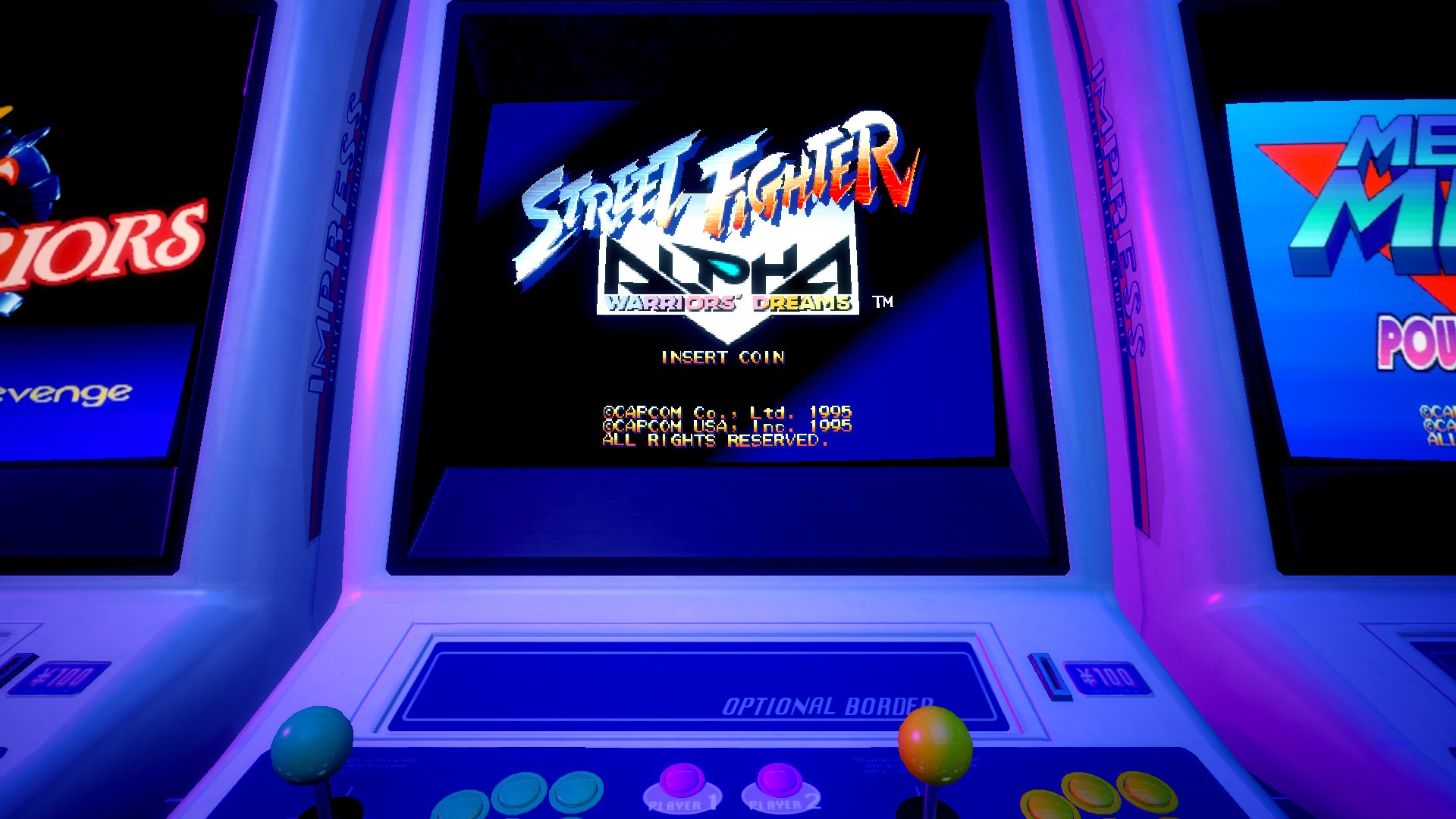
Street Fighter Alpha: Warriors’ Dreams began a distinctive branch of Capcom’s fighting franchise in arcades in 1995. Its animated character art, new roster relationships and Super Combo systems set it apart from Street Fighter II’s older visual approach. The Alpha games explore a period of the story before Street Fighter II, so their narrative chronology differs from the order in which consumers encountered the releases. PlayStation and Sega Saturn conversions brought the early Alpha experience to the 32-bit disc-console generation, while later handheld and computer adaptations broadened its reach. Characters such as Rose and Dan helped give Alpha a more experimental tone than the classic World Warriors roster. The Japanese name Street Fighter Zero refers to the same underlying game family rather than a separate 1995 numbered sequel.
The first Street Fighter Alpha arrived in 1995 with a distinctive anime-inspired character style and a storyline set before Street Fighter II. Its super-combo gauge, cast and visual presentation were noticeably different from the previous Street Fighter II arcade generation. PlayStation and Sega Saturn conversions helped the new branch reach the emerging disc-console market. Capcom later changed the mechanics and expanded the rosters in Alpha 2 and Alpha 3, so the original is not interchangeable with either sequel. The game image and video material in this entry identify the original 1995 Alpha release rather than a later revision.
Gameplay footage
Additional original arcade footage: Open the complete Street Fighter Alpha (1995) gameplay recording for a longer look at the original arcade release.
16. Street Fighter: The Movie — Arcade (1995)
Edition: Film-related fighting game. Platforms: Arcade.
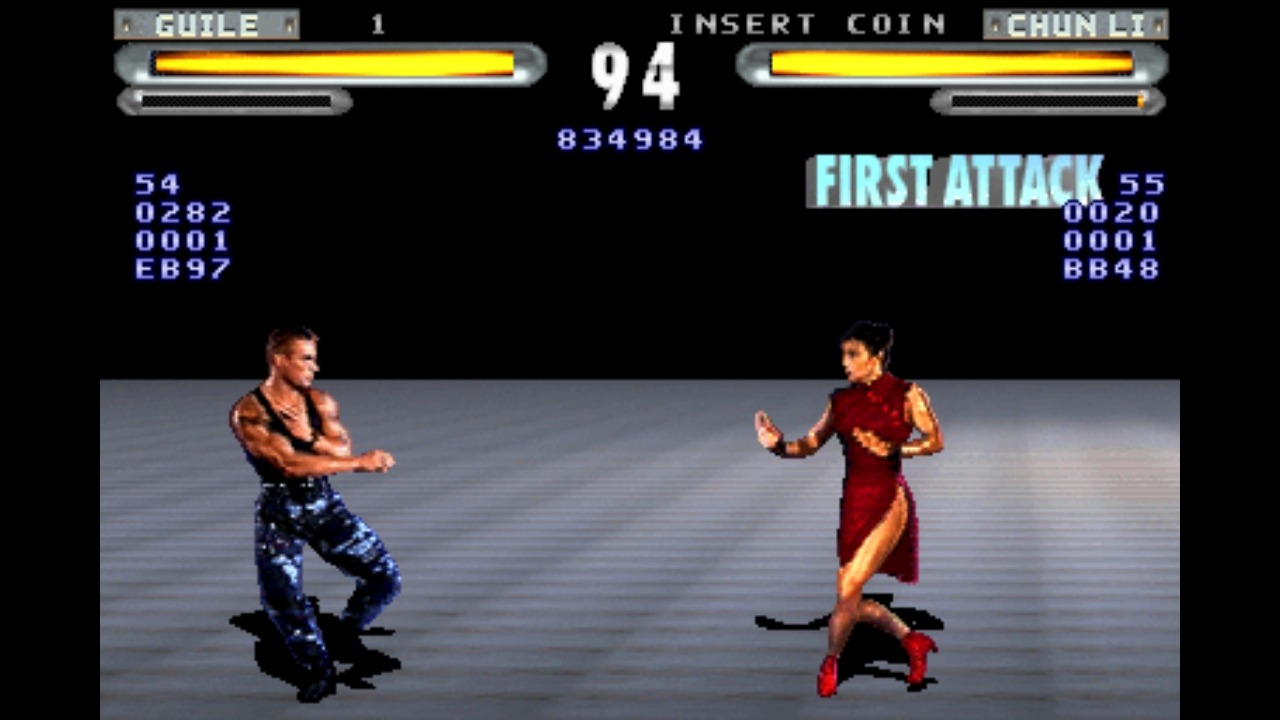
The 1995 arcade Street Fighter: The Movie brought digitized actors into a separate fighting-game cabinet. The arcade adaptation used filmed actors to connect the video game directly with the 1994 movie. That photographic approach looks radically different from Capcom’s traditional sprite work. Incredible Technologies built the arcade version, not the PlayStation or Saturn home software. It was a separate arcade production, not merely a port of the home game released in the same year.
The 1995 arcade Street Fighter: The Movie turned filmed performances into large digitized sprites on coin-operated hardware. Incredible Technologies built a combat system that differed from Capcom’s traditional Street Fighter II arcade rules. Actors’ movements, cinematic backgrounds and aggressively stylized effects gave this cabinet a visual identity closer to other digitized 1990s fighters. The machine’s animated health bars and character presentations are recognizable in the original arcade match footage. The PlayStation and Saturn games marketed under the same film title were separately developed products, so their different combat styles form an important part of the history.
Gameplay footage
17. Street Fighter: The Movie — Home (1995)
Edition: Different film-related game. Platforms: PlayStation, Sega Saturn.
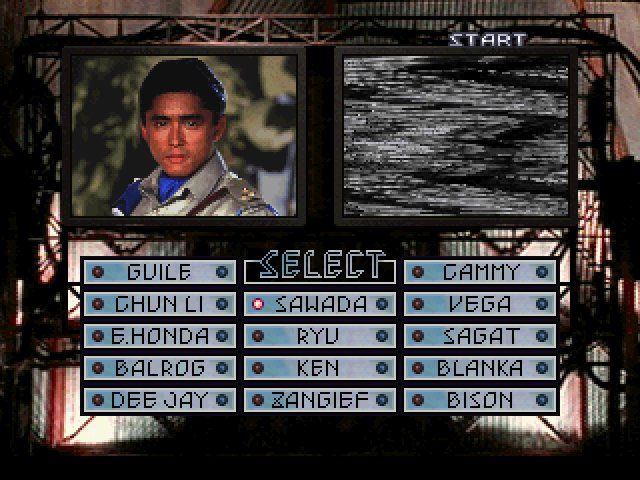
Capcom’s Street Fighter: The Movie reached home players as a separate 1995 fighting game. This PlayStation and Saturn title shared the movie license but was not identical to the arcade release. Its handling, presentation and content are best evaluated as a separate console interpretation. Its console releases were on the original PlayStation and Sega Saturn. The early PlayStation and Saturn rivalry makes this an unusually strong platform-history comparison.
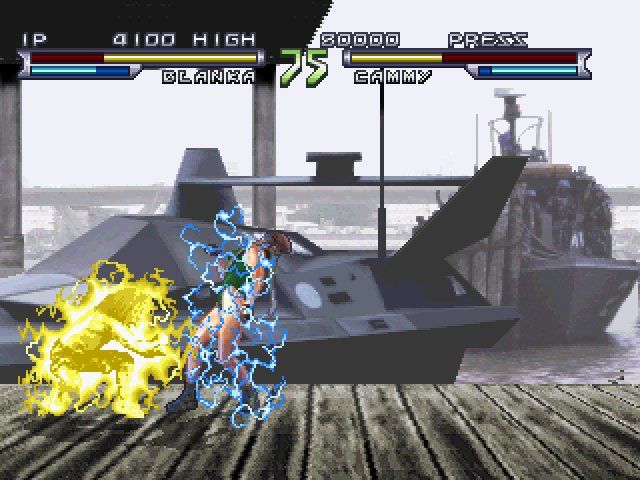
Capcom’s home Street Fighter: The Movie adapted the film license for the PlayStation and Sega Saturn in 1995. Its fighting rules were closer to the company’s familiar Street Fighter design than the Incredible Technologies arcade adaptation. Digitized film actors still defined the look, but the home version’s character select screen, stages and combat interface were distinct. Those differences are especially apparent when original console footage is viewed beside the arcade cabinet’s game. The twin releases illustrate why a shared license and title do not guarantee that two editions contain the same software.
Gameplay footage
18. Street Fighter II Movie / The Interactive Movie (1995)
Classification: Japan-exclusive interactive anime tie-in. Platforms: Sony PlayStation (1995), Sega Saturn (1996). Research: Release/source reference.
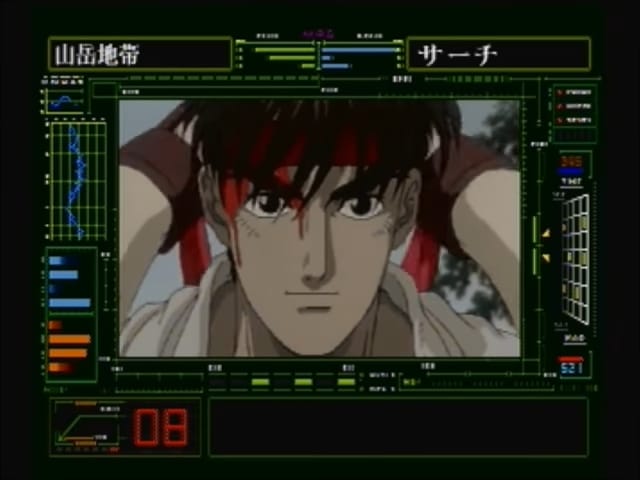
Street Fighter II Movie was released in Japan on PlayStation in December 1995 and on Saturn in March 1996. Its material draws from Street Fighter II: The Animated Movie instead of the live-action film. The player views and analyzes fighting actions in an interactive experience rather than playing a standard arcade-style tournament. At E3 the project appeared under the English description Street Fighter II: The Interactive Movie. A 3DO version was announced but not commercially released.
The interactive Street Fighter II Movie game follows a Shadaloo cyborg observing fighters through scenes from the animated film. Its full-motion-video presentation and interactive choices diverge from the standard six-button tournament format. Both Sega Saturn and PlayStation editions belong to the mid-1990s CD-ROM multimedia era. The game demonstrates how Capcom’s franchise became part of experiments in animated-video storytelling rather than conventional fighting alone. A short capture from the actual Saturn game below shows the distinct interface rather than substituting a theatrical movie trailer for gameplay.
Gameplay footage
19. Street Fighter Alpha 2 (1996)
Edition: Alpha sequel. Platforms: Arcade, PlayStation, Saturn, SNES, Windows.
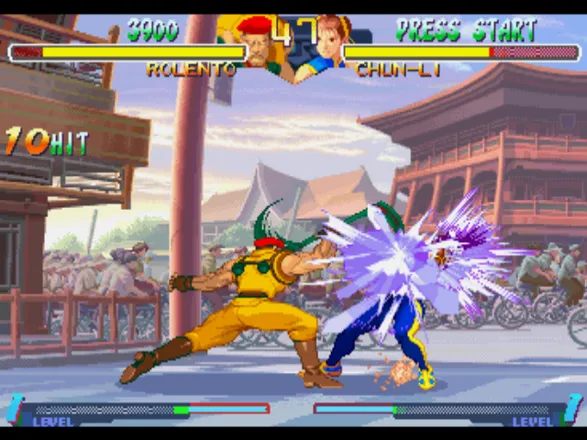
Street Fighter Alpha 2 arrived in arcades in 1996 and developed the animated prequel fighting system introduced in Warriors’ Dreams. The new Custom Combo system let players create extended attack sequences during a limited period instead of relying exclusively on preset Super Combos. The expanded cast added familiar fighters and new strategic matchups while preserving Alpha’s striking character art. PlayStation and Sega Saturn conversions were major 32-bit home releases, but an ambitious Super Nintendo version also appeared during the final stretch of the 16-bit era. Those different consoles did not deliver identical load times, audio or visual performance, making Alpha 2 particularly useful for hardware comparisons. The later Alpha 2 Gold and Zero 2 Alpha editions deserve their own historical descriptions because they changed or repackaged the base game.
The 1996 Alpha 2 screenshot preserves the expressive hand-drawn sprite style and its original arcade combat interface. Its Custom Combo system allowed fighters to spend meter on brief sequences of freely connected attacks instead of only predefined Super Combos. The mechanic rewarded movement, timing and experimentation with each character’s available attacks. The contemporary television advertisement shows how Capcom introduced the sequel during its release era. A separate 55-second arcade gameplay sample demonstrates what those systems actually looked and sounded like in matches.
Gameplay footage
20. Street Fighter Alpha 2 Gold / Zero 2 Alpha (1996)
Edition: Alpha revision. Platforms: Arcade as Zero 2 Alpha; later PlayStation and Saturn collections.
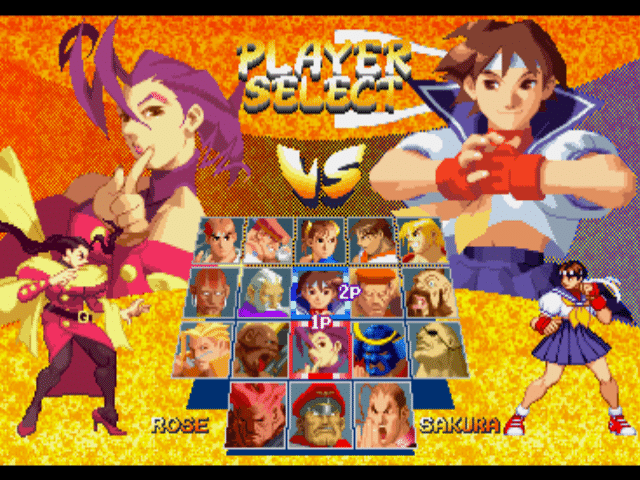
Street Fighter Zero 2 Alpha and the related Gold naming represent a revision of the Alpha 2 rules. The revised Zero 2 line expanded and rebalanced the Alpha 2 formula. Outside Japan the Alpha 2 Gold name is most familiar through console collection releases. The revised arcade version subsequently appeared through PlayStation and Saturn collection packages. This is an edition within Alpha 2’s history rather than a new numbered generation.
Street Fighter Zero 2 Alpha revised the original Alpha 2 formula in Japanese arcades, while Western players often encountered related material under the Alpha 2 Gold label. Added balance adjustments and character options meant that this was not simply a renamed untouched copy of the 1996 arcade release. Its later appearances inside home collections created several opportunities for names and versions to overlap. Console owners might know the revision by the collection package rather than by a dedicated cabinet or cartridge. Distinguishing these names clarifies the game’s actual revision history and prevents a single reworked release from being incorrectly represented as several unrelated sequels.
Gameplay footage
21. X-Men vs. Street Fighter (1996)
Edition: Crossover fighting game. Platforms: Arcade; Sega Saturn; PlayStation.
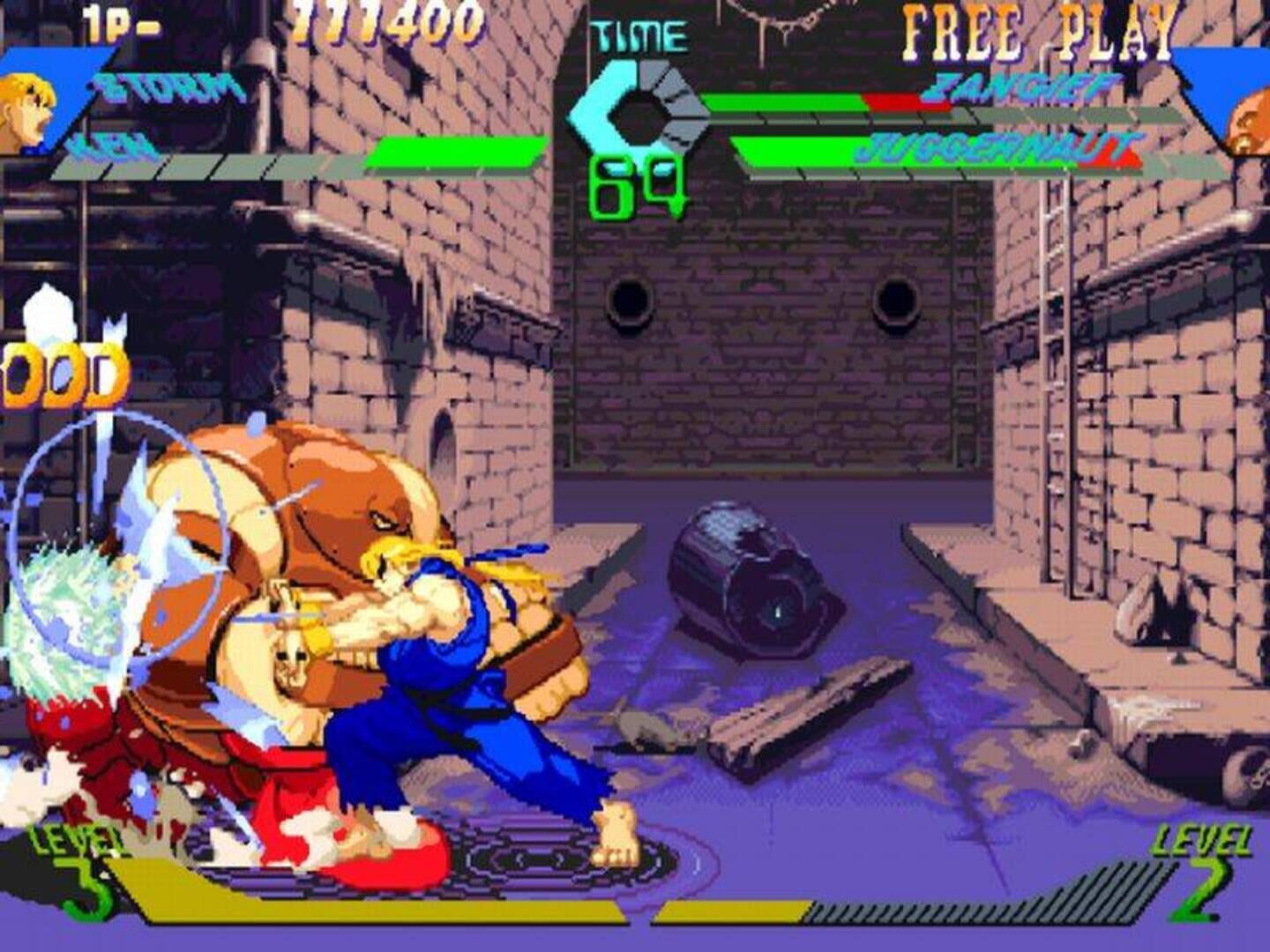
X-Men vs. Street Fighter opened a major tag-team crossover era for Capcom in 1996. Capcom paired Street Fighter characters with Marvel’s X-Men in a fast tag-team crossover. Huge attacks and partner switching created a different pacing from the main tournament series. Its original arcade version preceded technically different Sega Saturn and PlayStation conversions. The Saturn version’s expansion-RAM approach was important to the home conversion’s reputation.
X-Men vs. Street Fighter established Capcom’s 1996 partnership-based tag-fighting crossover in the arcades. Players could switch fighters during a match and combine Marvel mutants with recognizable Street Fighter characters. That two-member combat model became central to the broader versus-series lineage. The Sega Saturn home conversion benefited from additional memory for larger sprite data and fuller tag-team presentation, while the PlayStation adaptation had more substantial limitations. The original CPS-2 arcade game provides the clearest reference point for understanding the system before later home hardware compromises.
Gameplay footage
22. Street Fighter EX (1996)
Edition: 3D spin-off debut. Platforms: Arcade.
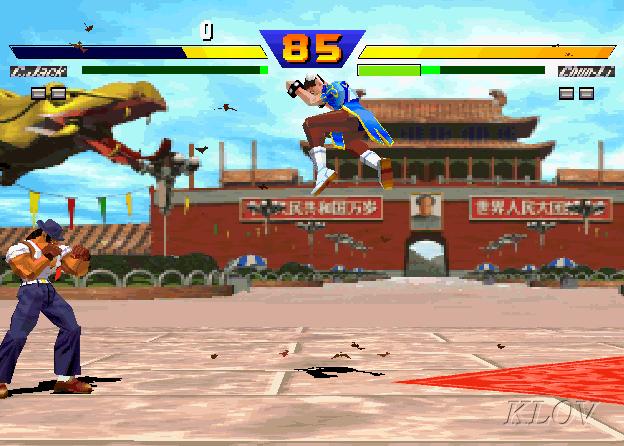
Arika launched the polygonal Street Fighter EX arcade branch in 1996. The Arika-developed EX project placed familiar fighters into polygonal presentation. Its combo structure and move language kept ties to Street Fighter despite the visual departure. EX was an arcade debut, with Plus and PlayStation Plus Alpha following later. The original arcade version is distinct from the enhanced EX Plus and PlayStation EX Plus Alpha.
The original Street Fighter EX moved familiar characters into polygonal models while preserving a largely traditional one-on-one fighting layout. Arika developed the branch for Sony ZN-series arcade hardware, showing how 3D rendering could be applied without abandoning the feel of a Street Fighter match. New figures such as Skullomania and Hokuto joined returning Capcom fighters in a roster that looked noticeably different from the contemporaneous Alpha series. The separate EX Plus revision and PlayStation EX Plus Alpha followed in 1997 with further changes. The original 1996 cabinet remains an important technology experiment rather than a replacement for Capcom’s main numbered series.
Gameplay footage
23. Super Puzzle Fighter II Turbo (1996)
Classification: Puzzle-game crossover spin-off. Platforms: Arcade; PlayStation and Sega Saturn; later Game Boy Advance and compilations. Research: Release/source reference.
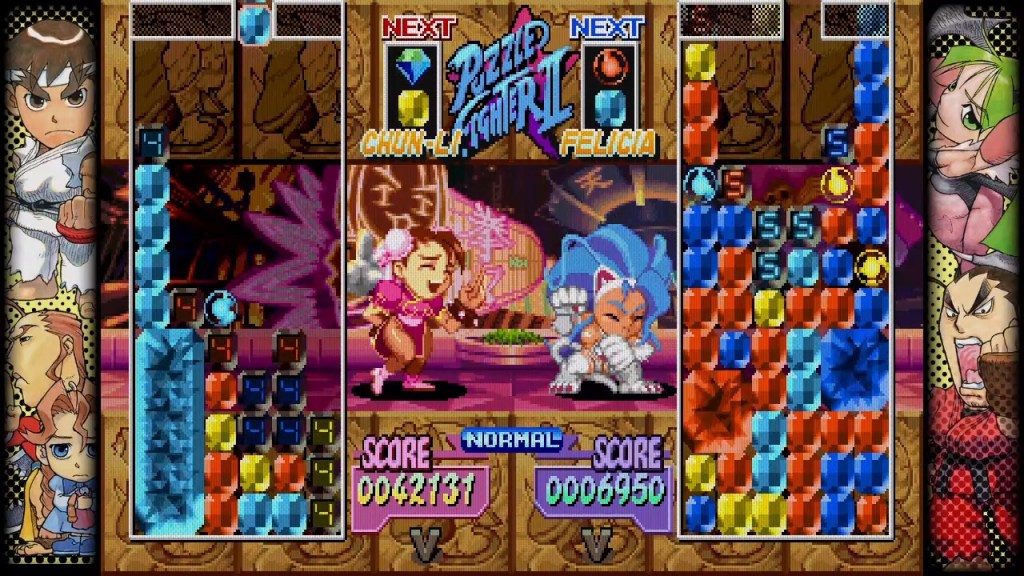
Super Puzzle Fighter II Turbo debuted as an arcade puzzle game in 1996. It features miniature representations of Street Fighter and other Capcom fighters. Players compete through falling colored gems rather than six-button attack inputs. The original reached the PlayStation and Saturn, while the Game Boy Advance received a later adaptation. The Japanese title Super Puzzle Fighter II X is a regional naming difference, not an unrelated sequel.
Super Puzzle Fighter II Turbo transformed recognizable Capcom characters into a competitive gem-matching puzzle game in 1996. Players assembled colored gems and triggered attacks while chibi fighter animations appeared beside the puzzle boards. The mechanics were unrelated to normal one-on-one punching and kicking despite sharing familiar character designs. This arcade spin-off eventually reached home consoles and was revisited in 2007 with a separate HD Remix. Its inclusion illustrates how the Street Fighter franchise expanded into different game genres during the 1990s.
Gameplay footage
24. Street Fighter EX Plus / EX Plus Alpha (1997)
Edition: Enhanced EX editions. Platforms: Arcade for EX Plus; PlayStation for EX Plus Alpha.
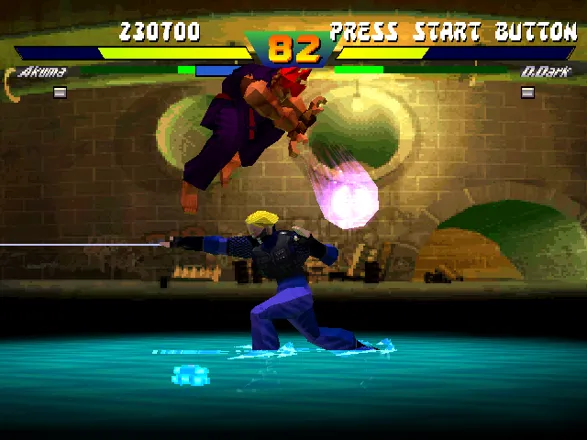
Street Fighter EX Plus and EX Plus Alpha expanded Arika’s 3D fighting experiment in 1997. EX Plus refined the initial arcade branch and the PlayStation release offered an expanded home interpretation. The console edition became a memorable early PlayStation fighting experience. EX Plus belongs to arcades, while EX Plus Alpha was an expanded original PlayStation product. The title names identify genuinely different platform releases and should not be collapsed into one anonymous EX video.
Street Fighter EX Plus expanded Arika’s polygonal arcade game before the series reached PlayStation as EX Plus Alpha. On Sony’s home console, players could encounter added fighters and content tailored to that conversion. The 3D-rendered models represented a different artistic route from the hand-drawn sprites of Street Fighter Alpha and III. This made the EX family an especially useful case study of late-1990s fighting games adapting to new hardware. The arcade Plus and home Plus Alpha labels should be preserved because they refer to related but not completely interchangeable products.
Gameplay footage
25. Street Fighter III: New Generation (1997)
Edition: Third numbered generation. Platforms: Arcade; later Dreamcast in Double Impact.
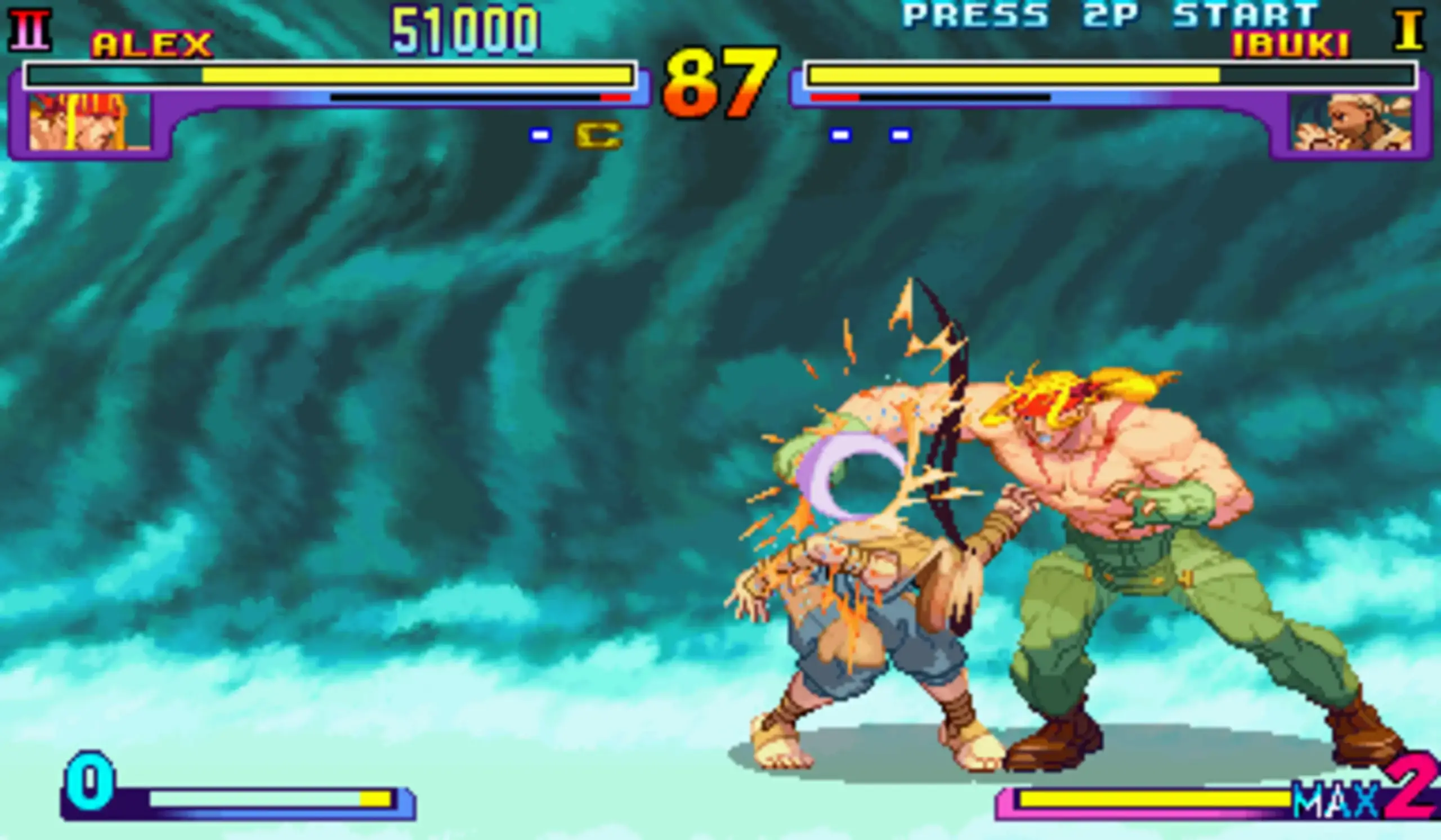
Street Fighter III: New Generation debuted on Capcom’s CPS-3 arcade platform in 1997 and represented a major redesign after the long run of Street Fighter II revisions. Alex emerged as the new central hero, with Ryu and Ken returning amid a largely different roster. Extremely fluid hand-drawn sprite animation became one of the game’s defining achievements even as much of the industry pursued polygonal graphics. Its parry system introduced a demanding defensive option that later became synonymous with Street Fighter III competitive play. The original New Generation game did not launch as a Super Nintendo or PlayStation cartridge; Sega Dreamcast owners encountered it later through the Double Impact two-game package. It is therefore essential to distinguish the 1997 arcade release from both 2nd Impact and the better-known 1999 3rd Strike.
Street Fighter III: New Generation debuted on Capcom CPS-3 arcade hardware in 1997 with fighters including Alex and Ibuki. Its distinctive interface and parry system launched a new line of competitively demanding matches. Hand-drawn animation gave the game an expressive identity at a time when many rival fighting series were moving toward polygonal art. Capcom followed the original release with 2nd Impact and 3rd Strike, each of which had different content. Dreamcast later preserved New Generation alongside 2nd Impact in the separate Double Impact collection.
Gameplay footage
26. Street Fighter III: 2nd Impact — Giant Attack (1997)
Edition: Street Fighter III revision. Platforms: Arcade; Dreamcast in Double Impact.
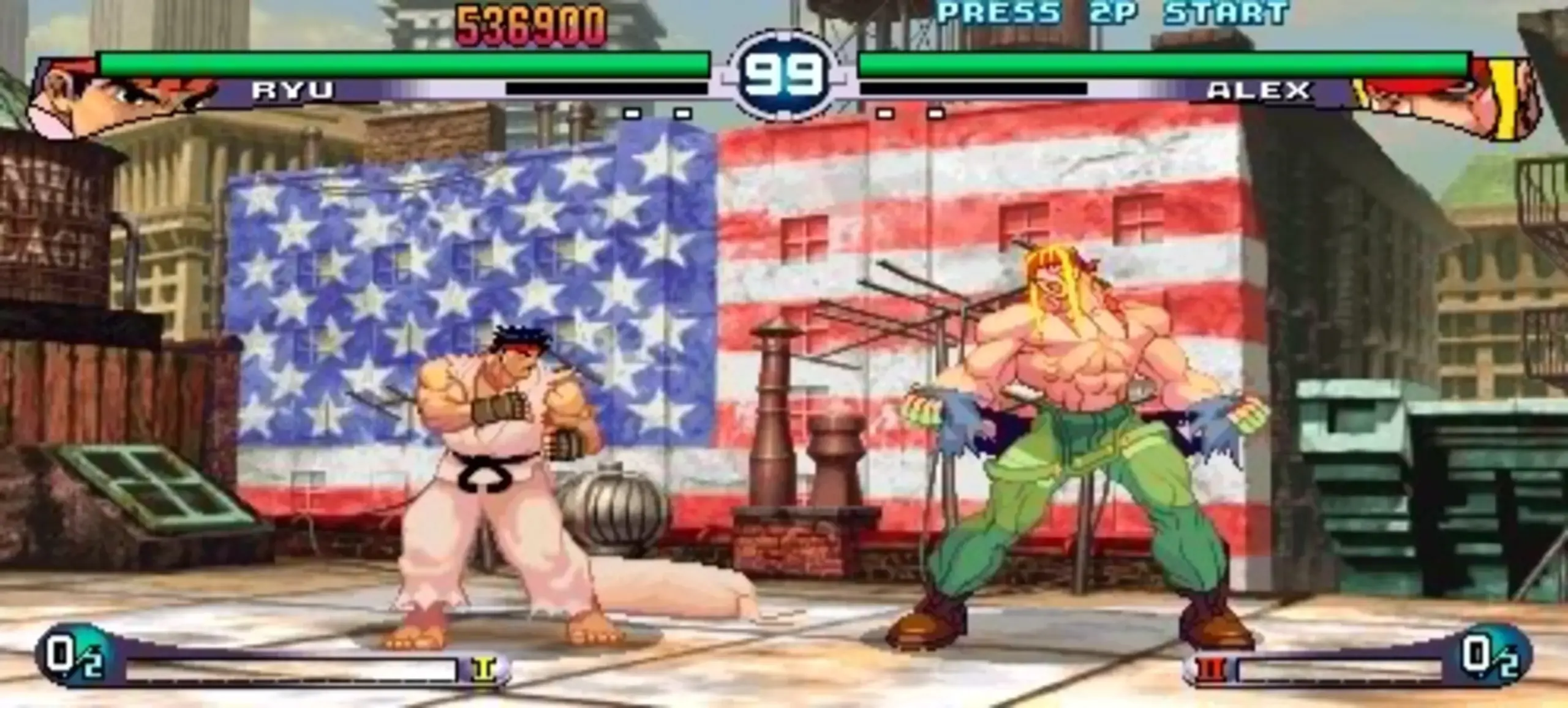
Street Fighter III: 2nd Impact — Giant Attack became a substantial CPS-3 revision in 1997. 2nd Impact expanded the early Street Fighter III roster and tuned the underlying game. It retained the technical 2D presentation and parry-based defense of New Generation. Arcade players first received the update; Dreamcast owners later encountered it within Double Impact. The Dreamcast Double Impact package later provided home access to both early III editions.
Street Fighter III: 2nd Impact — Giant Attack followed the first III arcade release in 1997 with a revised cast and fighting system. Its changes helped refine the new-generation mechanics before the more widely remembered 3rd Strike. The CPS-3 arcade version introduced its own character selection and match presentation, even though portions of the graphic style carried over. Dreamcast players later encountered New Generation and 2nd Impact together in Double Impact. The two-in-one Dreamcast package preserves two separate historical stages of Capcom’s Street Fighter III development.
Gameplay footage
27. Marvel Super Heroes vs. Street Fighter (1997)
Edition: Crossover fighting game. Platforms: Arcade; Sega Saturn; PlayStation.
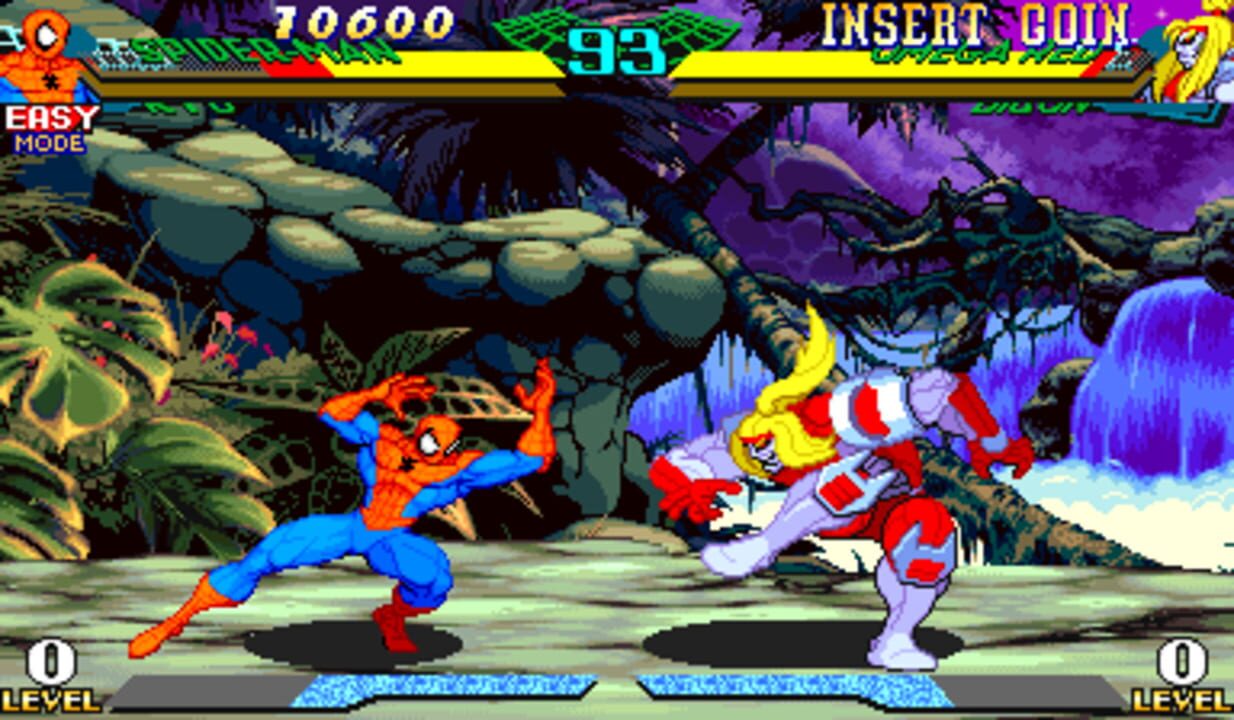
Marvel Super Heroes vs. Street Fighter brought a broader Marvel cast to Capcom’s tag-team arcades in 1997. This crossover followed X-Men vs. Street Fighter with a broader Marvel side of the roster. Its tag-team spectacle is more closely related to Capcom’s versus games than to numbered Street Fighter progression. The arcade original was followed by hardware-specific Sega Saturn and PlayStation ports. Saturn and PlayStation conversions arrived on different schedules and with different technical tradeoffs.
The 1997 Marvel Super Heroes vs. Street Fighter broadened Capcom’s crossover roster beyond the earlier X-Men-focused title. Partner switching and exaggerated super attacks remained central to the two-on-two arcade experience. The game ran on Capcom’s CPS-2 hardware, allowing large character sprites and fast-paced action. Later Saturn and PlayStation ports reveal how differently the two consoles handled the memory requirements of a sprite-heavy tag fighter. Its arcade release belongs between X-Men vs. Street Fighter and the later Marvel vs. Capcom series in crossover history.
Gameplay footage
28. Super Gem Fighter Mini Mix / Pocket Fighter (1997)
Edition: Comedic fighting spin-off. Platforms: Arcade; PlayStation, Sega Saturn; later collections.
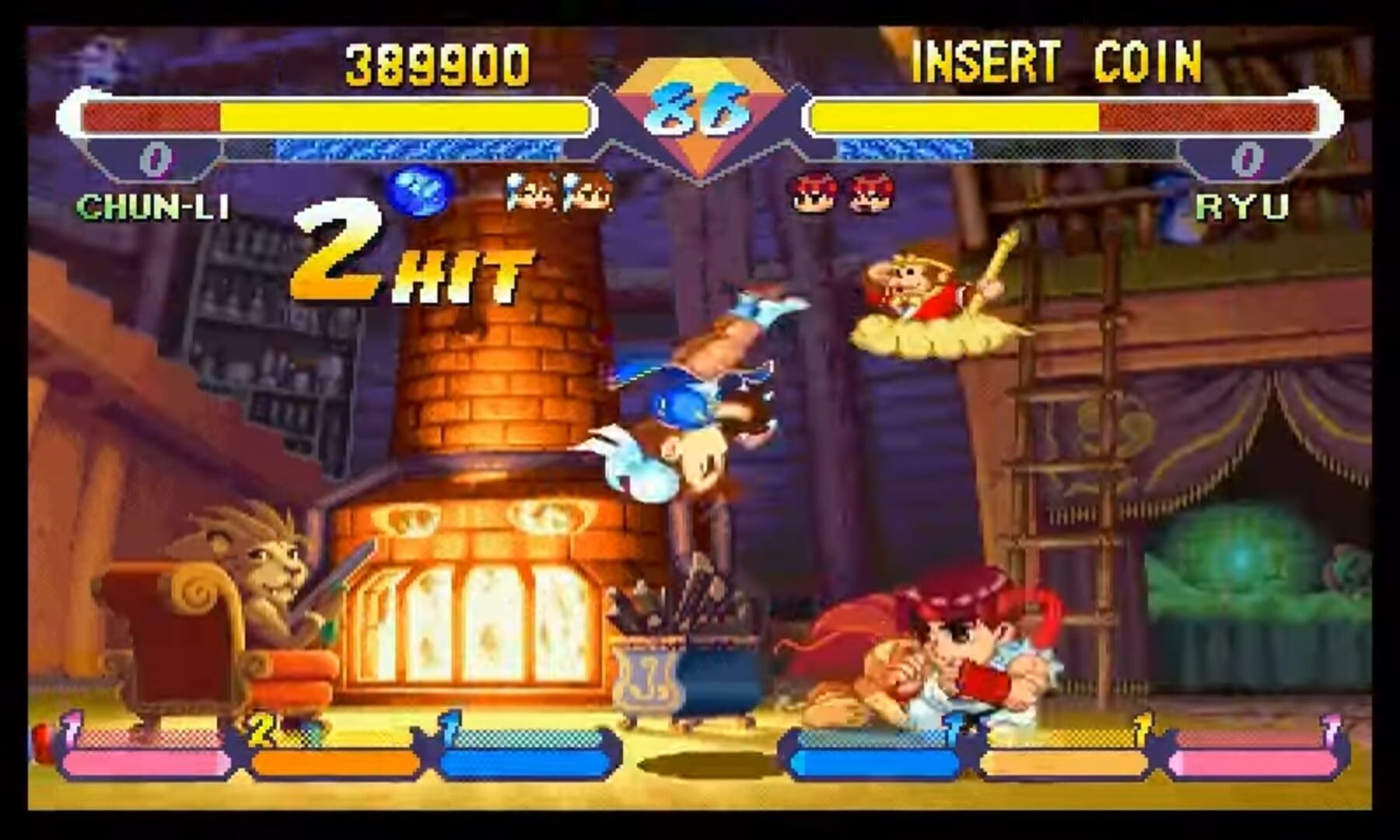
Capcom’s cheerful Super Gem Fighter Mini Mix, called Pocket Fighter in Japan, arrived in 1997. The super-deformed artwork made Street Fighter characters playful and immediately recognizable. Gem-based systems give the battles a distinct identity that is easy to miss in general franchise lists. The arcade original later appeared on PlayStation and Saturn and in collections. Pocket Fighter is an alternate regional name rather than a different fighting-game sequel.
Super Gem Fighter Mini Mix, called Pocket Fighter in Japan, transformed familiar Capcom characters into playful miniature fighters in 1997. Its comedy-focused visual style contrasted with the larger, more serious character art of Street Fighter III. Combat incorporated collectible gems and exaggerated character transformations alongside familiar fighting-game inputs. The gem system and super-deformed presentation made it recognizable as its own arcade game rather than a simple reskin of Street Fighter Alpha. The two regional names identify the same core game, with later home conversions extending its audience.
Gameplay footage
29. Street Fighter Collection (1997)
Classification: Two-disc console compilation. Platforms: PlayStation and Sega Saturn. Research: Release/source reference.
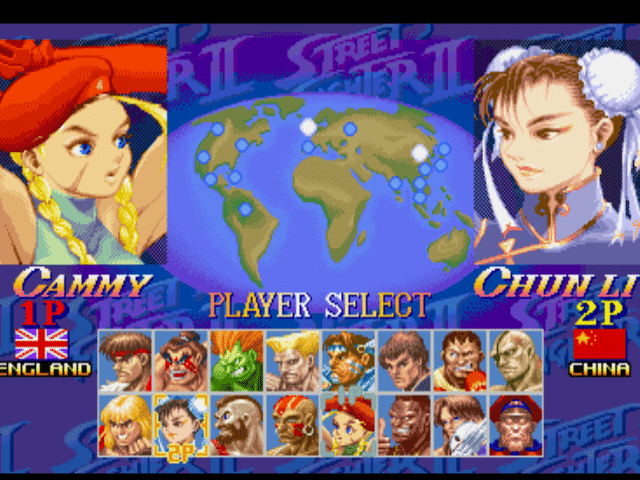
Street Fighter Collection appeared for PlayStation and Sega Saturn in 1997. The compilation includes Super Street Fighter II and Super Street Fighter II Turbo. It also includes an enhanced version of Alpha 2 known as Street Fighter Alpha 2 Gold. This was a disc-based way to revisit earlier arcade games on the new 32-bit consoles. A collection title-screen still is important because the included titles already have their own entries in the historical guide.
Street Fighter Collection was a 1997 retail package for the original PlayStation and Sega Saturn. It assembled Super Street Fighter II, Super Street Fighter II Turbo and the enhanced Alpha 2 Gold version. The package’s title menu and retail presentation distinguish it from the original arcade games included within it. Capcom was making older fighting content available together during the rise of disc-based home consoles. That made the collection a separate historical product even though the core fighting games had debuted previously.
Gameplay footage
30. Street Fighter EX2 (1998)
Edition: 3D spin-off sequel. Platforms: Arcade.
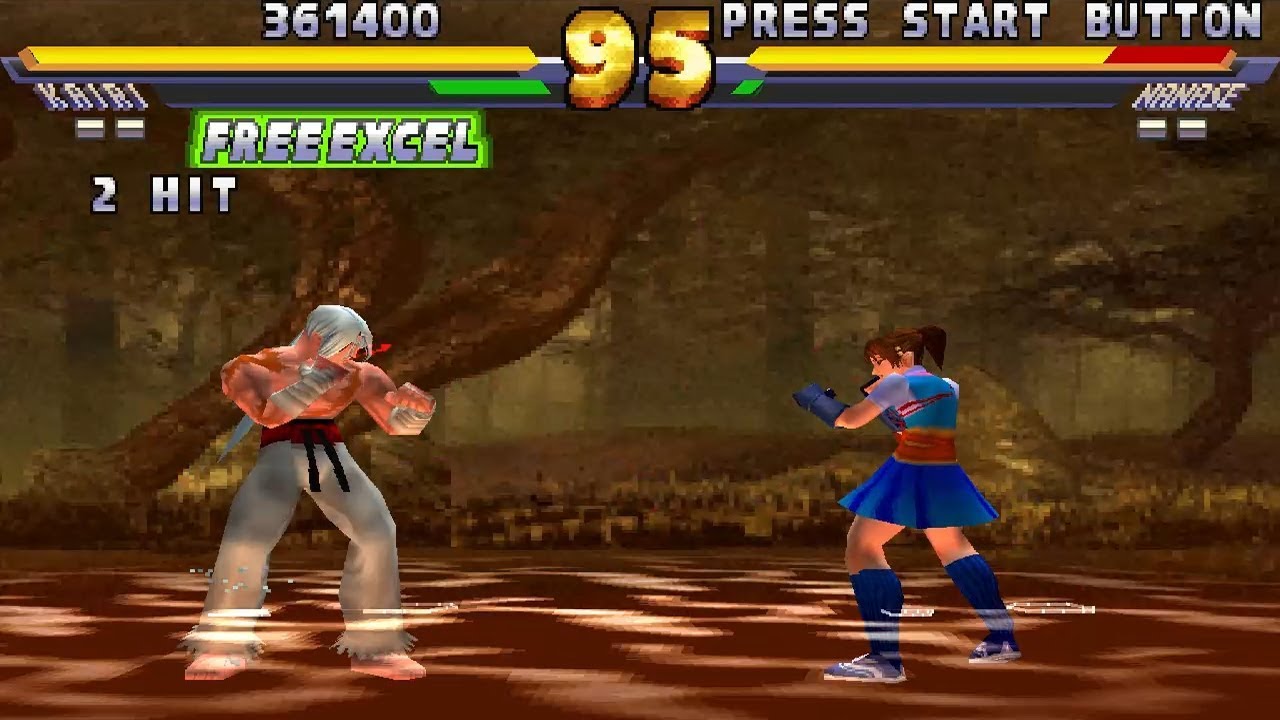
Arika expanded its polygonal fighting series with Street Fighter EX2 in 1998. EX2 pushed the polygonal side series forward with revised moves and characters. Its arena perspective still follows side-on fighting rules rather than becoming a free-roaming brawler. The initial EX2 appeared in arcades before EX2 Plus and its home conversion. The later EX2 Plus update and PlayStation port belong to the next stage of this branch.
Street Fighter EX2 continued Arika’s polygonal fighting experiments in 1998 arcade hardware. New moves, redesigned arenas and a changing lineup expanded the original EX foundation. The game’s 3D models still fought within a largely side-on competitive structure, separating it from fully free-roaming arena games. An important later update, EX2 Plus, altered the experience enough to deserve its own section. Treating the first EX2 as the starting point makes the branch’s rapid late-1990s evolution easier to understand.
Gameplay footage
31. Street Fighter Alpha 3 (1998)
Edition: Third Alpha installment. Platforms: Arcade; PlayStation; later Saturn and Dreamcast.
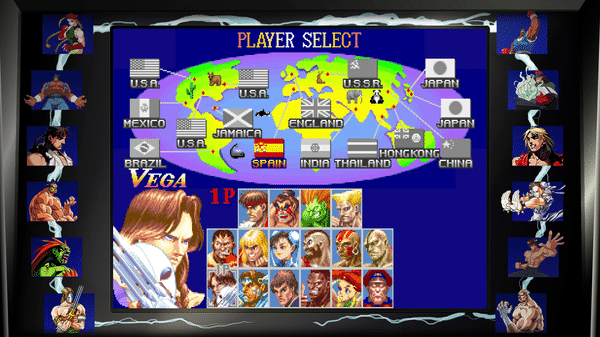
Street Fighter Alpha 3 brought three selectable ISM fighting styles to arcades in 1998. Alpha 3 introduced multiple selectable fighting styles through its -ISM system. The larger roster and distinct gauges made the game especially rewarding for version comparisons. PlayStation, Saturn and Dreamcast conversions later modified the arcade baseline. PlayStation, Dreamcast and Saturn releases each help tell the story of late-1990s console competition.
Street Fighter Alpha 3 introduced a choice among A-ISM, V-ISM and X-ISM, fundamentally changing how players approached the same characters. These styles offered different super-gauge rules, combo approaches and strategic possibilities. The original 1998 arcade cast and interfaces therefore form an important baseline for later expanded releases. Dreamcast, portable and subsequent collection versions did not all carry the same character rosters or feature sets. Understanding the original ISM system makes the edition differences more meaningful than a simple count of playable fighters.
Gameplay footage
32. Street Fighter Collection 2 (1998)
Classification: PlayStation compilation of three Street Fighter II versions. Platforms: Sony PlayStation. Research: Release/source reference.
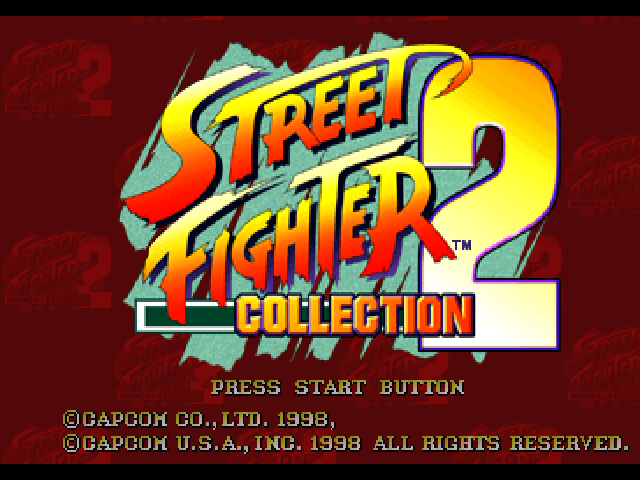
Street Fighter Collection 2 was released for PlayStation in 1998. It packaged The World Warrior, Champion Edition and Hyper Fighting together. The Japanese counterpart was part of Capcom’s Generation collection line. The collection appealed to owners of Sony’s disc console who wanted the foundational early Street Fighter II games. It was a different package from 1997’s Street Fighter Collection, which focused on later II and Alpha titles.
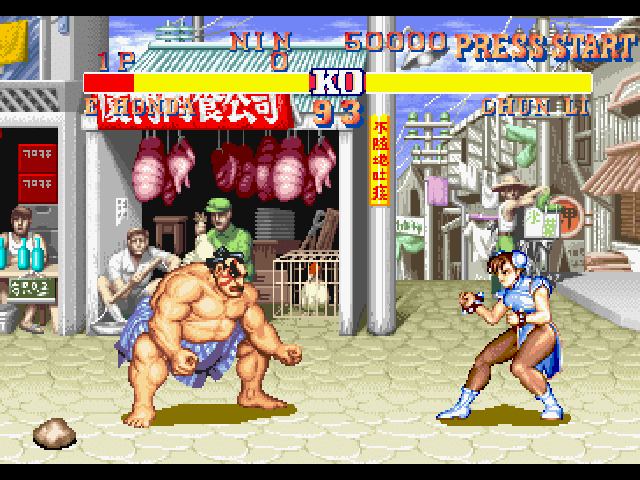
Street Fighter Collection 2 reached the PlayStation in 1998 with World Warrior, Champion Edition and Hyper Fighting. Its menu gave owners a convenient way to compare the first three major Street Fighter II arcade rule sets. The anthology is different from 1997’s Street Fighter Collection, which included Super Street Fighter II editions and Alpha 2 Gold. The PlayStation capture now included in this section demonstrates the actual collection software and game selection. Its value lies in game preservation and accessibility, not in introducing a new numbered sequel.
Gameplay footage
33. Street Fighter Alpha 3: Saikyo Dojo (Dreamcast) (1999)
Classification: Enhanced Dreamcast home conversion. Platforms: Sega Dreamcast (Japan 1999, North America 2000). Historical release documentation.
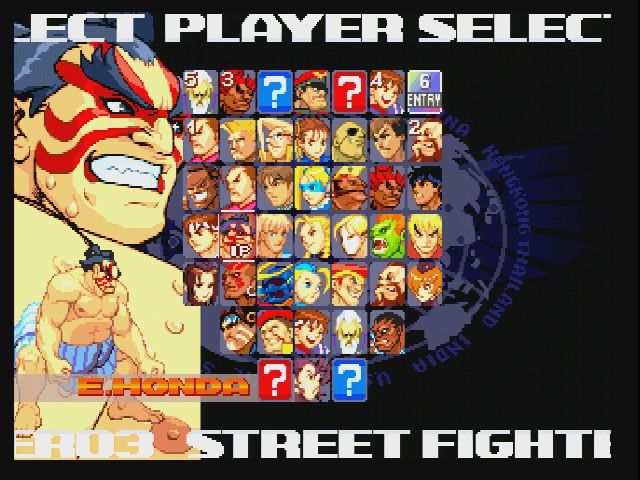
The Dreamcast release of Street Fighter Alpha 3 appeared in Japan in July 1999 with the Saikyo Dojo subtitle. It carried forward the central arcade roster and incorporated expanded content from the earlier PlayStation conversion. The additional Saikyo Dojo mode built special battles around a player-trained character. Sega’s Dreamcast hardware gave the late Alpha series a distinct console presentation. Regional retail dates and the use of the Street Fighter Zero 3 title in Japan make this edition easy to confuse with the 1998 arcade debut.
The Dreamcast Street Fighter Alpha 3: Saikyo-ryu Dojo adapted the popular CPS-2 fighting game for Sega’s home hardware in 1999. The Dreamcast version offered distinctive modes and a larger cast than the initial arcade release. Its online score-related elements should be distinguished from the later 2001 Matching Service edition that expanded network versus play. The separate Dreamcast capture illustrates the original home version rather than the later network update. These distinctions explain why the variants merit separate entries in a hardware-based franchise history.
Gameplay footage
34. Street Fighter EX2 Plus (1999)
Edition: Enhanced EX2 edition. Platforms: Arcade, PlayStation.
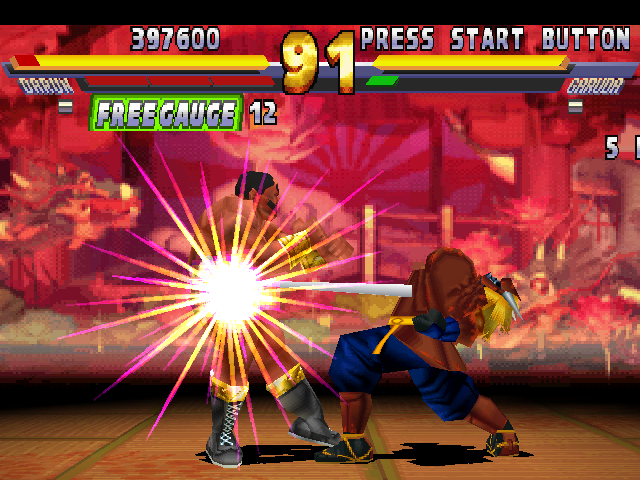
Street Fighter EX2 Plus rebalanced and enlarged the EX2 experience in 1999. EX2 Plus revised and expanded the EX2 lineup and mechanics. The PlayStation home release made this enhanced version the one many players remember. The Plus game appeared on arcade hardware and PlayStation. It should be compared against the 1998 arcade EX2 instead of being called the original title.
Street Fighter EX2 Plus revisited Arika’s earlier EX2 arcade game with additions to the roster and fighting options. Its PlayStation version gave home players a substantial late-1990s polygonal Street Fighter experience. Returning Capcom fighters shared stages with EX-specific characters whose styles never became core numbered-series staples. The Plus identity matters because players comparing recorded matches need to know which roster and mechanics were available. This version represents a final major PlayStation-era refinement of EX2 before the PlayStation 2-exclusive EX3 arrived.
Gameplay footage
35. Street Fighter III: 3rd Strike — Fight for the Future (1999)
Edition: Major Street Fighter III revision. Platforms: Arcade; Dreamcast; PS2/Xbox collection ports; PS3 and Xbox 360 online edition.
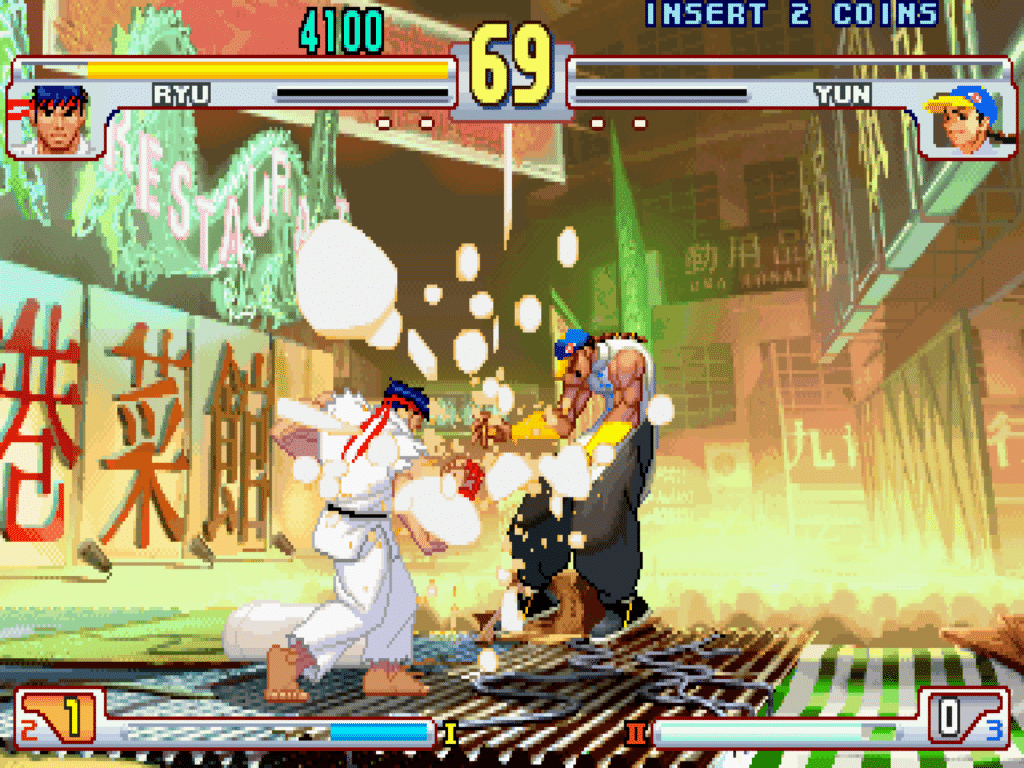
Street Fighter III: 3rd Strike — Fight for the Future appeared in arcades in 1999 as Capcom’s third major revision of Street Fighter III. It expanded and refined the roster while retaining the extraordinary CPS-3 sprite animation that separated the III generation from the polygonal competition. The parry system rewarded players who anticipated an opponent’s strike with precise directional inputs, creating unusually dramatic reversals. Sega Dreamcast received a major home adaptation, and later PlayStation and original Xbox collections brought the game to additional audiences. The 2011 Online Edition for PlayStation 3 and Xbox 360 was another distinctive preservation and online-play release, not the debut of the original fighting system. Readers should therefore distinguish a 1999 arcade clip from 2011 Online Edition footage, even when both show recognizable characters and stages.
The original 1999 arcade Street Fighter III: 3rd Strike refined Capcom’s parry-based combat and expanded the fighter roster, including the return of Chun-Li. The CPS-3 game’s health bars, Super Art gauges and animation give the release a recognizable appearance. Its 2nd Impact predecessor had fewer fighters and different balance rules, while the 2011 Online Edition was a later digital reissue. Original arcade match footage therefore supplies a more historically precise reference than a modern networked remaster alone. 3rd Strike’s longevity in competitive play explains why recordings from several different platforms appear in searches today.
Gameplay footage
More 3rd Strike gameplay: Open the complete 1999 arcade-game recording from World of Longplays for a deeper look at stages, rounds and characters.
36. Street Fighter III: Double Impact / W Impact (1999)
Classification: Dreamcast two-game compilation. Platforms: Sega Dreamcast (Japan 1999, North America and Europe 2000). Research: Release/source reference.
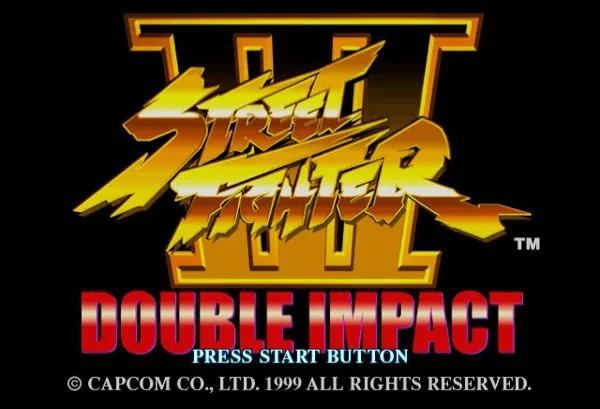
Street Fighter III: W Impact debuted on Dreamcast in Japan in December 1999. The English-language Double Impact release followed in 2000. It contains the New Generation and 2nd Impact arcade versions of Street Fighter III. This let console players compare the two earlier versions without a separate CPS-3 arcade board. The North American name and year can mislead anyone who counts games exclusively from local retail dates.
Street Fighter III: Double Impact, known as W Impact in Japan, arrived as a Sega Dreamcast compilation in 1999. It contained New Generation and 2nd Impact, allowing home players to explore two earlier arcade revisions in one package. The collection’s title screen and selection interface distinguish it from either standalone CPS-3 arcade release. The dedicated Dreamcast gameplay capture preserves its console context. Double Impact is not another wholly new Street Fighter III fighting system, but it played a meaningful role in making the first two versions accessible at home.
Gameplay footage
2000–2015: PlayStation 2, handhelds, HD remakes and Xbox rivalry
37. Street Fighter EX3 (2000)
Edition: PlayStation 2 console sequel. Platforms: PlayStation 2.
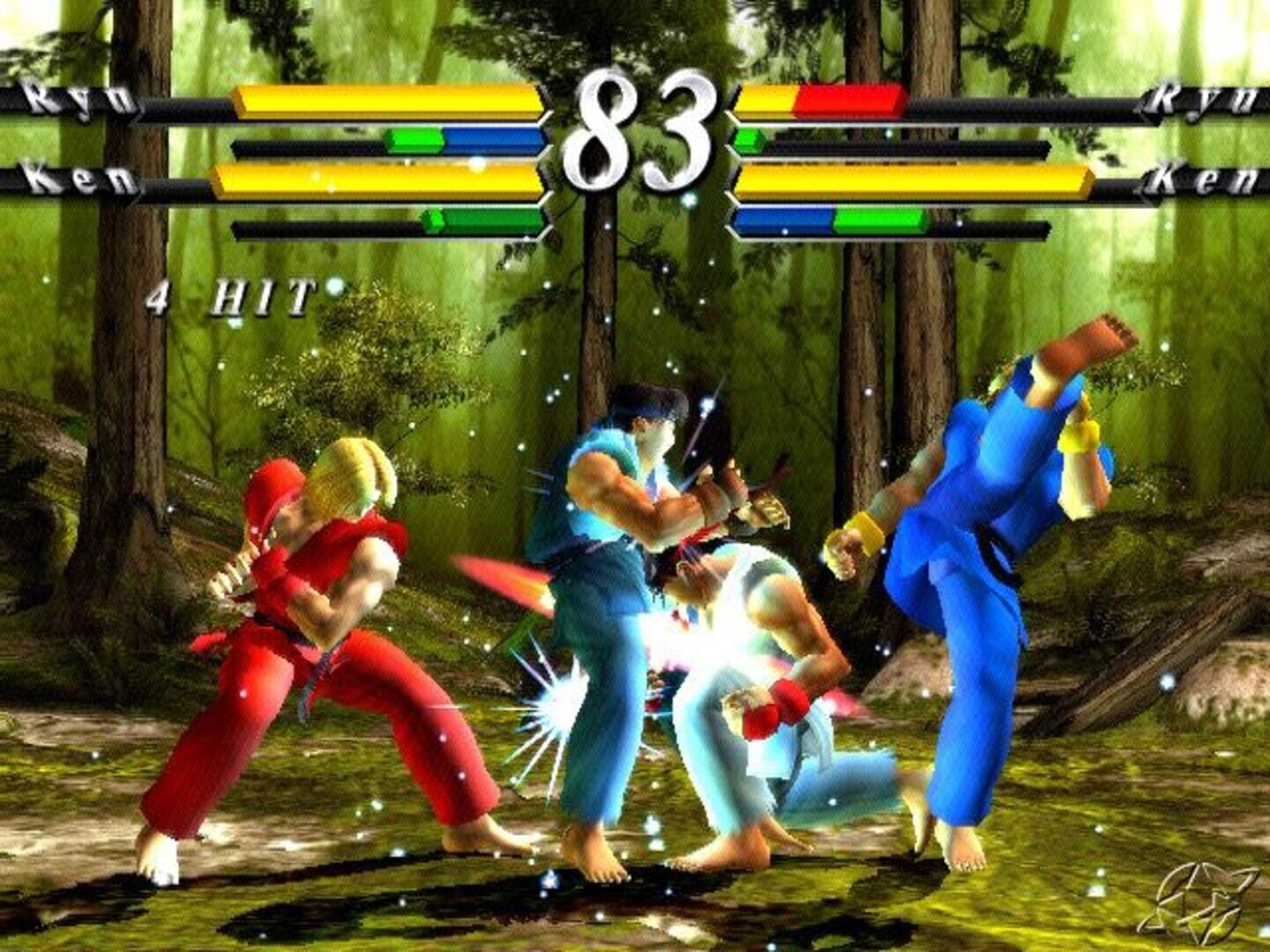
Street Fighter EX3 extended the polygonal EX line into the PS2 generation in 2000. EX3 arrived during the PlayStation 2 launch period and extended the 3D EX series. Tag and team ideas made it feel different from a conventional one-on-one arcade sequel. This entry was conceived for PlayStation 2 rather than a standard coin-op launch. Its PS2-only identity is essential: it did not begin as a widely distributed separate arcade release.
Street Fighter EX3 arrived for the PlayStation 2 in 2000 instead of following the previous EX games directly into arcades. Team-focused Dramatic Battle and Tag Battle modes expanded the options beyond a straightforward one-on-one match. The polygonal fighters benefited from a newer console generation, while the underlying EX identity remained recognizable. The shift to PS2 hardware also marks the end of the three-title numbered EX sequence associated with Arika and Capcom. Unlike later Arika projects with related characters, EX3 was an officially branded Street Fighter release.
Gameplay footage
38. Super Street Fighter II X for Matching Service (2000)
Classification: Japan-only Dreamcast online home edition. Platforms: Sega Dreamcast (Japan, December 22, 2000). Historical release documentation.
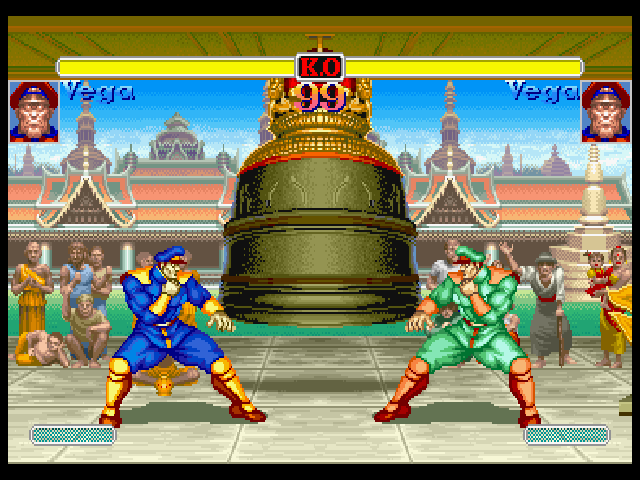
Capcom released Super Street Fighter II X for Matching Service in Japan on December 22, 2000. The Dreamcast disc adapted the original Super Street Fighter II Turbo fighting system rather than introducing another numbered sequel. Its distinctive selling point was two-player online competitive play through Capcom and Sega’s Matching Service. The product was distributed as a Japanese Dreamcast edition, not a PlayStation 2 or Xbox release. The software therefore belongs to both classic Street Fighter II preservation and early home-console online history.
The screenshot above is an actual Dreamcast match capture from Super Street Fighter II X for Matching Service, preserving the arcade-style health bars and pixel-art stage design. Although the visible battle resembles its earlier arcade ancestor, this 2000 Japanese edition introduced a different home-use context through online versus play. The original Matching Service experience should not be confused with current fan-maintained network restoration or a modern collection’s online functionality. A genuine release-era Japanese advertisement and a short Dreamcast-specific gameplay recording are still being sourced rather than replaced with unrelated Super Turbo footage. For console historians, its importance lies in demonstrating how a classic 1994 fighting game was adapted to network-capable Dreamcast hardware six years later.
Gameplay footage
39. Typing Fighter II Plus (2000)
Classification: Street Fighter II-themed typing and fighting educational game. Platforms: Windows PC and classic Mac OS, Japan (2000). Historical verification.
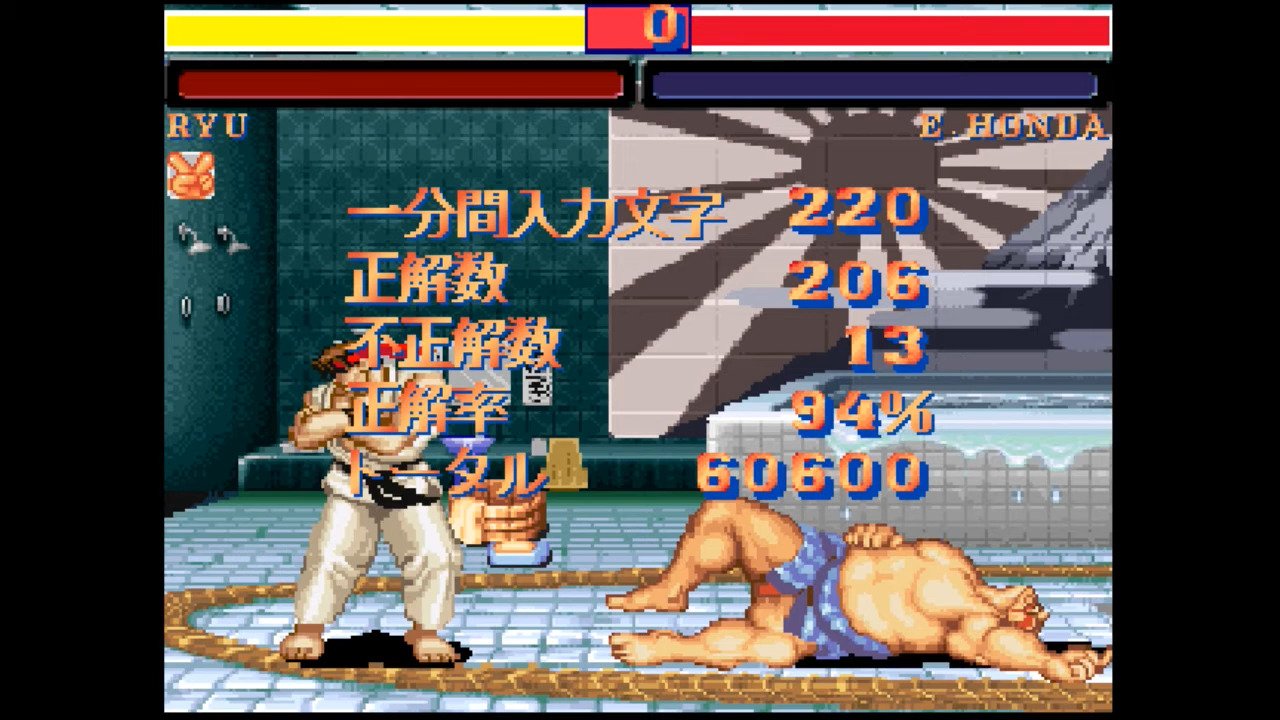
Typing Fighter II Plus arrived for Windows and Macintosh computers in 2000. Capcom published the game and Apcom developed it. Instead of using the traditional arcade stick and six attack buttons, players type words to fight opponents. The software combines fighting-game imagery with typing-practice mechanics. PCGamingWiki identifies the release date as June 17, 2000, and MobyGames classifies the game among typing titles.
Typing Fighter II Plus used recognizable Street Fighter imagery in a keyboard-driven Japanese computer game around 2000. Instead of standard punch and kick inputs, it incorporated typing prompts as part of the interaction. That unusual educational format explains its place alongside more conventional arcade and console adaptations. Its Windows and Macintosh context also makes it especially relevant to PCFix411’s broader computer-technology audience. Accurate game-specific screenshots identify this obscure release, while ordinary Street Fighter II battle footage would not represent its distinctive controls.
Additional archive references: Old-Games.RU community editors reported adding an exclusive Typing Fighter II Plus (2000 Windows) game video on September 30, 2025. Their dated video-submission discussion points to the game-specific video index. The archive identifies a possible recording for this unusual release, but the footage remains inaccessible for independent viewing. A second game-specific preservation lead, My Abandonware’s Typing Fighter II Plus listing, labels a YouTube recording as a gameplay video. That recording is linked for further viewing rather than embedded here because its exact-game content and accessibility have not been confirmed. The separate recording titled Typing Fighter II (Net-OH) appears to document a later network successor, not automatically the 2000 Plus release. The exact-version screenshot above remains the verified visual reference.
40. Street Fighter Alpha 3 Upper / Street Fighter Zero 3 Upper (2001)
Classification: Expanded arcade revision with later handheld adaptation. Platforms: Arcade in Japan (2001); Game Boy Advance (2002). Research: Release/source reference.
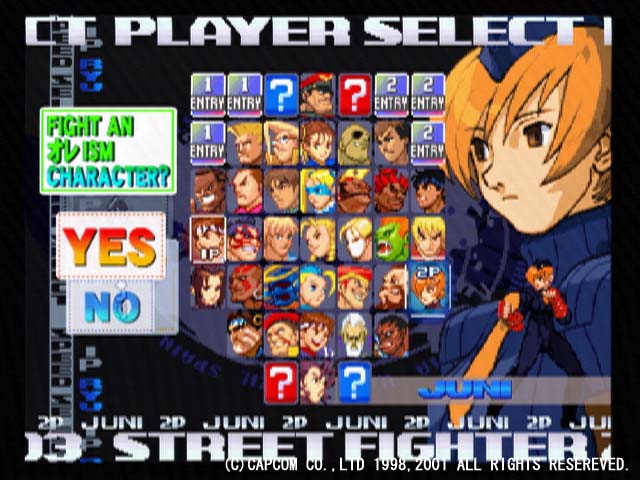
Street Fighter Zero 3 Upper was an expanded arcade variant of the Alpha 3 family released in Japan in 2001 on Sega NAOMI GD-ROM hardware, not the earlier CPS-2 board. Capcom later used this material as the basis for the Game Boy Advance adaptation. The GBA release adds characters from Capcom vs. SNK 2 and changes the presentation to suit the handheld hardware. The arcade Upper release is also preserved in Capcom Fighting Collection 2 from 2025. This game should not be treated as identical to the 1998 original or the later 2006 PSP MAX edition.
The 2001 Street Fighter Zero 3 Upper release brought the expanded Alpha 3 character lineup to Sega NAOMI arcade hardware. Later Game Boy Advance adaptations reduced the screen resolution, audio quality and controls for portable hardware. Those versions shared a fighting lineage but differed in presentation and available features. The original 1998 CPS-2 Alpha 3 should therefore remain a separate reference entry from the 2001 Upper edition and its handheld descendants. Capcom Fighting Collection 2 provides a modern way to revisit Upper, while its modern package menus do not replace historical arcade screenshots.
Gameplay footage
41. Super Street Fighter II Turbo: Revival (2001)
Edition: Handheld reinterpretation. Platforms: Game Boy Advance.
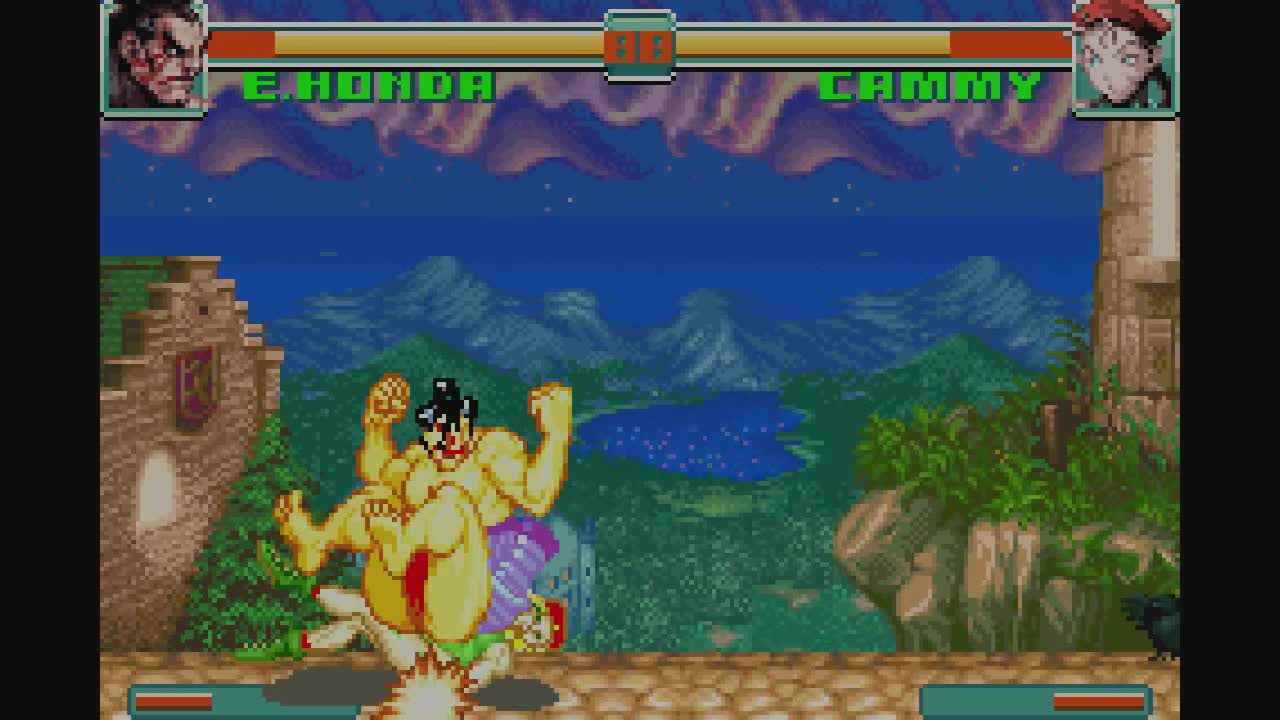
Super Street Fighter II Turbo: Revival reworked a classic arcade fighter for portable play in 2001. Revival adapted the Super Turbo foundation to a portable Nintendo system. Screen presentation, controls and content had to accommodate the Game Boy Advance. Its dedicated platform was the Nintendo Game Boy Advance. It is best understood as a handheld adaptation of the 1994 fighter rather than a 2001 new numbered sequel.
The Game Boy Advance conversion Super Street Fighter II Turbo: Revival brought a complex 1994 arcade fighter onto a much smaller screen in 2001. Its portable layout, button mapping and presentation reflect the limitations and strengths of Nintendo’s cartridge handheld. The pixel art remained based on the classic Street Fighter II era, but the experience differed from standing at an arcade cabinet. Its special handheld adaptations make the original GBA footage particularly useful for comparing versions. Revival became one of several examples of Capcom reworking classic arcade fighters for new hardware rather than simply issuing another numbered sequel.
Gameplay footage
42. Street Fighter Zero 3: Saikyo-ryu Dojo for Matching Service (2001)
Classification: Enhanced Japan-only Dreamcast online edition of Alpha 3. Platforms: Sega Dreamcast, Japan, February 15, 2001. Historical verification.
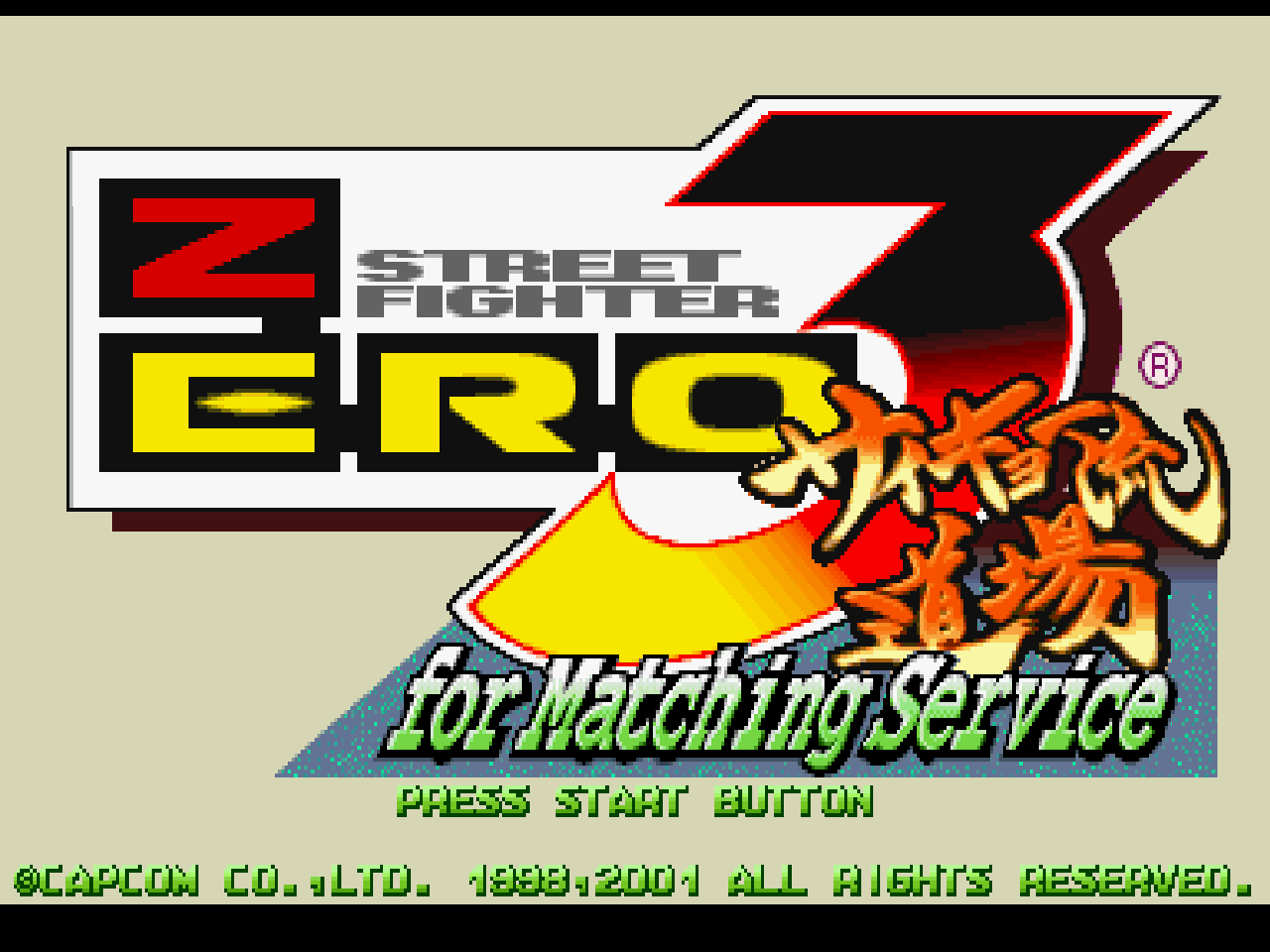
Street Fighter Zero 3: Saikyo-ryu Dojo for Matching Service was offered for Dreamcast players in Japan in February 2001. The release expanded the 1999 Saikyo Dojo home version rather than replacing the original 1998 arcade Street Fighter Alpha 3. Its most important new feature was online versus matches through Sega’s Matching Service. The special edition was distributed through a more limited Dreamcast ordering channel than a typical retail game. It belongs to the same Alpha 3 game family but represents a distinctive pre-broadband online-console experience.
The title screen shown above belongs to the 2001 Japanese Dreamcast for Matching Service release, which distinguishes it more reliably than an unlabeled generic Alpha 3 fighting screenshot. The older 1999 Saikyo-ryu Dojo edition had already brought its own modes to the Dreamcast, while the later Matching Service version added direct online-versus functionality. That network feature makes the edition an early example of a fighting game adapting to console connectivity before online play became a routine expectation. A game-specific gameplay clip and any authentic original promotional video still need independent verification, especially because footage from the 1999 Dreamcast build can look nearly identical. Readers should also keep the separately released Zero 3 Upper and portable Alpha 3 MAX revisions distinct, rather than collapse all four releases into one entry.
Gameplay footage
43. Hyper Street Fighter II: The Anniversary Edition (2003)
Edition: Anniversary-era variant. Platforms: Arcade; PlayStation 2 and original Xbox via collections.
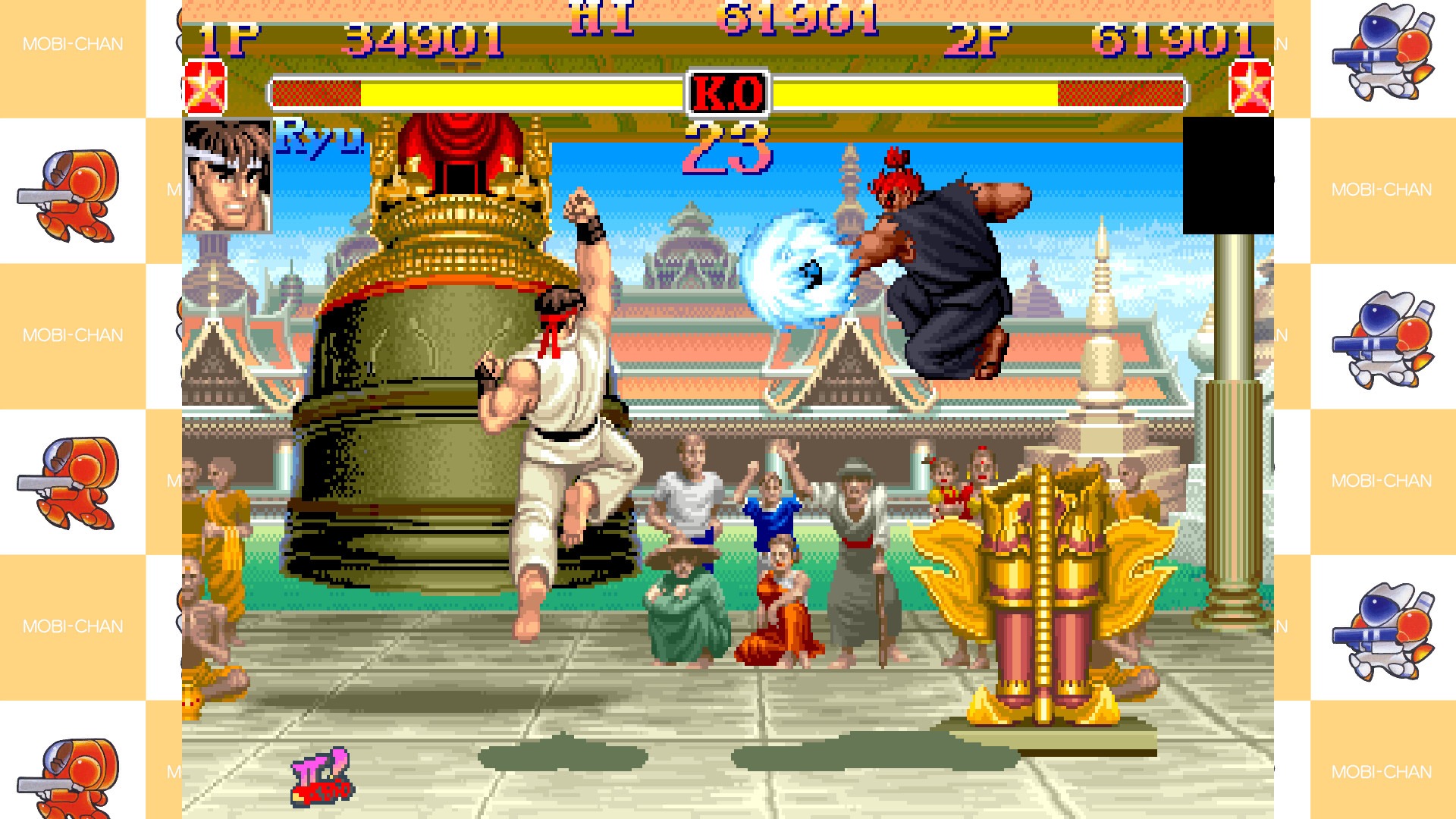
Hyper Street Fighter II: The Anniversary Edition celebrated multiple historical II rule sets in 2003. Hyper Street Fighter II brought several Street Fighter II-era versions together for anniversary play. The idea of choosing different historical builds turns the game’s mechanics into a playable timeline. The arcade anniversary game later reached PlayStation 2 and original Xbox through home packages. PS2 and Xbox anthology releases gave console owners an accessible package.
Hyper Street Fighter II: The Anniversary Edition celebrated the series’ early history by letting fighters from several Street Fighter II rule sets compete in one package. Version selection mattered because different character generations carried different move options and balance assumptions. It treated previous arcade revisions as playable alternatives rather than erasing them with a single newer balance version. The anniversary release also traveled to home hardware, broadening access beyond a dedicated cabinet. Its experiment in mixing versions made it a distinctive historical product instead of a routine copy of Super Turbo.
Gameplay footage
44. Street Fighter Anniversary Collection (2004)
Classification: PS2 and original Xbox collection. Platforms: PlayStation 2; original Xbox. Research: Release/source reference.
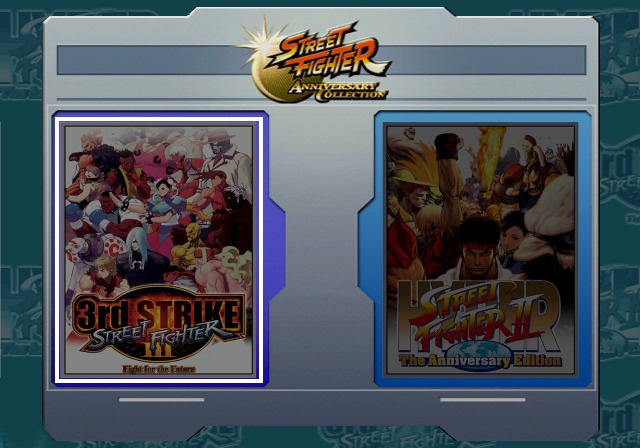
Street Fighter Anniversary Collection brought major classic games together in 2004. Its core games are Hyper Street Fighter II and Street Fighter III: 3rd Strike. North American PS2 owners received a unified package, while releases varied by region. The Xbox version included online competitive functionality. The package should not be confused with the later 2018 Street Fighter 30th Anniversary Collection, which contains twelve arcade titles.
Street Fighter Anniversary Collection arrived for PlayStation 2 and original Xbox during the 2004 anniversary period. Its retail anthology incorporated Hyper Street Fighter II and Street Fighter III: 3rd Strike. The menus and hardware-specific presentation make this a distinct home product instead of the original arcade board for either game. The PlayStation 2 gameplay recording illustrates the collection itself. Its Xbox availability is also useful for understanding when Capcom’s historic fighters reached Microsoft consoles.
Gameplay footage
45. Capcom Fighting Evolution / Capcom Fighting Jam (2004)
Classification: Capcom crossover fighting game. Platforms: Arcade; PlayStation 2 and original Xbox. Research: Release/source reference.
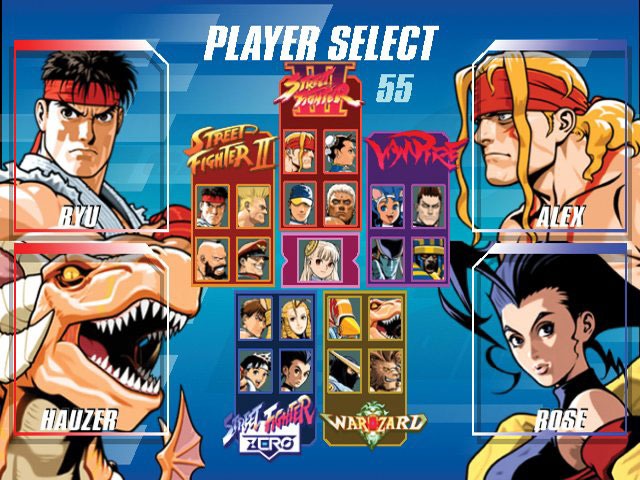
Capcom Fighting Evolution appeared in 2004 and is called Capcom Fighting Jam in Japan. Its combatants draw on Street Fighter II, Alpha and III as well as other Capcom properties. This is a crossover fighter, not a standalone Street Fighter IV precursor. Its initial versions span arcade hardware and the PlayStation 2 and Xbox console generations. The game later appeared among the playable releases in Capcom Fighting Collection 2.
Capcom Fighting Evolution, known as Capcom Fighting Jam in Japan, united several generations of Capcom fighters under one dedicated 2004 ruleset. Characters from different franchises retained recognizable visual traits and combat options while competing against one another. PlayStation 2 and Xbox editions introduced this experiment to home players at a time when Capcom had already developed numerous fighting systems. It is a separate crossover, not simply a menu of unmodified Street Fighter releases. Its later inclusion in Capcom Fighting Collection 2 makes the original game easier to study but should not blur the distinction between the 2004 software and the 2025 compilation.
Gameplay footage
46. Street Fighter Alpha: Maximum Blow (2004)
Classification: Early Java-enabled mobile phone action adaptation. Platforms: Java mobile handsets over early European carrier services, with 2004 North American catalog entry. Historical verification.
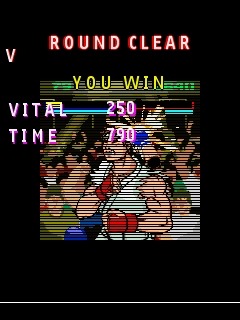
Street Fighter Alpha: Maximum Blow was part of Capcom’s early mobile publishing initiative in 2004. Capcom named this title in its June 30, 2004 announcement about distribution through European operators. The project belonged to the Java mobile era rather than Nintendo Game Boy or Sony PSP formats. GameFAQs records a North American mobile release in September 2004. Details about specific handset versions and combat mechanics need careful original-source verification rather than assumption.
The archived Street Fighter Alpha: Maximum Blow screenshot shows the condensed character art and fighting interface used by Java-enabled phones around 2004. Unlike the original arcade Alpha, this edition had to work within narrow display and input constraints. Capcom used such mobile adaptations to introduce recognizable characters to an audience beyond arcades and dedicated consoles. A release-era carrier commercial has not been verified, so the period promotional-video requirement is documented as an exception. An authentic 55-second recording of the Java game is now embedded below instead of unrelated footage from Street Fighter Alpha’s arcade era.
Historical video availability: An authentic game-specific gameplay recording for the rare mobile-phone release Street Fighter Alpha: Maximum Blow is now linked below. A release-era TV commercial remains unverified. The game-specific archived still is used for identification; a generic arcade Alpha trailer would misrepresent this phone edition.
Gameplay footage
47. Street Fighter Alpha: Rapid Battle (2005)
Classification: Standalone mobile phone edition of Street Fighter Alpha. Platforms: Mobile phones (North America; April 2, 2005). Historical verification.
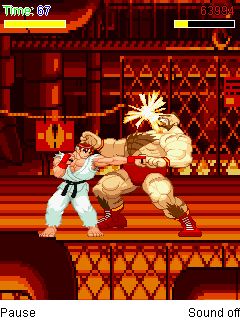
Capcom catalog records show Street Fighter Alpha: Rapid Battle as a mobile-phone game dated April 2, 2005. Its release belongs to the period when phone manufacturers and mobile carriers offered simplified versions of console franchises. The title is associated with the Street Fighter Alpha family rather than being a new numbered Street Fighter game. It should not be merged with Maximum Blow merely because both appeared on early mobile devices. Publicly available contemporary documentation is relatively sparse, so version-specific claims about individual handset support remain unverified.
Street Fighter Alpha: Rapid Battle illustrates how Capcom branding reached low-resolution mobile-phone games in the mid-2000s. Its separate title and small-screen presentation distinguish it from the SNES Alpha conversions and the later PSP Alpha 3 MAX. Historical documentation of the actual handset software is far less abundant than material about Capcom’s arcade hits. Archived mobile artwork helps establish the product’s visual context, but rare gameplay claims should rely on source-specific evidence instead of unrelated footage. This release matters as part of the evolution from basic phone games toward later iPhone and Android adaptations.
Historical video availability: A confirmed gameplay recording of the separate mobile game Street Fighter Alpha: Rapid Battle has now been located and embedded below. Its original release-era advertisement remains unverified. Its own small-screen archived still remains the visual reference until exact-version video evidence can be authenticated.
Gameplay footage
48. Arcade Legends Street Fighter II: Special Champion Edition (2005)
Classification: Licensed plug-and-play Genesis-derived two-game television console. Platforms: Sega Toys / Radica Play TV Legends plug-and-play hardware (2005). Historical verification.
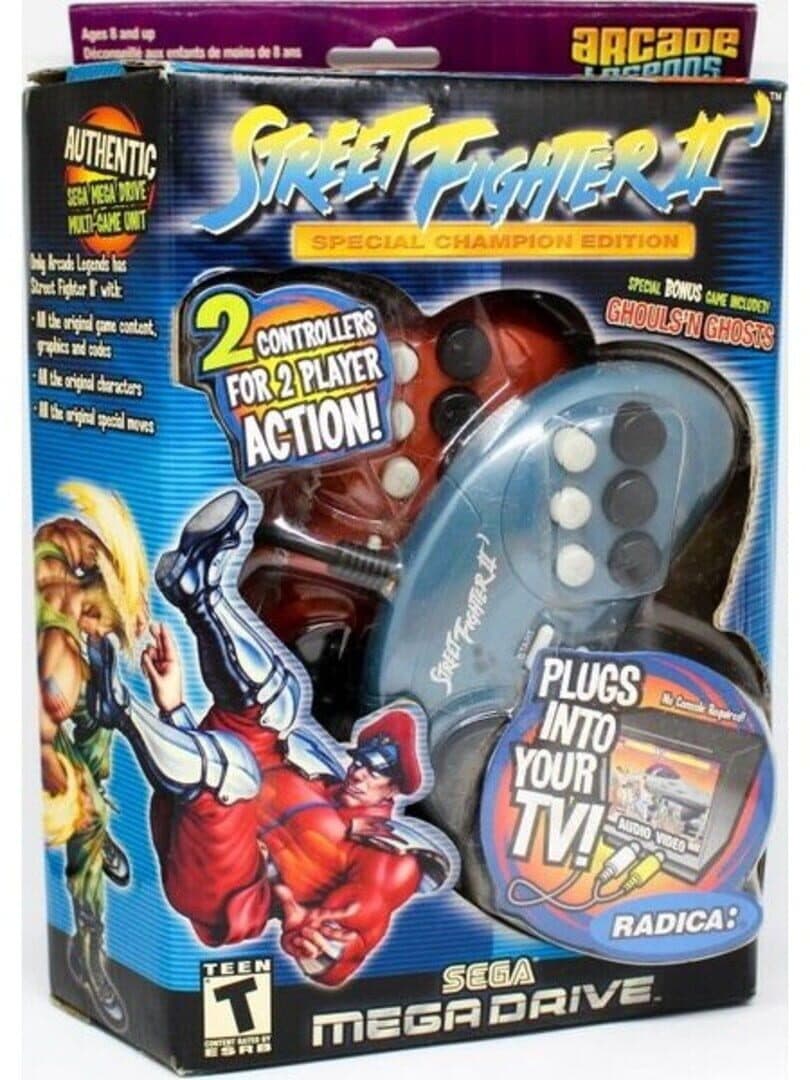
Radica launched Arcade Legends Street Fighter II: Special Champion Edition as a plug-and-play television gaming product in 2005. A contemporary company filing describes two included six-button Sega Genesis-style controllers. The system contains a licensed Street Fighter II Special Champion Edition adaptation. It also includes Ghouls’n Ghosts as an additional built-in game. The hardware connects directly to a television and does not require a separate Sega Genesis console.
The original retail-box photograph above shows Radica’s plug-and-play hardware and the two six-button controllers, rather than a cartridge running in an original Sega Genesis. The box also advertises the built-in Ghouls’n Ghosts bonus game, which demonstrates why this product belongs in the hardware and retro-technology timeline. Sega Toys manufactured the console-on-a-chip device and Radica distributed it in Western markets under the Arcade Legends or Play TV Legends branding. The device is a distinct 2005 physical product, even though the fighting software draws on the earlier Genesis adaptation of Street Fighter II: Special Champion Edition. We still need an authentic recording of gameplay running on the actual Radica hardware before describing any screenshot as device-specific gameplay evidence. Period launch announcements, including Radica’s SEC-filed press release, document the original product more reliably than a modern emulator clip mislabeled as 2005 footage.
Gameplay footage
49. Street Fighter Alpha Anthology (2006)
Classification: PlayStation 2 collection of the Alpha/Zero family. Platforms: PlayStation 2. Research: Release/source reference.
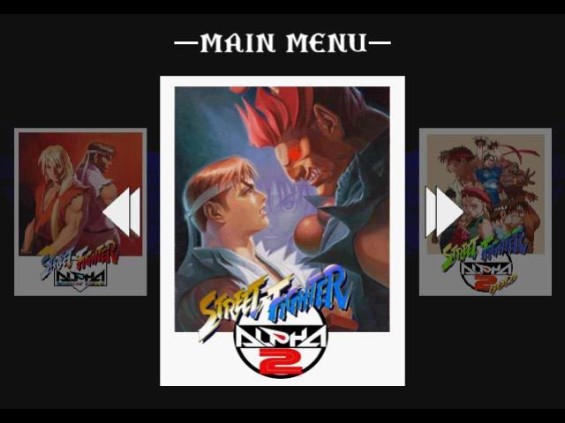
Street Fighter Alpha Anthology appeared on PlayStation 2 in 2006. The collection reunites the Alpha series, including Warriors’ Dreams, Alpha 2 and Alpha 3. Its Japanese title is Street Fighter Zero: Fighters’ Generation. The compilation provides later-console access to games previously spread among arcade, Saturn and PlayStation versions. It is a distinct retail package even though the base fighting games began earlier.
Street Fighter Alpha Anthology appeared on PlayStation 2 in 2006 as a retail collection of the Alpha series and Super Gem Fighter Mini Mix. The original compilation menu allowed players to choose among releases that had previously been distributed on different arcade and home systems. Its Japanese title was Street Fighter Zero: Fighters’ Generation. The separate PlayStation 2 capture now embedded here demonstrates the anthology interface and an included fighting game. This release bridged the 1990s series with newer home-console preservation, giving players easier access to several historically significant versions.
Gameplay footage
50. Street Fighter Alpha 3 MAX (2006)
Edition: Expanded handheld Alpha edition. Platforms: PlayStation Portable.
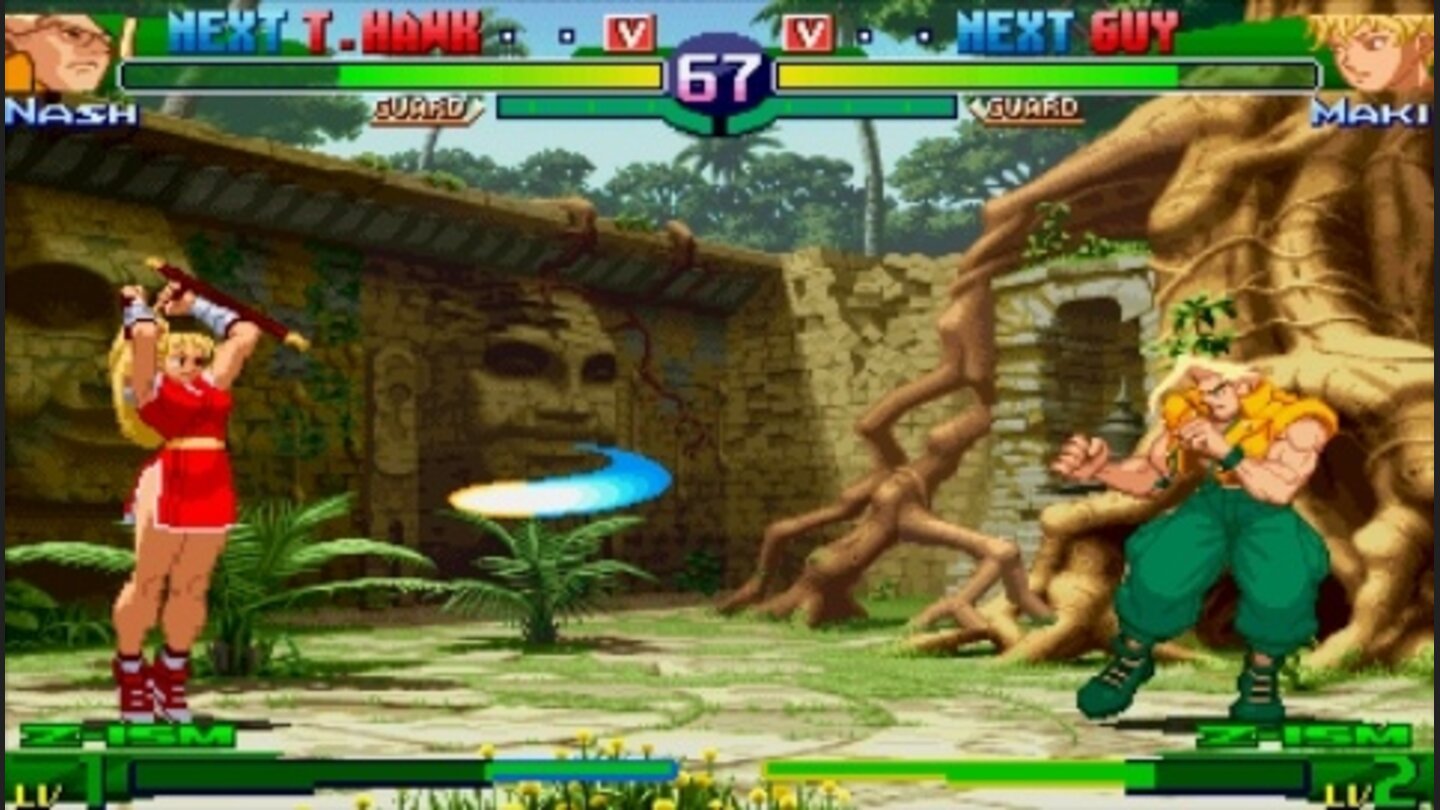
Street Fighter Alpha 3 MAX brought an expanded Alpha 3 experience to handheld players in 2006. MAX was a major portable Alpha 3 release with additional characters and modes. Its Japanese Zero 3 Double Upper identity is another naming trap for collectors. MAX was released for the PlayStation Portable rather than the original arcade hardware. The PSP version should be compared with the PlayStation and Dreamcast Alpha 3 variants rather than treated as identical.
Street Fighter Alpha 3 MAX brought an enlarged Alpha 3 experience to Sony’s PlayStation Portable in 2006. Its portable presentation let players revisit a roster and combat system that had originated on arcade hardware in 1998. Additional character options and handheld-specific features differentiated MAX from the original CPS-2 arcade game. Because some of those fighters were not in the original arcade roster, footage from the PSP version can convey a different picture of Alpha 3’s final content. MAX illustrates how the series used enhanced handheld conversions to preserve and expand older fighting systems.
Gameplay footage
51. Super Puzzle Fighter II Turbo HD Remix (2007)
Classification: High-definition digital puzzle remake. Platforms: Xbox 360 (Xbox Live Arcade); PlayStation 3 (PlayStation Network). Research: Release/source reference.
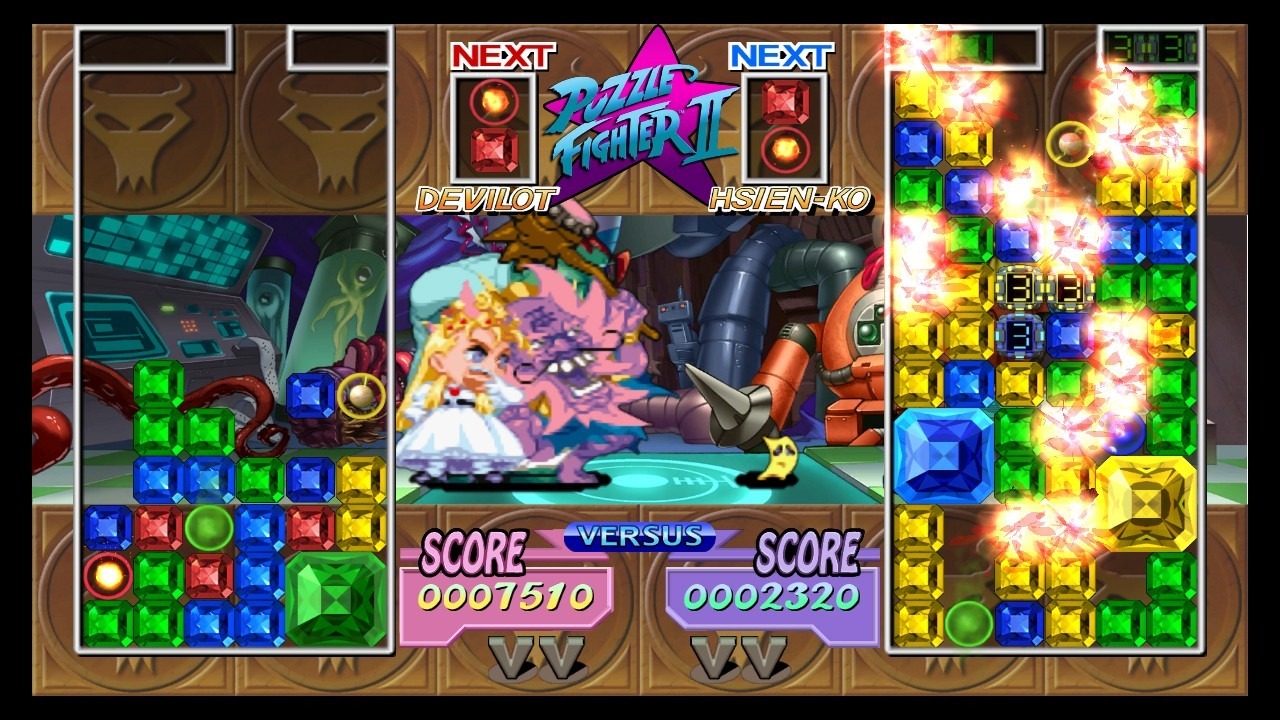
Capcom released Super Puzzle Fighter II Turbo HD Remix for Xbox 360 and PS3 in August 2007. This version reworked the 1996 puzzle game with new high-definition artwork. It also added online play and changes to modes and game balance. The remake continued the use of Street Fighter and other Capcom characters in puzzle competition. It was a digital-console release rather than a brand-new arcade Street Fighter II fighting game.
Super Puzzle Fighter II Turbo HD Remix arrived through Xbox Live Arcade and PlayStation Network in 2007. The update featured high-definition presentation and new digital distribution compared with the 1996 arcade puzzle game. Players still competed by building and breaking groups of colored gems to attack opponents. The Xbox 360 gameplay recording now in this entry preserves the actual HD Remix interface and online battle presentation. It stands as a separate product from the older arcade, Saturn and PlayStation puzzle releases.
Gameplay footage
52. Super Street Fighter II Turbo HD Remix (2008)
Edition: High-definition remake. Platforms: PlayStation 3, Xbox 360.
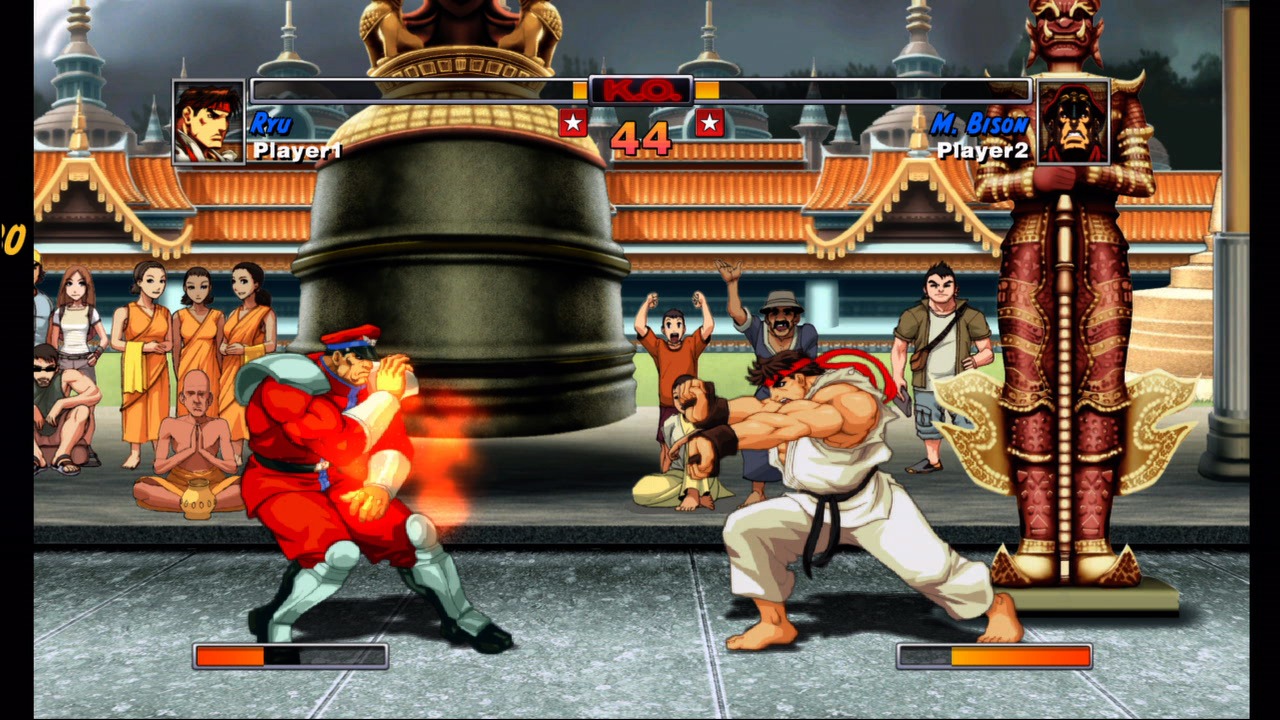
Super Street Fighter II Turbo HD Remix reinvented the classic game’s art for 2008 digital storefronts. HD Remix reworked the visual presentation of the classic Super Turbo formula. Its redrawn aesthetic stood apart from the original pixel-art arcade release. The HD Remix launched on PlayStation 3 and Xbox 360. Digital distribution on PS3 and Xbox 360 marked a new phase of access to classic fighters.
Super Street Fighter II Turbo HD Remix reworked the classic fighter for digital distribution on PlayStation 3 and Xbox 360 in 2008. Redrawn high-definition character and background artwork made the updated presentation noticeably different from the 1994 pixel-art arcade original. The revised soundtrack and balance options added modern appeal while the underlying fighting identity remained familiar. These changes make HD Remix a meaningful reinterpretation rather than a newly numbered installment. Side-by-side comparisons are particularly revealing because the basic character matchups appear with dramatically different artwork and display resolution.
Gameplay footage
53. Street Fighter Online: Mouse Generation (2008)
Classification: Japan-only online free-to-play PC fighting spin-off. Hardware: Microsoft Windows XP/Vista PC, Japan (July 9, 2008). Release verification.
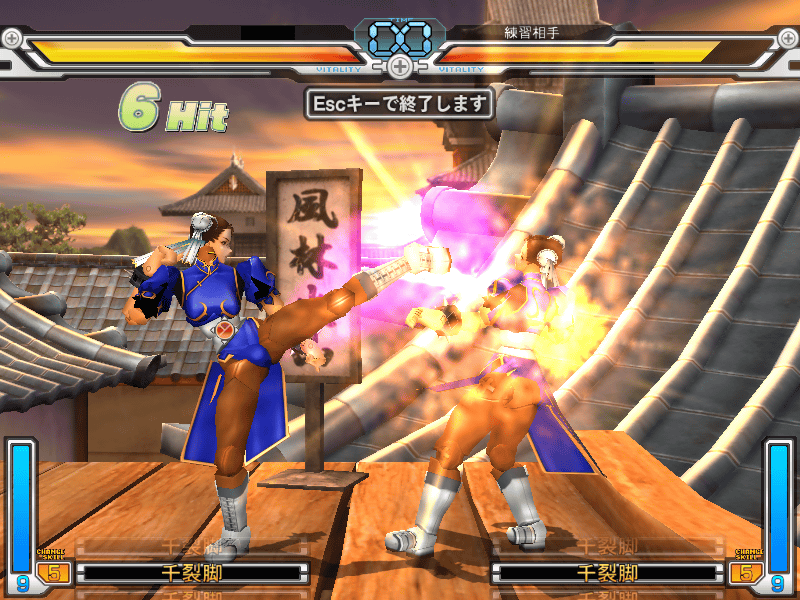
Street Fighter Online: Mouse Generation began official service in Japan on July 9, 2008. Daletto and Profire developed the online fighter under the Capcom license. The game dispensed with normal six-button arcade inputs and used a computer mouse to move and attack. Its figure-like characters had customizable body parts, with crossover characters added beyond the regular Street Fighter roster. The online service ended on August 31, 2009, making original documentation and video especially important to preserving it.
Street Fighter Online: Mouse Generation was a 2008 Japanese online fighting experiment that used mouse-driven controls and unusual customizable characters. It belonged to the PC online-gaming market rather than to the standard Street Fighter IV arcade-console line. Its original service ended in 2009, so screenshots and contemporary coverage are historical evidence rather than proof of current official matchmaking. The game’s presentation provides a distinctive example of how Capcom experimented with input devices and online business models. Its original Japanese promotional material must be differentiated from modern demonstrations or unrelated Street Fighter IV combat footage.
Gameplay footage
54. Street Fighter IV (2008)
Edition: Fourth numbered generation. Platforms: Arcade in 2008; PlayStation 3, Xbox 360 and PC in 2009; later mobile adaptations.
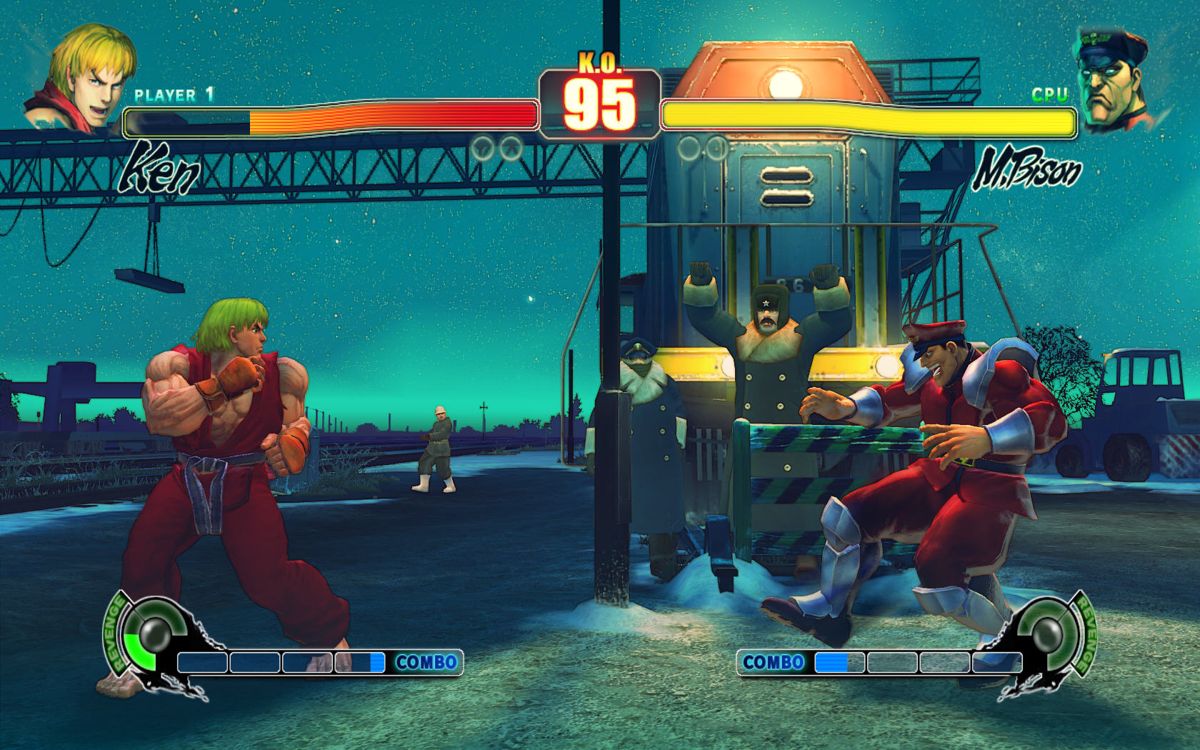
Street Fighter IV returned the franchise to a major new numbered generation when Capcom launched the game in Japanese arcades in 2008. Its three-dimensional character models moved along a traditional two-dimensional fighting plane, combining recognizable Street Fighter controls with a dramatically updated visual presentation. Focus Attacks, Ultra Combos and expressive animation gave players new strategic and cinematic tools. The important home releases arrived in 2009 for PlayStation 3, Xbox 360 and Windows PC, so the original arcade launch date should not be mistaken for the Western retail-console date. The Xbox 360 version was particularly important in the platform rivalry because the later Street Fighter V would not launch on Xbox. The 2010 iPhone release was a separate adapted touchscreen product and is documented independently in this catalog.
Street Fighter IV debuted on Taito Type X2-based Japanese arcade hardware in 2008 and returned the numbered series to a broad competitive audience. Its 3D-rendered fighters fought on a traditional side-on plane, combining modern character models with a familiar control philosophy. Focus Attacks and the Revenge-based Ultra Combo system were distinctive features of the original release. Home versions arrived later for PlayStation 3, Xbox 360 and Windows, carrying the franchise into mainstream online competition. The later Super, Arcade and Ultra revisions expanded the rules and roster and must be identified separately from this debut.
Gameplay footage
Original PS3 adaptation: Watch the original 2009 Street Fighter IV home-console recording. It is distinct from the 2008 arcade-era gameplay above.
55. Pinball FX: Super Street Fighter II Turbo HD Remix Table (2008)
Classification: Licensed Street Fighter-themed downloadable pinball table. Platform: Xbox 360 through Xbox Live Arcade (November 12, 2008). Related but distinct: ZEN Pinball Street Fighter II Tribute for PlayStation 3 (August 20, 2009). Sources: Capcom 2008 announcement and Sony/Zen Studios 2009 launch announcement.
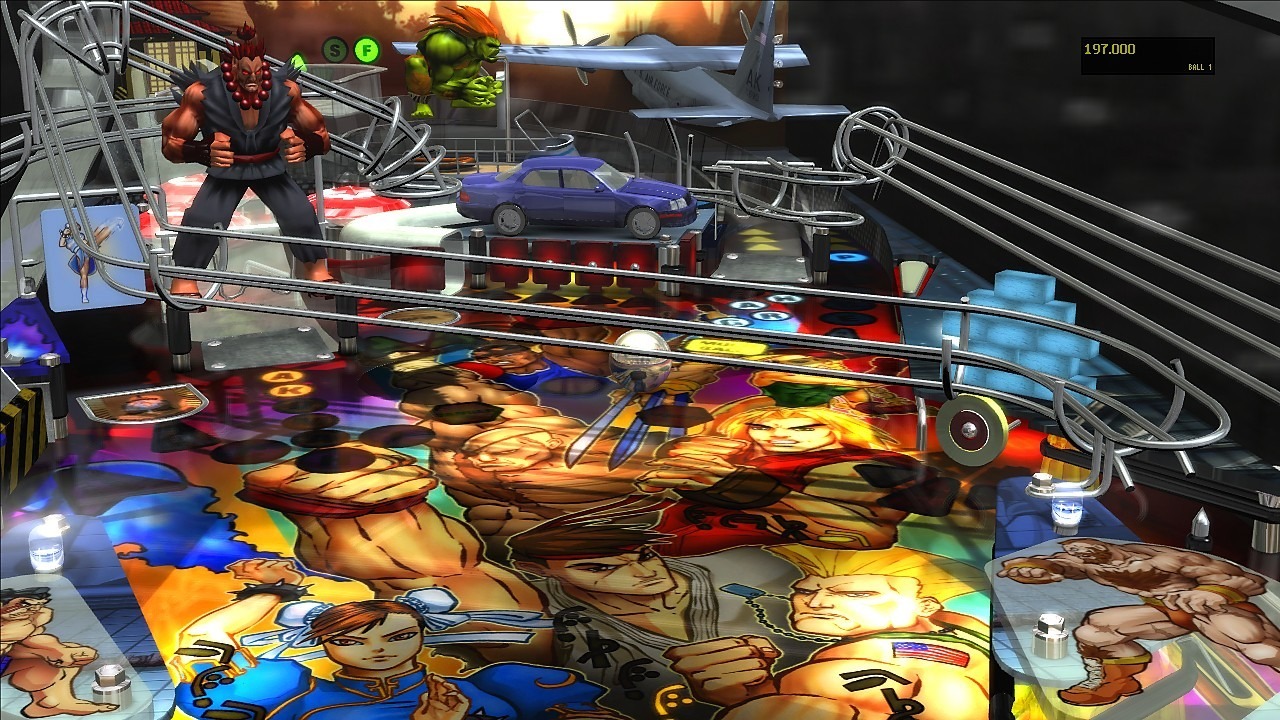
Zen Studios and Capcom announced a Super Street Fighter II Turbo HD Remix-themed add-on table for Pinball FX on Xbox 360 in November 2008. Capcom’s original announcement calls it the Pinball FX SSF2T HD Remix table, not Street Fighter II Tribute. Its Xbox Live Arcade downloadable release was set for November 12, ahead of the fighting-game update it promoted. The playfield drew on HD Remix character artwork, sounds and music, translating Street Fighter imagery into flipper-and-ball scoring rather than one-on-one combat. It was additional content for an existing Xbox 360 pinball game, not a standalone Street Fighter fighting-game cartridge. The distinction makes this a licensed crossover spin-off in the history timeline, not another edition of the 1994 fighting game.
The screenshot above shows the Xbox 360 table’s actual flippers, ramps, score display and Street Fighter artwork rather than footage from the conventional fighting game. Players could enjoy the licensed characters and presentation while using the scoring mechanics of digital pinball. A later, separately announced ZEN Pinball Street Fighter II Tribute table debuted on PlayStation 3 on August 20, 2009, so the 2008 Xbox and 2009 PlayStation products must not be described as one identical launch. The much earlier 1993 Gottlieb Street Fighter II machine was a physical coin-operated pinball cabinet and forms another distinct chapter. Capcom’s 2008 news story documents the partnership, but does not establish that an original television spot existed. The table’s moving ball, flippers and scoring mechanics make it a different experience from every Street Fighter fighting game discussed in the main chronology.
Gameplay footage
56. Street Fighter IV for iPhone and iPod touch (2010)
Classification: Dedicated iOS touchscreen adaptation. Platforms: iPhone, iPod touch (iOS; March 10, 2010). Historical release documentation.
Capcom launched Street Fighter IV for iPhone and iPod touch on March 10, 2010. It was specifically rebuilt for Apple’s touchscreen hardware instead of being the complete Xbox 360 game running unchanged. The initial roster offered eight selectable fighters and seven environments. The virtual Visual Pad could be repositioned to suit each player and included optional assisted special moves. Local head-to-head play used Bluetooth to bring two-player fighting to portable phones.
Capcom adapted Street Fighter IV for iPhone and iPod touch in 2010 with a special touchscreen control interface. Virtual on-screen buttons and a directional pad replaced the physical arcade panel, while simplified input options helped players perform special moves. The Dojo training mode was also an important part of the portable presentation. The mobile recording attached here illustrates the actual 2010 iPhone software rather than an Xbox 360 or PlayStation 3 match. This adaptation demonstrates how the franchise evolved from dedicated arcade hardware to multipurpose smartphones.
Gameplay footage
57. Super Street Fighter IV (2010)
Edition: Major SFIV expansion. Platforms: PlayStation 3, Xbox 360.
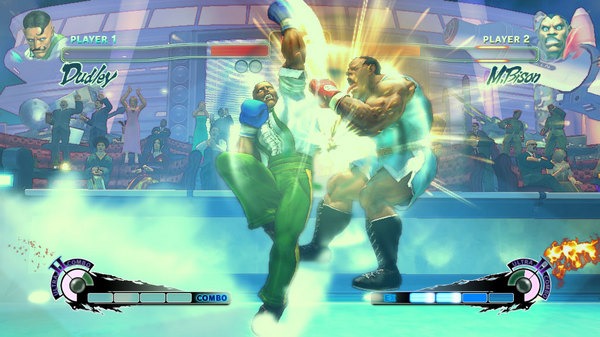
Capcom released Super Street Fighter IV for PlayStation 3 and Xbox 360 in April 2010, following the original Street Fighter IV. Rather than treating it as a fifth numbered game, Capcom expanded the SFIV fighting system with new and returning playable characters, revised combat balance and additional multiplayer features. Its expanded roster included Juri, Hakan, Dudley, Makoto and Ibuki, among other familiar fighters. Players could also choose between Ultra Combos, adding a new strategic decision before individual matches. On the seventh-generation PlayStation 3 and Xbox 360 hardware, Super became a substantial standalone console update, not a mere cosmetic reissue. Super Street Fighter IV: 3D Edition arrived separately for Nintendo 3DS in 2011 and must not be mistaken for a 2010 PS3/Xbox 360 release.
The screenshot above captures Dudley fighting M. Bison inside Super Street Fighter IV‘s original 2010 match interface. Its health bars, Ultra meters and character animations make it stronger historical evidence than a generic Street Fighter character illustration. Readers comparing editions should study this roster and ruleset before moving to 2011’s Arcade Edition, which introduced further fighters and competitive changes. The later Ultra Street Fighter IV belongs to the 2014 phase of this same game family, so Ultra screenshots should not be presented as images of the 2010 release. The promotional trailer shows how Capcom marketed the update, while the separate PlayStation 3 match demonstrates the 2010 gameplay and interface. For anyone tracking how console fighting games evolved, this version illustrates Capcom’s move from a fixed numbered release toward substantial intermediate editions.
Gameplay footage
58. Super Street Fighter IV: Arcade Edition (2011)
Edition: Arcade-related revision. Platforms: Arcade; PlayStation 3, Xbox 360 and PC.
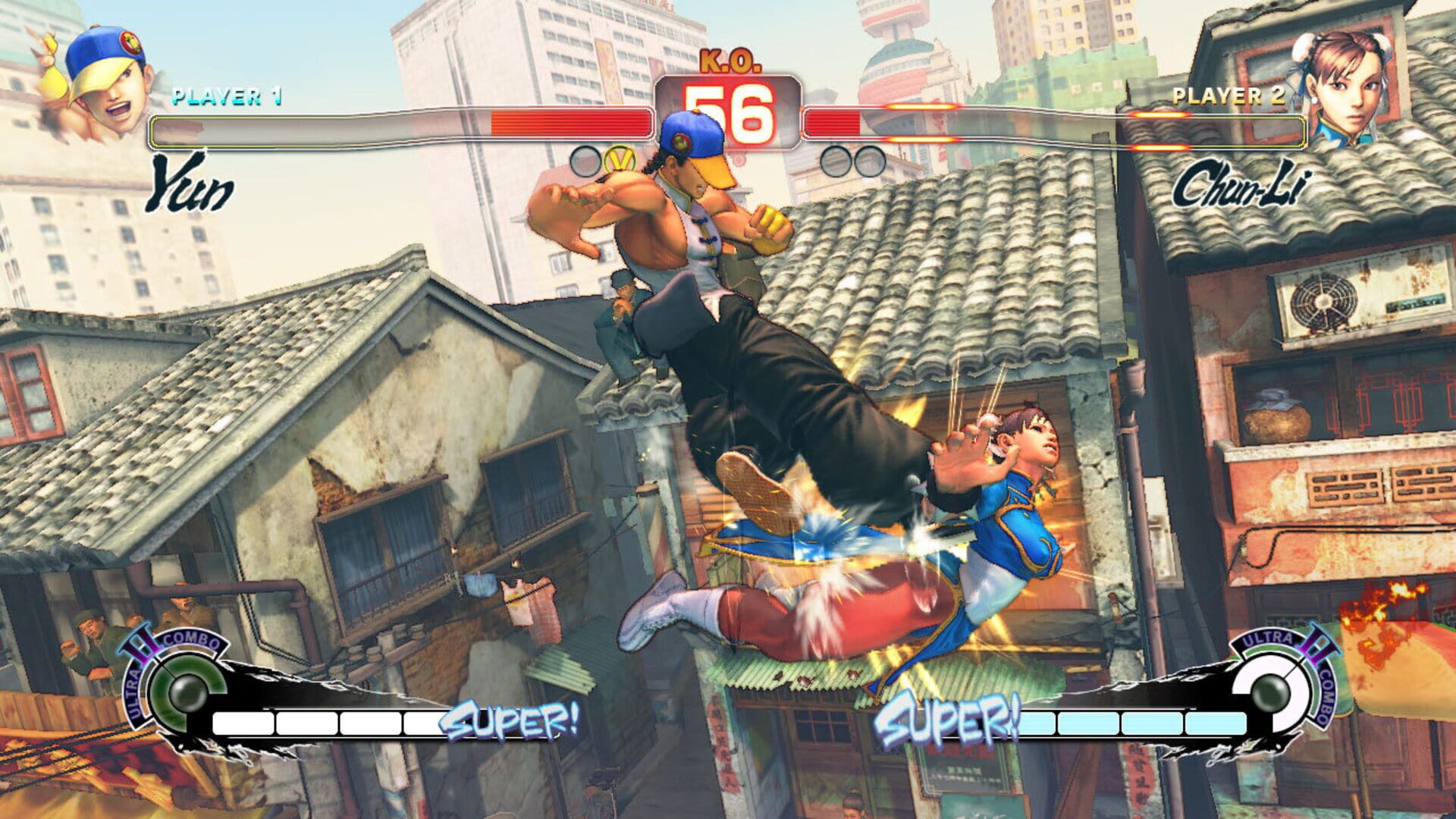
Super Street Fighter IV: Arcade Edition marked another major balance-and-roster update in 2011. Arcade Edition added competitive adjustments and fighters following the Super release. The home updates brought the evolving arcade roster to PS3, Xbox 360 and Windows players. Arcade Edition was available in arcades, followed by PlayStation 3, Xbox 360 and Windows versions. This edition is part of the SFIV expansion sequence rather than a separate fifth numbered installment.
Super Street Fighter IV: Arcade Edition expanded the 2010 Super lineup after a further arcade evolution. Yun, Yang, Oni and Evil Ryu were among the additions associated with the Arcade Edition phase. Those fighters and gameplay adjustments helped define its identity before the later Ultra Street Fighter IV revision. The console and Windows versions gave players access to an arcade-derived roster that had not existed in the initial 2008 release. Its place in the timeline demonstrates how major fighting-game updates became recognizable products with their own competitive communities.
Gameplay footage
59. Super Street Fighter IV: 3D Edition (2011)
Edition: Dedicated handheld conversion. Platforms: Nintendo 3DS.
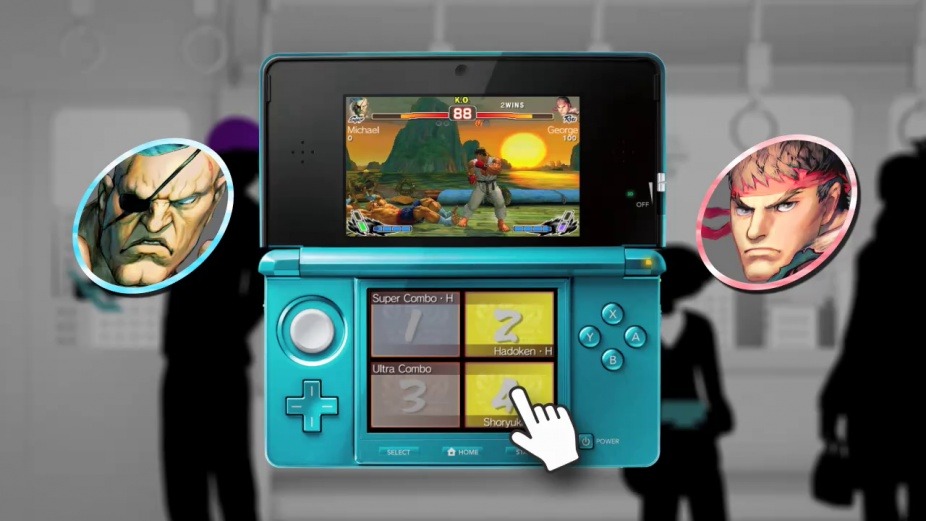
Super Street Fighter IV: 3D Edition gave Nintendo’s then-new handheld a full fighting-game showcase in 2011. 3D Edition brought the Super Street Fighter IV experience to the Nintendo 3DS. Its handheld presentation highlighted Nintendo’s 3D-screen hardware and portable controls. This was the Nintendo 3DS edition, not the later Arcade Edition for home consoles. The title is not the same product as Arcade Edition on PS3 and Xbox 360.
Super Street Fighter IV: 3D Edition translated the console game’s expanded cast to Nintendo’s then-new 3DS handheld. The upper stereoscopic screen and lower touchscreen created a visibly different interface from the PlayStation 3 and Xbox 360 versions. Touchscreen shortcut controls could support special attacks for players adapting to portable button layouts. Nintendo’s early 3DS lineup made the release an important showcase of fighting games on a dual-screen 3D device. Its hardware-specific design makes the 2011 portable edition more than a simple reduction in screen size.
Gameplay footage
60. Street Fighter III: 3rd Strike Online Edition (2011)
Classification: PS3 and Xbox 360 remaster of 3rd Strike. Platforms: PlayStation 3, Xbox 360. Research: Release/source reference.
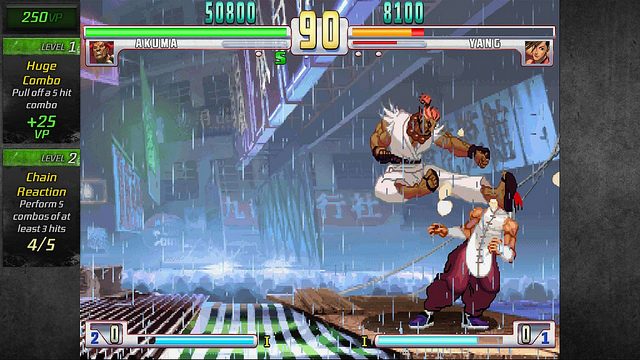
Capcom released 3rd Strike Online Edition for PlayStation Network and Xbox Live Arcade in August 2011. It retains the classic Street Fighter III combat foundation. The modern package added GGPO online play, training challenges and replay sharing. Its display options can mimic a CRT or apply different visual filters. It is a distinct digital release of the 1999 game rather than an entirely new numbered successor.
Street Fighter III: 3rd Strike Online Edition brought the classic fighter to PlayStation 3 and Xbox 360 digital storefronts in 2011. Iron Galaxy added online capabilities and features supporting modern play around the original Street Fighter III combat system. This version’s menus, network options and display choices distinguish it from a 1999 CPS-3 cabinet. A direct PS3 gameplay capture now illustrates the remaster separately from the original arcade entry earlier in the timeline. Its role in preserving the competitive game through internet-enabled consoles is historically important even as online-service features may change over time.
Gameplay footage
61. Street Fighter IV: Volt (2011)
Classification: Standalone expanded mobile fighting edition. Platforms: iPhone and iPod touch (iOS; June 30, 2011). Historical release documentation.
Capcom released Street Fighter IV: Volt for iPhone and iPod touch on June 30, 2011. The update introduced internet-enabled online fighting to the series’ iOS adaptation. It brought more characters and unlockables than the previous iPhone Street Fighter IV release. Reworked touch controls continued using the four-button Visual Pad instead of six physical arcade buttons. Capcom published postlaunch roster updates, including playable Yun and Fei Long in September 2011.
Street Fighter IV: Volt was a distinct 2011 mobile follow-up to Capcom’s first iPhone Street Fighter IV adaptation. It retained touchscreen controls while expanding the phone-based fighting experience with additional competitive options. The small-screen user interface, mobile network environment and application-specific modes define its identity. It must therefore be distinguished from both the 2010 iPhone release and the 2017 Champion Edition mobile product. Volt helps document how Capcom continued adapting its fighting games to rapidly changing smartphone technology.
Gameplay footage
62. Street Fighter X Tekken (2012)
Edition: Street Fighter/Tekken crossover. Platforms: PlayStation 3, Xbox 360, Windows and PS Vita; an iOS adaptation.
Capcom brought Street Fighter X Tekken to a new generation of tag-fighting crossover fans in 2012. Street Fighter X Tekken combined Capcom and Namco fighting characters in a tag-based crossover. Its combat and visual language leaned toward Capcom’s Street Fighter style. PS3, Xbox 360, Windows and PS Vita versions appeared alongside a separate iOS adaptation. The console, PC and Vita editions demonstrate how broadly the PS3/Xbox 360 generation extended.
Street Fighter X Tekken brought characters from two competing fighting-game traditions into one Capcom-developed crossover in 2012. Battles used team-based switching, combining Street Fighter movement and special attacks with recognizable Tekken fighters. The result was not a canonical numbered Street Fighter sequel, nor was it the unreleased reverse-direction Tekken X Street Fighter project. Gem-related customization and character pairings distinguished the crossover from both Street Fighter IV and standard Tekken releases. Its identity belongs in the wider Capcom versus tradition while remaining a separate game family in the 2012 console era.
Gameplay footage
63. Street Fighter X Tekken Mobile (2012)
Classification: Distinct touch-controlled mobile crossover adaptation. Platforms: iPhone, iPod touch and iPad running iOS 5 or later (September 19, 2012). Verified historical release source.
Capcom released Street Fighter X Tekken Mobile for iOS on September 19, 2012, months after the console fighting game. This was not simply the console game running with a small screen and virtual joystick because Capcom redesigned its controls and tag-team mechanics for the mobile format. A single punch button, kick button, special move button and tag button replaced the console game’s more complex six-button input language. Its initial ten-character lineup included Ryu, Chun-Li, Kazuya and Nina, and matches could use Wi-Fi or Bluetooth for competition. Compatible hardware included the iPhone 4/4S, fourth-generation iPod touch and later supported iPads, making this a true early-2010s phone-and-tablet release. Capcom’s September launch announcement is primary evidence that the distinct product was commercially available, not merely shown as a proposed E3 prototype.
Street Fighter X Tekken Mobile was a separate 2012 adaptation of Capcom’s crossover for touchscreen Apple devices. Its on-screen directional pad and special-action controls differed from the traditional console controller interface. The mobile roster and modes also reflected hardware and product-design constraints that did not apply to the PlayStation 3 and Xbox 360 game. Capcom’s official September 2012 launch trailer in this section introduces the adaptation rather than the original home-console edition. This release illustrates how even a single crossover title could generate distinct software products for multiple hardware generations.
Gameplay footage
64. Street Fighter X Tekken Gauntlet (2012)
Classification: Separate free iOS timed-survival promotional game. Platforms: iPhone and iPad on iOS (November 28, 2012). Verified historical release source.
Capcom introduced Street Fighter X Tekken Gauntlet as a separate free-to-download mobile app on November 28, 2012. Its purpose was fast survival competition built around Ryu and Kazuya rather than the main mobile release’s fuller roster. Players fought a chain of opponents under a decreasing timer instead of following a conventional set of arcade tournament stages. Completing in-match objectives extended the available time, which made it play differently from the 2012 premium iOS crossover. The launch coverage described the product as completely free without in-app purchases, rather than downloadable character content for the original console game. A historical guide should therefore recognize Gauntlet as a distinct marketed mobile application, not a renaming of the main Street Fighter X Tekken Mobile app.
The image above comes from contemporary launch-day coverage of the free Street Fighter X Tekken Gauntlet application, rather than the full-price console game. This version revolved around surviving repeated one-on-one fights while a countdown timer threatened to end the run. Playing as Ryu or Kazuya and completing specific in-fight objectives could extend a run, an unusual structure compared with a normal arcade-ladder mode. The separate period gameplay embed below is identified as an original iPhone/iPad capture recorded one day after the 2012 release, not footage from the premium mobile crossover. A publisher-authenticated promotional video remains outstanding and should not be fabricated by repurposing an unrelated Street Fighter X Tekken cinematic trailer. This limited, free mobile experiment belongs in the chronology as its own app while remaining historically connected to the paid iOS title.
Gameplay footage
65. Street Fighter X Mega Man (2012)
Classification: Officially supported free crossover action-platform game. Platforms: Windows PC. Research: Release/source reference.
Street Fighter X Mega Man was released for Windows in December 2012. The project began as a fan-developed crossover and received Capcom’s official support. Mega Man faces Street Fighter-inspired opponents and abilities in an 8-bit-style action game. It was associated with anniversary celebrations for both franchises. The game is not the same title or genre as the tag-based Street Fighter X Tekken.
Street Fighter X Mega Man arrived in 2012 as a free Capcom-supported Windows action-platform game. Its eight-bit-inspired visual style brought Mega Man into stages themed around Street Fighter characters and special attacks. The actual gameplay combines side-scrolling platforming with bosses based on Capcom’s fighting-game cast. Capcom USA’s original promotional feature and separate gameplay recording now document this exact crossover rather than an ordinary Street Fighter fighting match. The Windows-only distribution and fan-project origin make the title a distinctive milestone in Capcom’s wider anniversary history.
Gameplay footage
66. Ultra Street Fighter IV (2014)
Edition: Definitive expanded SFIV edition. Platforms: Arcade, PlayStation 3, Xbox 360, Windows; PlayStation 4 in 2015.
Ultra Street Fighter IV expanded the fourth numbered fighting generation in 2014. Ultra expanded the roster and refined the established Street Fighter IV system. Multiple competitive tools and balance changes distinguished it from Super and Arcade Edition. Its arcade, PS3, Xbox 360 and Windows versions were followed by a PS4 conversion in 2015. Its later PS4 port bridges two Sony generations without making it a new numbered game.
Ultra Street Fighter IV marked a major 2014 update to the Street Fighter IV family rather than the debut of a fifth numbered game. The expanded cast included new characters and veterans returning from other installments. Added battle mechanics and revised balance increased the number of competitive choices available to players. Later availability on PlayStation 4 extended the game’s life into another console generation beyond its earlier PS3 and Xbox 360 roots. Tracking Ultra separately prevents readers from confusing its content with the smaller 2008 original or the intermediate Super and Arcade editions.
Gameplay footage
67. Street Fighter: Puzzle Spirits (2014)
Classification: Capcom mobile tile-matching puzzle and fighting RPG. Hardware: Android Japan (December 9, 2014); later iOS in Japan and iOS in the United States (2016). Release verification.
Capcom launched Street Fighter: Puzzle Spirits for Android in Japan on December 9, 2014. The smartphone game combines matching puzzle tiles with Street Fighter characters and collectible skill-card attacks. Its first major release was not for Xbox, PlayStation or arcade boards. The game later came to iOS, including a 2016 North American release. Capcom ended the live service on March 30, 2017, so original distribution availability should not be confused with current downloads.
Street Fighter: Puzzle Spirits expanded Capcom’s smartphone catalog in 2014 through a mobile puzzle and character-collection experience. The presentation mixed familiar Street Fighter branding with gem-based mechanics and collectible fighter abilities. Its separate Japanese mobile-release context distinguishes it from the 1996 Super Puzzle Fighter II Turbo and its 2007 HD Remix. The small-screen interface matters because much of the play occurred through mobile menus and special-action effects rather than traditional arcade combat. This title forms part of the franchise’s experimentation with casual games and ongoing mobile-service models.
Gameplay footage
68. Street Fighter IV Arena (2014)
Classification: South Korea-first Capcom/Nexon mobile fighting and character-progression spin-off. Platforms: South Korean Android/iOS mobile distribution (July 2014 launch). Verified historical release source.
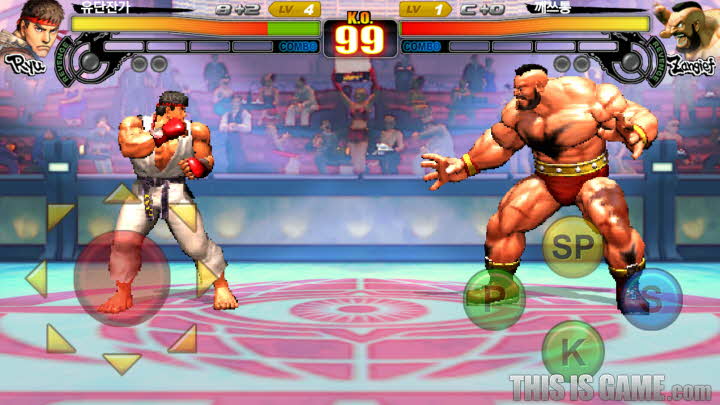
Street Fighter IV Arena entered commercial service in South Korea in July 2014 according to Capcom’s contemporaneous financial presentation. Capcom and Nexon collaborated on the mobile project after a Korean beta test took place earlier that year. The software draws on the Street Fighter IV visual family but introduced character-growth and mobile social systems instead of simply reproducing the console roster. Players could obtain and strengthen variants of characters through in-game currencies and other progress mechanics. The Korean-market launch distinguishes it from the already-released Street Fighter IV and Volt games on iPhone. Capcom’s financial release explicitly names the July launch, so this is more than an unconfirmed product announcement or prototype.
Street Fighter IV Arena was developed in collaboration with Nexon as a Korean-market smartphone fighter in 2014. Its systems combined one-on-one fighting with character collection and upgrades that influenced team strength. The closed-beta footage documented by contemporary Japanese and English-language games media showed actual fights, special moves and interface features unlike the ordinary console Street Fighter IV. Some versions used support characters to affect health or performance, reflecting the mobile business model. The Korea-specific product belongs in the timeline as a separate experiment rather than a standard international arcade or console release.
Gameplay footage
69. Street Fighter Battle Combination (2015)
Classification: Capcom mobile free-to-play team-fighting and character-card game. Platforms: Android in Japan (March 30, 2015); iOS in Japan (June 25, 2015). Verified historical release source.
Capcom launched Street Fighter Battle Combination on Android in Japan on March 30, 2015, with the iOS version following on June 25, 2015. The free-to-play mobile game uses teams of three Street Fighter characters rather than one fighter and six traditional arcade attack buttons. Players tap to perform attacks and special moves, changing which party member is active during a fight. Its collectible character art and progression systems connect familiar world warriors with mobile role-playing mechanics. The iOS launch added automatic battle options, including Auto and Turbo modes, widening its audience beyond expert fighting-game players. Contemporary Japanese release coverage identifies both platform launch dates, so those dates should not be collapsed into the original 2014 planning announcements.
Street Fighter Battle Combination appeared in Japan in 2015 as a mobile fighter that blended touch input with three-member team selection. The combat and card-style support elements differed substantially from a traditional six-button Street Fighter IV match. The Japanese market context and short-lived service history make surviving gameplay especially valuable to collectors. The actual Android gameplay already attached to this section illustrates the team-based interface instead of substituting footage from Street Fighter: Duel. Capcom’s wider mobile experiments during this period laid groundwork for later roster-collection and character-based service games.
Original 2015 promotional films: Capcom issued two release-era promotional videos, reported in March 10 and March 27 coverage. Those original YouTube files were unavailable in the reviewed archive, so they are not replaced with an unrelated advertising clip. The short video below is actual Android gameplay, not a historical TV commercial.
Gameplay footage
2016–2026: Street Fighter V, Nintendo Switch and Street Fighter 6
70. Street Fighter V (2016)
Edition: Fifth numbered generation. Platforms: PlayStation 4, Windows PC; later Japanese arcade version.
Street Fighter V launched the fifth numbered generation on PlayStation and PC in 2016. Street Fighter V launched for PlayStation 4 and PC, not Xbox consoles. Cross-platform play and a service-style update model defined its longer life. The original retail platforms were PlayStation 4 and Windows PC, with later Japanese arcade availability. Arcade Edition and Champion Edition later packaged material differently without changing the base numbered game.
Street Fighter V launched on PlayStation 4 and Windows PC in 2016, emphasizing online competition and its V-System mechanics. V-Trigger and V-Skill gave fighters another strategic layer alongside familiar special moves and critical arts. Unlike Street Fighter IV before it and Street Fighter 6 after it, the fifth numbered generation did not receive a conventional Xbox home release. Capcom subsequently expanded the game through Arcade Edition and Champion Edition packages, changing the selectable roster and available modes. The original launch therefore stands as the beginning of an evolving platform-specific product rather than the complete content set later associated with Street Fighter V.
Gameplay footage
71. Ultra Street Fighter II: The Final Challengers (2017)
Edition: Switch-era reinterpretation. Platforms: Nintendo Switch.
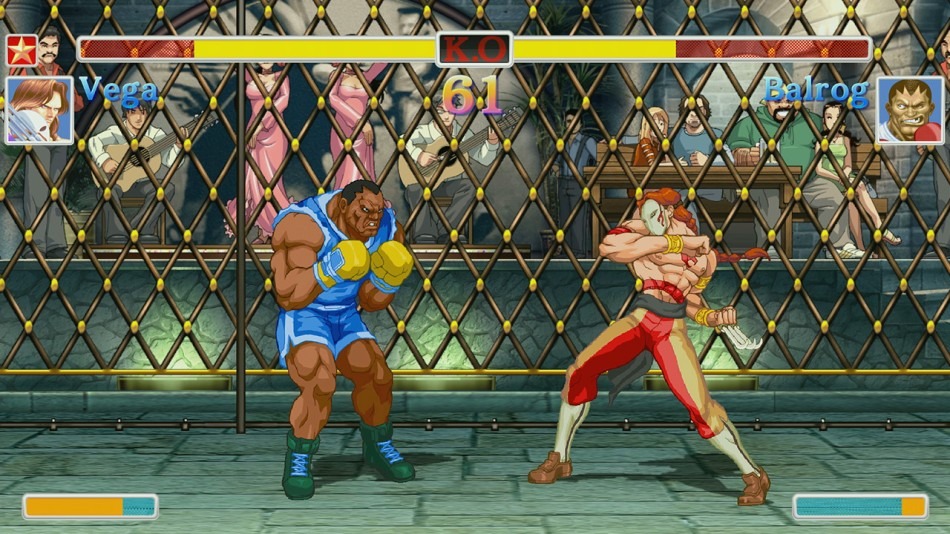
Ultra Street Fighter II: The Final Challengers returned to Nintendo hardware in 2017. Ultra Street Fighter II returned the classic cast to Nintendo hardware with modern presentation options. Evil Ryu, Violent Ken, cooperative modes and classic-versus-modern art options give it a separate identity. Nintendo Switch was the original platform for this new edition. It is a Switch release and should not be confused with Ultra Street Fighter IV.
Ultra Street Fighter II: The Final Challengers appeared on Nintendo Switch in 2017, decades after the original Street Fighter II arcade debut. Players could select classic pixel art or updated high-definition visuals, making a direct comparison part of the product itself. Nintendo’s Joy-Con controllers offered another way to play the famous six-button fighting system on hybrid hardware. Additional content and presentation choices distinguished the release from a straight reissue of the old arcade code. It also preceded the 2018 30th Anniversary Collection, which instead focused on preserving original arcade editions.
Gameplay footage
72. Street Fighter IV: Champion Edition (Mobile) (2017)
Classification: iOS mobile expansion. Platforms: iPhone and iPad (iOS; July 2017; subsequent updates). Historical release documentation.
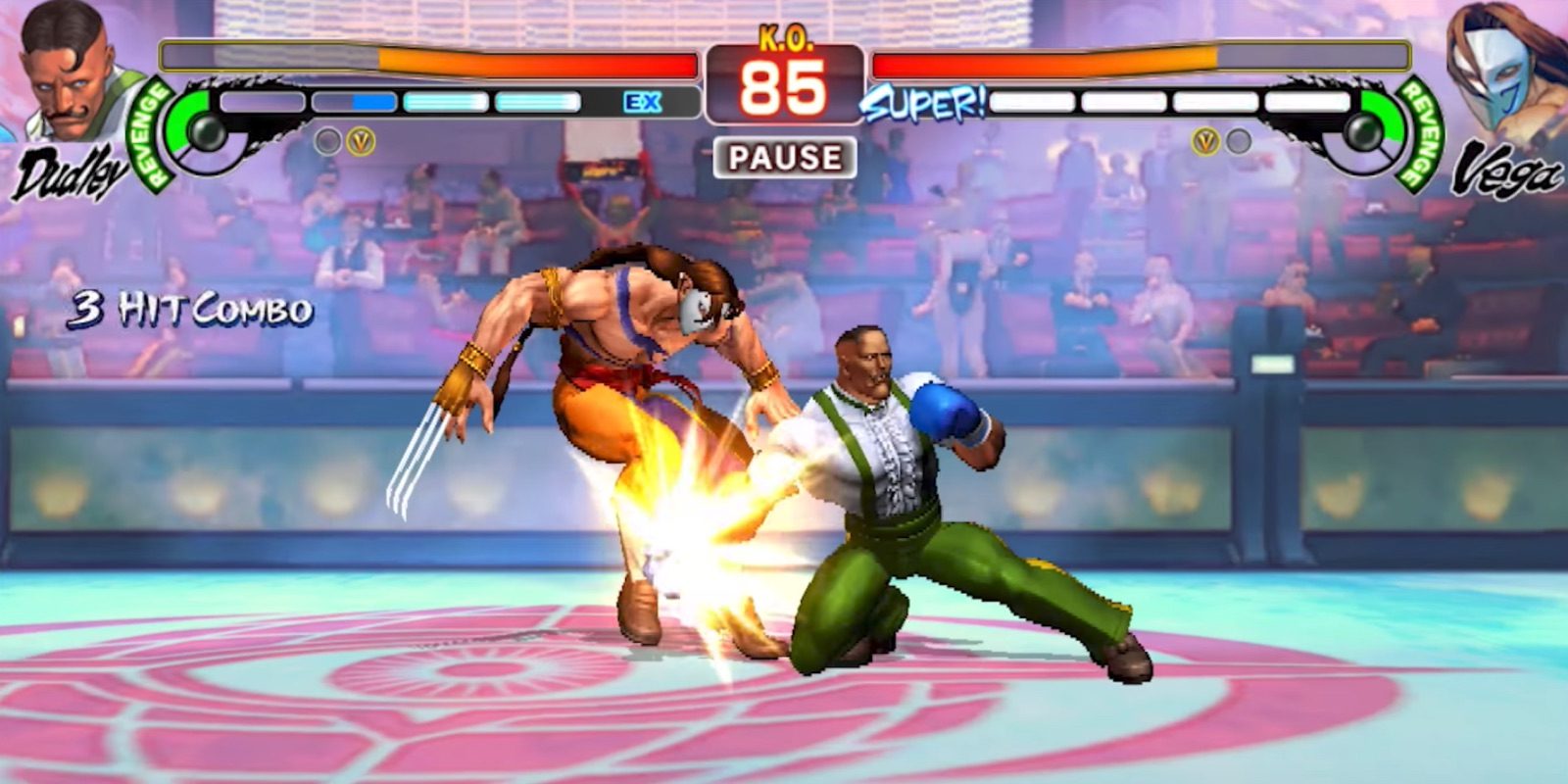
Street Fighter IV: Champion Edition arrived on iOS in July 2017 as an updated mobile version of the fourth-generation fighter. Its interface adapts the familiar fighting mechanics to touch and optional supported controllers. Capcom’s product description advertises a roster of thirty-two world warriors after expanded content updates. Higher-resolution presentation and widescreen support suit more modern Apple devices. The title should not be confused with Street Fighter V: Champion Edition, a completely different game and platform generation.
Street Fighter IV: Champion Edition launched for iOS in 2017 as a significantly refreshed smartphone fighter. Its wider display, revised roster and touch-oriented virtual controls distinguish it from the original 2010 iPhone release and the later Volt edition. Additional smartphone compatibility and optional external-controller support broadened the ways players could participate. The launch-era iOS gameplay now embedded here demonstrates this exact Champion Edition software rather than the PlayStation 3 game. This version deserves a separate place in the chronology because the mobile input and product design continued evolving independently of console revisions.
Gameplay footage
73. Street Fighter V: Arcade Edition (2018)
Edition: SFV content edition. Platforms: PlayStation 4, Windows PC.
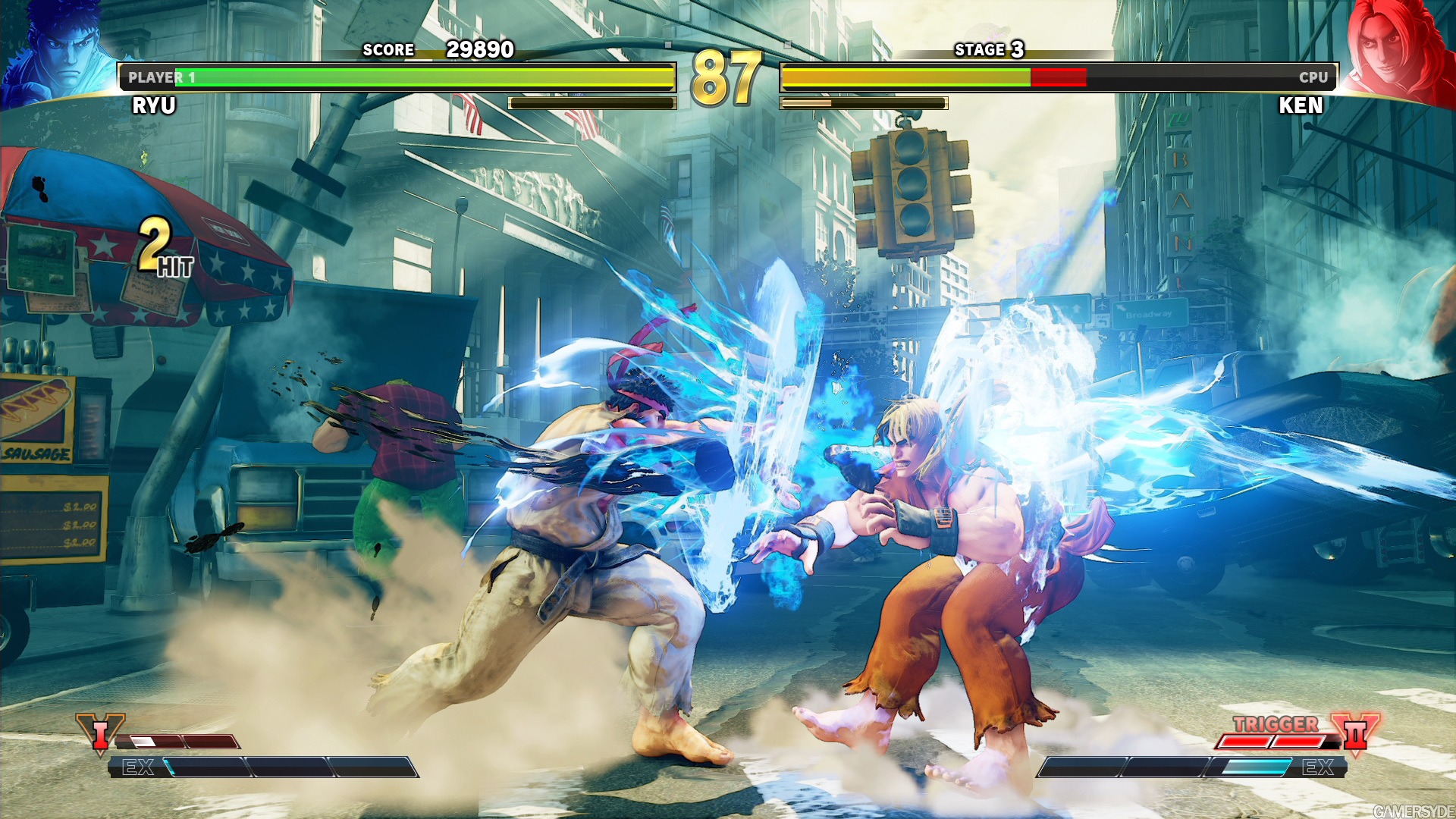
Street Fighter V: Arcade Edition released in January 2018 as a major new stage in Capcom’s fifth numbered fighting game. It added an arcade-style progression mode and provided a second V-Trigger option for every character, expanding tactical choices during matches. Capcom’s launch covered PlayStation 4 and Windows PC rather than Xbox consoles. The title was an update and new package for Street Fighter V, which originally launched in 2016, not a separate Street Fighter VI game. The arrival of Arcade Edition illustrates Capcom’s evolving approach to seasons, additional characters and revisions in a digital-update environment. Its game identity can be verified using the original menu, the new V-Trigger II options and Capcom’s contemporary 2018 announcement footage.
Street Fighter V: Arcade Edition was a substantial 2018 expansion of the original 2016 PlayStation 4 and Windows fighter. Its revised V-Trigger options, additional content and arcade-style modes changed the product available to players. Capcom’s original Arcade Edition trailer documents how that update was promoted. The separate release-period PS4 gameplay excerpt shows the fighting system with the edition-specific interface. Although these versions share characters and underlying technology, they represent different stages in the game’s service-era development.
Gameplay footage
74. Street Fighter 30th Anniversary Collection (2018)
Edition: Historical compilation. Platforms: Nintendo Switch, PlayStation 4, Xbox One, Windows PC.

Capcom assembled twelve foundational titles in Street Fighter 30th Anniversary Collection in 2018. Capcom assembled twelve original arcade titles spanning 1987 to Street Fighter III: 3rd Strike. Its playable archive is especially useful for contrasting the II, Alpha and III families. The compilation reached PlayStation 4, Xbox One, Nintendo Switch and Windows PC. The collection does not contain every EX, movie or crossover title.
Street Fighter 30th Anniversary Collection brought twelve core arcade games together on modern consoles and PC in 2018. Its roster of software spans the 1987 original, the Street Fighter II revisions, the Alpha trilogy and the three Street Fighter III arcade editions. The museum materials and collection interface give players a structured way to compare how the franchise changed over thirty years. It deliberately does not include every crossover, EX game, movie adaptation or later mainline installment. The release is therefore an excellent archival gateway but not a substitute for the more comprehensive platform-by-platform history.
Gameplay footage
75. Street Fighter V: Champion Edition (2020)
Edition: Expanded SFV content edition. Platforms: PlayStation 4, Windows PC.
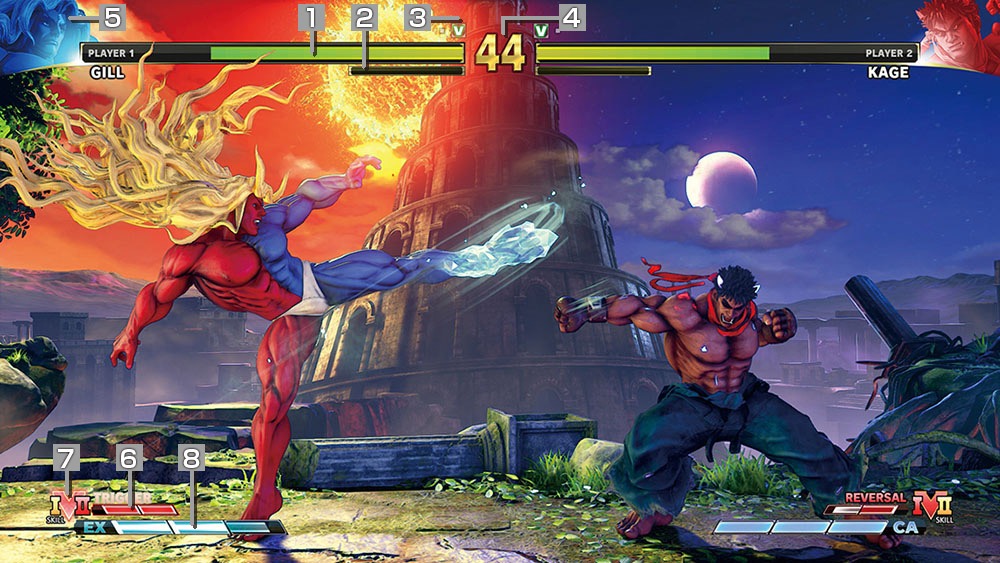
Street Fighter V: Champion Edition reached PlayStation 4 and Windows PC in February 2020 as a particularly comprehensive package of the Street Fighter V generation. Capcom advertised forty fighters, thirty-four stages and more than two hundred costumes at launch, with selected licensed and promotional items excluded. New V-Skill II options also expanded each fighter’s tactical choices beyond the earlier Arcade Edition release. The software was offered both as a complete game and through an upgrade pathway for existing Street Fighter V owners. Its 2020 release did not add Xbox support or convert the game into the sixth numbered installment. Later seasonal character updates changed the wider SFV roster again, so launch-package totals should always be associated with their original 2020 date.
Street Fighter V: Champion Edition packaged a broader range of characters, costumes and modes in 2020. The game remained part of the Street Fighter V generation while consolidating much of its prior downloadable content. The updated title screen and combat interface help identify Champion Edition footage rather than the original 2016 release. The archived Capcom promotion and the separate PlayStation 4 gameplay clip document the edition’s marketing and actual mechanics. Subsequent character additions should be understood as further support for Street Fighter V, not content necessarily present in every initial Champion Edition package.
Gameplay footage
76. Capcom Fighting Collection (2022)
Classification: Ten-game Capcom arcade compilation featuring Street Fighter spin-offs. Platforms: PlayStation 4, Xbox One, Nintendo Switch, Windows PC. Research: Release/source reference.
Capcom Fighting Collection launched in June 2022. It contains ten classic games from several Capcom franchises. Street Fighter-related offerings include Hyper Street Fighter II, Super Gem Fighter Mini Mix and Super Puzzle Fighter II Turbo. The package adds contemporary online functionality and a gallery of official art. It is a Capcom-wide compilation rather than an additional numbered Street Fighter game.
Capcom Fighting Collection assembled a selection of older fighting games under a new 2022 compilation interface. Hyper Street Fighter II and other Capcom arcade works appeared alongside several series from outside the numbered Street Fighter lineage. Its modern menu, online features and platform availability distinguish the collection from any one included arcade game. The publisher’s own launch trailer establishes the 2022 product identity, while the separate gameplay excerpt demonstrates software running within the collection. It reached major PlayStation, Xbox and Nintendo platforms as well as Windows PC, improving access to historic fighting titles.
Gameplay footage
77. Street Fighter 6 (2023)
Edition: Sixth numbered generation. Platforms: PlayStation 4, PlayStation 5, Xbox Series X|S and Windows PC; Nintendo Switch 2 later.
Street Fighter 6 launched in June 2023 across PlayStation 4, PlayStation 5, Xbox Series X|S and Windows PC, giving Capcom’s sixth numbered generation broad console reach. The game introduced the Drive system, which players use for both aggressive techniques and defensive resource management. Fighting Ground preserves competitive matches, World Tour offers a player-driven exploration mode, and Battle Hub creates a social arcade-style environment. Modern controls provide a more approachable option for newcomers without eliminating the classic input format. A Nintendo Switch 2 release followed in June 2025 as a different platform edition, with a specific Years 1–2 Fighters bundle. Capcom continued releasing additional characters into 2026, but those passes are downloadable content for Street Fighter 6 rather than a separate Street Fighter 7.
Street Fighter 6 introduced a modern combat presentation built around a Drive gauge and visually distinctive Drive-system attacks. Players can spend this resource on offensive, defensive and movement options, adding another tactical layer to familiar special moves. The game returned the numbered franchise to Xbox Series consoles alongside PlayStation and Windows in 2023. Its launch trailer demonstrates the overall visual direction, while the short gameplay excerpt highlights the actual pace of a match. Later character updates and the Nintendo Switch 2 edition represent subsequent phases rather than features necessarily present in every original 2023 purchase.
Gameplay footage
Explore World Tour: Watch the longer launch-era Street Fighter 6 World Tour recording by Arekkz Gaming. This optional walkthrough complements the shorter versus-mode video.
78. Street Fighter: Duel (2023)
Classification: Licensed mobile role-playing game. Platforms: Android and iOS. Research: Release/source reference.
Street Fighter: Duel launched internationally in February 2023. Crunchyroll Games announced the mobile release in partnership with Capcom. The gameplay combines collectible characters and role-playing progression rather than traditional six-button arcade rounds. The initial release covered North America and selected other territories. It should not be confused with Street Fighter 6, which debuted on PC and consoles later in 2023.
Street Fighter: Duel launched internationally in 2023 as a character-collection mobile role-playing game. Its fighting parties, progression systems and automated or real-time battles differed from conventional one-on-one Street Fighter gameplay. The original Crunchyroll launch trailer in this section captures the product’s official marketing at release. The separate iOS gameplay recording shows how players recruited characters and participated in battles through the smartphone interface. The regional rollout and online-service model make this title a distinct mobile branch rather than an extension of Street Fighter 6’s numbered fighting system.
Gameplay footage
79. Street Fighter VR: Shadaloo Enhancement Plan (2023)
Classification: Location-based virtual-reality arcade attraction. Platforms: Capcom VR-X location-based VR venues in Japan. Research: Release/source reference.
Street Fighter VR: Shadaloo Enhancement Plan entered a public location test at Plaza Capcom Hiroshima in Japan on February 17, 2023. Rather than shipping as a PlayStation VR, Meta Quest or ordinary PC title, it was designed for Capcom’s location-based VR-X entertainment venues. Players enter a Shadaloo training simulation and encounter Street Fighter characters from an immersive first-person perspective. The attraction uses physical VR controls and body movement instead of the standard six-button arcade layout familiar to longtime fans. Capcom also identified MIRAINO in Toyokawa as another planned 2023 location, placing this entry in Japan’s amusement-arcade ecosystem. Its existence illustrates a different kind of Street Fighter hardware experiment from the home-console releases documented elsewhere in this timeline.
The screenshot above reveals the actual VR attraction’s health display, timer and on-screen confrontation with M. Bison, providing evidence of the version shown at the 2023 location test. This matters because ordinary Street Fighter V screenshots may share some character assets while failing to show how the VR combat interface worked. Capcom’s release announcement also described a promotional video, and the period video below is labeled as marketing footage rather than a verified hands-on playthrough. A distinct short gameplay recording is still needed before this entry satisfies the article’s two-video standard. Unlike a conventional home-console title, the attraction involved venue-specific hardware and an approximately 25-minute on-site experience. Its historical value lies in documenting a Street Fighter installation that many international console players could not simply buy for home play.
80. Marvel vs. Capcom Fighting Collection: Arcade Classics (2024)
Classification: Seven-title crossover compilation featuring Street Fighter-related games. Platforms: PlayStation 4, Nintendo Switch, Windows PC; Xbox One from 2025. Research: Release/source reference.
Marvel vs. Capcom Fighting Collection: Arcade Classics debuted in September 2024 on its first platforms. Its included games span the older Marvel and Capcom crossover arcade series. X-Men vs. Street Fighter and Marvel Super Heroes vs. Street Fighter are especially relevant to this history. The collection supplies modern network play and a route back to games once spread across arcade and 32-bit consoles. It is not a new Street Fighter-only sequel and belongs in the crossover preservation category.
Marvel vs. Capcom Fighting Collection: Arcade Classics arrived in 2024 as a modern anthology of classic Capcom crossover titles. The software included several Street Fighter-related versus games alongside other Marvel and Capcom arcade releases. Its original collection menu, platform options and presentation distinguish it from a standalone 1996 or 1997 CPS-2 arcade board. The Nintendo Switch capture embedded here demonstrates X-Men vs. Street Fighter running within the 2024 collection interface. The compilation belongs in the chronology as a preservation product rather than as a new mainline Street Fighter sequel.
Gameplay footage
81. Capcom Fighting Collection 2 (2025)
Classification: Eight-game compilation with Alpha 3 Upper and Capcom-versus-SNK titles. Platforms: Nintendo Switch, PlayStation 4, Xbox One, Windows PC. Research: Release/source reference.
Capcom Fighting Collection 2 became available in May 2025. Its eight-game lineup includes Street Fighter Alpha 3 Upper and Capcom Fighting Evolution. It also includes Capcom vs. SNK: Millennium Fight 2000 Pro and Capcom vs. SNK 2. The collection features rollback online play and a museum of illustrations and development materials. It is an important modern preservation release, not Street Fighter 7.
Capcom Fighting Collection 2 followed the 2022 original with another selection of arcade fighting games in 2025. The anthology included notable Capcom crossover titles and Street Fighter Alpha 3 Upper, extending access to older editions through modern hardware. Its collection menu, platform-specific features and original promotional trailer distinguish it from the earlier anthology. The separate Nintendo Switch gameplay clip in this section shows the actual 2025 collection and one included fighting game. This release demonstrates why preserving version names and anthology identities is essential to an accurate franchise history.
Gameplay footage
82. Street Fighter 6: Years 1–2 Fighters Edition (2025)
Edition: Nintendo Switch 2 content edition. Platforms: Nintendo Switch 2.
Street Fighter 6: Years 1–2 Fighters Edition brought bundled additional fighters to new Nintendo hardware in 2025. The Switch 2 version arrived alongside Nintendo’s next-generation hardware on June 5, 2025. Its named bundle groups the earlier years of additional fighter content with the base game. This edition belongs specifically to Nintendo Switch 2. Capcom also promoted Switch 2-specific ways to play, including Joy-Con gyro features.
Street Fighter 6: Years 1–2 Fighters Edition reached Nintendo Switch 2 in 2025 as a bundled version of the existing sixth numbered game. The package provided the base experience alongside additional fighters from its first two years. Its motion-related Gyro Battle options and Switch 2-specific presentation make it distinct from simply playing the 2023 PlayStation version. Buyers should distinguish the bundled package from the separate base release and later character passes. This 2025 entry is principally a hardware and product-edition milestone, not the launch of another numbered Street Fighter generation.
Gameplay footage
83. Street Fighter: Combo Challenge — YouTube Playable (2026)
Classification: Interactive promotional browser game/advergame tied to the 2026 live-action film, not a traditional numbered fighter. Platform: YouTube Playables in supported web browsers and YouTube mobile apps (September 1, 2026). Play location: Open the original Street Fighter: Combo Challenge YouTube Playable (device, region and current availability may vary). Verification: MobyGames release record and September 2026 contemporary gameplay coverage.
Legendary Pictures released Street Fighter: Combo Challenge on YouTube Playables on September 1, 2026. The experience is a small playable promotional game for the live-action Street Fighter film. Players enter correctly timed directions and attacks while movie footage appears on a simulated arcade cabinet. Those input sequences produce scores rather than the complete movement, blocking and roster systems of an ordinary Street Fighter fighting game. The title is cataloged independently as a free browser game and is not Street Fighter 7 or an expansion to Street Fighter 6.
Street Fighter: Combo Challenge appeared through YouTube Playables in 2026 as an interactive promotion connected with the Street Fighter live-action film. Players responded to timed input prompts and received feedback within a virtual arcade-themed interface. The browser-based minigame is neither a full traditional six-button fighting title nor another numbered Street Fighter sequel. Its contemporaneous screenshots and original playable link document the experience more precisely than an unrelated film trailer or Street Fighter 6 match. Access to the Playable may vary by YouTube device and region, making its preservation and classification particularly important.
Play the real game: Launch Street Fighter: Combo Challenge on YouTube Playables. The 2026 release is an interactive browser game, not a standard YouTube video. Its on-screen directional input prompts and scoring respond to the viewer, so a static movie trailer cannot honestly substitute for actual game-play footage. A separate two-to-five-minute recording of the playable itself has not been authenticated; the original interactive game is linked directly instead. Contemporary September 2026 launch reporting documents the play mechanics and approximately two-to-three-minute sessions.
84. Street Fighter 6: Year 4 Character Pass (2026)
Edition: Downloadable content cycle. Platforms: Street Fighter 6 on supported systems; base game required.
Street Fighter 6: Year 4 Character Pass added downloadable roster content in 2026. Capcom’s Year 4 pass was offered in 2026 with staged character releases. Official details identify Yasmine and Arjun for 2026, with Tifa and Bosch scheduled for later. The pass applies to supported Street Fighter 6 platforms and requires its base game. The product is downloadable content and requires Street Fighter 6 rather than functioning as a standalone fighting game.
Capcom’s Street Fighter 6: Year 4 Character Pass was offered in 2026 as additional downloadable content requiring the original game. Yasmine and Arjun belong to the 2026 rollout, while Tifa and Bosch are scheduled for 2027 according to official Capcom and platform-store listings. The game remains Street Fighter 6 throughout this process, with its roster expanded by separately released characters rather than by a new numbered installment. Gameplay featuring Yasmine shows a fighter already available in the 2026 portion of the schedule, while the reveal trailer previews the complete pass. This entry is best understood as a dated snapshot of ongoing support for the 2023 base game, not evidence of a standalone Street Fighter 7 release.
Gameplay footage
Related branches: important omissions from numbered-game lists
The catalog also has a separate 1990 NES Street Fighter 2010 action-platformer, the 1995 interactive Street Fighter II Movie adaptation, 1996 Super Puzzle Fighter II Turbo (including later HD versions), and 2023 Street Fighter: Duel mobile role-playing adaptations. The wider Capcom versus family includes Marvel vs. Capcom and the Capcom vs. SNK titles, but those deserve their own crossover chronology rather than being incorrectly listed as new Street Fighter II, III or IV revisions. Additionally, Fighting EX Layer is an Arika successor with connections to EX characters and development history, not a Street Fighter-branded Capcom sequel.
How console generations changed Street Fighter
Arcade and 8-bit years: Cabinets established the original controls while early computer and NEC CD conversions spread the brand. 16-bit years: Super Nintendo and Sega Genesis brought different versions of II and Super II to living rooms. 32-bit years: PlayStation and Saturn hosted Alpha, EX and movie-related releases. Dreamcast and PlayStation 2: Dreamcast became a home for III and Alpha 3, while EX3 appeared on PS2. HD and online years: PlayStation 3, Xbox 360, PC and later PS4 powered IV, remix editions and V. Modern generation: Street Fighter 6 spans PS4, PS5, Xbox Series X|S, Windows and Nintendo Switch 2, with continuing content releases.
Continue Exploring Fighting-Game History and Hardware
For a closer examination of the 1990s prequel games, read our Street Fighter Alpha legacy guide. Our pixel-art-to-polygon history puts the series’ shift from hand-drawn sprites to 3D models in a broader technological context. Readers comparing the original PlayStation conversions can explore our PlayStation 1 historical game collection. For control hardware, the game controller comparison explains modern wired and wireless choices, while the Xbox controller setup guide covers practical Windows connections. For classic games on portable or television-connected hardware, consult our retro handheld versus game stick guide and retro gaming device overview before evaluating the products available today.
Build a practical Street Fighter setup: controllers, retro hardware and gameplay capture
Start with compatibility, not nostalgia alone. The six-button layout that made Street Fighter II famous can feel different on a modern controller, keyboard or dedicated arcade stick. A traditional fight stick may suit arcade purists, but a good wired controller can also be practical for modern PC fighting games. Our controller buying guide compares the connection types and features worth checking before ordering. Readers shopping for hardware can browse GearReady’s game controller collection or its retro-gaming device collection, but they should confirm that an individual device actually supports the chosen game and console. A generic plug-and-play box is not an officially licensed Street Fighter collection merely because its marketing mentions classic arcade games.
Recording your own five-minute gameplay is another useful option. The most dependable way to show an obscure edition is often to capture its title screen, original platform, controls and a real match instead of borrowing gameplay from a superficially similar sequel. Depending on the console and connection, you may need a compatible video capture interface, recording software and a machine capable of smooth capture. Our PCFix411 technology guides cover broader hardware topics, while GearReady’s capture and creator-gear collection offers equipment to compare. Modern captures can help explain gaming history, but they should identify the original game and system accurately, and any public upload or compilation must respect the source recording, software, music and platform licensing. Commerce disclosure: GearReady is part of the same Nacluv Tech ecosystem as PCFix411; these are links to our own store, not independent shopping endorsements.
Where can you actually play classic Street Fighter games in November 2026?
As of November 13, 2026, Capcom’s own Capcom Town Classic Games page has a rotating free-to-play selection. Capcom’s November 2 announcement lists home-console versions of Street Fighter II: The World Warrior, Super Street Fighter II: The New Challengers, Street Fighter Alpha 2 and the unusual NES title Street Fighter 2010: The Final Fight. These are current browser availability examples, not evidence of the original release year or console hardware. Capcom says this monthly lineup is available until December 1, 2026 at 1:00 p.m. Japan Standard Time; after that date, recheck the selection before telling readers a particular title is free. For a longer-term historically focused collection, the Street Fighter 30th Anniversary Collection remains a reference for twelve original arcade games, while Street Fighter 6 is the current numbered fighting-game generation.
Street Fighter FAQ: real questions about games, versions and systems
How many main numbered Street Fighter games are there?
There are six numbered Street Fighter generations as of November 2026: the 1987 original, Street Fighter II, Street Fighter III, Street Fighter IV, Street Fighter V and Street Fighter 6. The numeral refers to the mainline generation rather than to the number of separate game products sold. Street Fighter II alone received multiple substantially different arcade revisions, while III, IV and V also evolved through updated editions. The Alpha and EX branches are important but do not represent new numbered generations. The wider 84-entry catalog therefore includes more than the six primary chapters without claiming that eighty-four numbered sequels exist.
What was the first Street Fighter game?
Capcom released the first Street Fighter for arcades in 1987. Players controlled Ryu in single-player bouts, and a second player could select Ken in versus competition. The original cabinets included an unusual pressure-sensitive control design, with more conventional button arrangements appearing as well. Special moves and individual international opponents introduced ideas that the sequel later expanded. Street Fighter II arrived in 1991 and became the better-known template, but it was not the franchise’s debut.
Was Street Fighter II originally a Super Nintendo game?
No, Street Fighter II: The World Warrior first appeared in arcades in 1991. Nintendo’s Super NES adaptation arrived in 1992 and brought the fighter to a large new home audience. That console version translated the arcade character roster, stages and special moves to 16-bit cartridge hardware. Later SNES editions such as Street Fighter II Turbo and Super Street Fighter II were separate products with additional revisions. An article comparing these releases should therefore distinguish the original arcade debut from each subsequent Nintendo conversion.
Which Street Fighter games came to Sega Genesis?
The Sega Genesis, also sold as the Mega Drive, received Street Fighter II: Special Champion Edition and Super Street Fighter II: The New Challengers. Special Champion Edition combined familiar features associated with Champion Edition and the faster Hyper Fighting style. Super Street Fighter II brought the four New Challengers characters to Sega’s 16-bit platform. The console’s six-button controllers were especially useful for approximating arcade fighting inputs. Neither cartridge should be presented as the identical executable of the SNES game or of its arcade counterpart.
What is the difference between Champion Edition and Hyper Fighting?
Street Fighter II: Champion Edition debuted in arcades in 1992 and made the four bosses playable. It also permitted two players to select the same character, a change from the original World Warrior rules. Street Fighter II: Hyper Fighting followed with faster gameplay and additional changes to moves and character balance. Although the two versions share much of their character art and stages, the way matches feel is not identical. Capcom’s own 30th Anniversary Collection lists Champion Edition and Hyper Fighting as two separate arcade games.
What is Street Fighter II Turbo on SNES?
Street Fighter II Turbo: Hyper Fighting is the Super Nintendo’s 1993 home version of the faster Street Fighter II ruleset. It followed the earlier SNES edition of The World Warrior, offering updated speed and move options. It is associated with the Hyper Fighting generation but includes home-specific presentation and controls. It should not be confused with Super Street Fighter II Turbo, the later 1994 arcade update. Using the complete title, year and console name prevents a short label like ‘Turbo’ from mixing up two different releases.
What is the difference between Super Street Fighter II and Super Turbo?
Super Street Fighter II: The New Challengers arrived in arcades in 1993. It introduced Cammy, Dee Jay, Fei Long and T. Hawk alongside changes to the visual and audio presentation. Super Street Fighter II Turbo followed in 1994 with more gameplay tuning and the influential Super Combo meter system. It also introduced the hidden boss Akuma, known as Gouki in Japan. The two games are distinct arcade revisions, even though they share the same broad Street Fighter II character generation.
Is Street Fighter Alpha set before Street Fighter II?
Yes, the Street Fighter Alpha games, known as Street Fighter Zero in Japan, depict a prequel-oriented era. Their fictional events fit broadly after the first Street Fighter and before the Street Fighter II generation. That placement differs from release chronology because the first Alpha game did not appear until 1995, four years after Street Fighter II. Later characters, character endings and revisions can complicate a strict scene-by-scene canon timeline. Readers should use release order to track hardware and gameplay evolution, while treating story order as a separate question.
Why is Street Fighter III released before Street Fighter IV?
The numbers identify the series’ major release generations, not the order in which its fictional events occur. Street Fighter III: New Generation debuted in arcades in 1997. Street Fighter IV launched in Japanese arcades in 2008, more than a decade later. Within the fiction, Street Fighter IV and V generally take place before major Street Fighter III events. That distinction explains why a chronological release-history article should not reshuffle the numbered games according to the storyline.
What is the best Street Fighter game for a first-time player in 2026?
Street Fighter 6 is a strong modern starting point for someone who wants active online play, contemporary tutorials and optional simplified controls. Its Fighting Ground mode provides traditional versus matches, while World Tour teaches mechanics through a different structure. Players interested in series history can instead begin with Street Fighter II, Alpha 2 and 3rd Strike through the Street Fighter 30th Anniversary Collection. The older arcade games are historically important but can be less forgiving to a newcomer than modern practice tools. The best choice depends on whether the goal is learning today’s competitive game or exploring how Capcom’s earlier systems worked.
What is the difference between Street Fighter EX and regular Street Fighter?
Street Fighter EX was a separate 3D-rendered fighting-game branch developed with Arika during the late 1990s. It used Street Fighter branding and recognizable Capcom fighters while introducing its own characters and mechanics. EX Plus Alpha, EX2 Plus and EX3 are distinct revisions or sequels associated with different arcade and home hardware. The numbered Street Fighter games retained a separate development line even when later entries used three-dimensional character models. Fighting EX Layer, associated with several EX-era characters, is not itself a numbered Capcom Street Fighter sequel.
Were the two Street Fighter: The Movie games the same?
No, the 1995 arcade version and the 1995 PlayStation and Saturn home adaptation were different fighting games. Both drew on filmed actors and the visual identity of the 1994 live-action movie. Their combat systems, character presentations and technical implementations differed in significant ways. A video labeled only ‘Street Fighter: The Movie gameplay’ therefore needs checking before it is assigned to either entry. The hardware or title screen is an especially helpful clue because similar character photographs alone do not establish which game is being shown.
Did Street Fighter appear on the original PlayStation?
Yes, Capcom released several Street Fighter-related games for the original Sony PlayStation. These included entries in the Alpha series, Street Fighter EX Plus Alpha, the home Street Fighter: The Movie game, collections and crossovers. They appeared at different points in the console’s life cycle and did not all use the same mechanics or artwork. Street Fighter III did not receive an original PlayStation home conversion; Dreamcast became one of its notable home platforms. A complete console-specific list should therefore distinguish PlayStation from PlayStation 2 and from later PlayStation hardware.
Which Street Fighter games were on Sega Dreamcast?
The Sega Dreamcast hosted Street Fighter III: Double Impact and Street Fighter III: 3rd Strike among its best-known franchise releases. Street Fighter Alpha 3 also appeared there, including the Japanese Saikyo-ryu Dojo and Matching Service variants. Japan also received Super Street Fighter II X for Matching Service, a distinctive online-enabled adaptation of the older Super Turbo ruleset. Regional naming and package differences mean that not every title used the same name in every market. The Dreamcast library is particularly important for understanding Street Fighter’s late-1990s arcade conversions and early console networking experiments.
Was Street Fighter EX3 released for PlayStation 2?
Yes, Street Fighter EX3 arrived on PlayStation 2 in 2000. It belongs to the Arika-developed EX branch rather than the numbered Street Fighter III line. The game was closely associated with the PS2 launch era and made use of the newer hardware for 3D characters and modes. Although the branding resembles the earlier arcade EX games, EX3 is a distinct home-console product. Gameplay recordings should therefore show the original PlayStation 2 release, not Street Fighter EX2 Plus running on another platform.
Is Street Fighter V available on Xbox?
Street Fighter V originally launched for PlayStation 4 and Windows PC in 2016, not Xbox. Its Arcade Edition and Champion Edition updates remained associated with that PlayStation-and-PC release family. By contrast, Street Fighter IV appeared on Xbox 360 as well as PlayStation 3 and Windows. Street Fighter 6 launched on Xbox Series X and Series S alongside other supported systems in 2023. The absence of Street Fighter V from Xbox should not be confused with a general absence of all Street Fighter titles from Microsoft consoles.
Which Street Fighter games are playable on Nintendo Switch?
The original Nintendo Switch received Ultra Street Fighter II: The Final Challengers and Street Fighter 30th Anniversary Collection. Those products provide different ways of experiencing the series’ older arcade gameplay and updated home features. Street Fighter 6 later launched for Nintendo Switch 2 in 2025, including a Years 1–2 Fighters Edition. The Switch 2 release must not be described as an original Switch software launch. Buyers should check each specific game’s store listing and device compatibility instead of assuming all Street Fighter titles run on either Nintendo system.
Does the 30th Anniversary Collection include every Street Fighter game?
No, the 2018 Street Fighter 30th Anniversary Collection contains twelve selected arcade titles rather than the entire franchise. It covers the first game, five Street Fighter II versions, three Alpha games and three Street Fighter III entries. Capcom chose the original arcade editions rather than every console port, expanded character roster or later remake. Games such as Street Fighter EX, the movie adaptations and numbered IV, V and 6 do not appear in that package. Its value is as a curated historical arcade library, not a comprehensive substitute for all eighty-four products in this extended release catalog.
Is Street Fighter 2010 actually a Street Fighter fighting game?
Street Fighter 2010: The Final Fight is a 1990 NES action-platformer, not a tournament fighting game in the usual Street Fighter style. Its Western localization tied the title to the Street Fighter name even though its gameplay and fictional setting are very different. Players fight through side-scrolling science-fiction stages rather than select opponents for traditional one-on-one arcade bouts. That makes it a legitimate part of the wider branding and localization history without making it a new numbered sequel. Actual NES footage, not an image from Street Fighter II, is required to illustrate this unusual entry.
Is Street Fighter 7 out in 2026?
No, Capcom had not released an officially numbered Street Fighter 7 as of November 13, 2026. The latest numbered release remained Street Fighter 6, first launched in June 2023. Capcom continued expanding Street Fighter 6 through character passes and additional platforms. Its Year 4 pass includes Yasmine, Arjun, Tifa and Bosch, with the latter characters scheduled into 2027 according to official product listings. A character update, crossover or film tie-in should not be mistaken for an announcement or launch of Street Fighter 7.
Are Street Fighter X Tekken and Marvel vs. Street Fighter part of the main numbered storyline?
Street Fighter X Tekken and Marvel Super Heroes vs. Street Fighter are crossover fighting games, not new entries in the six numbered mainline generations. They combine Street Fighter characters with fighters from other fictional universes or game franchises. Their development history and gameplay mechanics are important, but they do not establish a chronological ‘Street Fighter 4.5’ or ‘Street Fighter 7’ chapter. The broader versus catalog also includes Marvel vs. Capcom compilations that preserve crossover arcade releases. A historical games-in-order guide should identify these titles as side branches instead of blending them into the numbered storyline.
Can I legally use Street Fighter gameplay in a compilation video?
Street Fighter gameplay recordings can include copyrighted artwork, software, music, character designs and video elements. Some commentary, criticism or limited illustrative use may qualify for exceptions such as fair use under applicable law, but no single clip length guarantees that protection. A video platform’s content-recognition or takedown process can still affect an upload even when the creator believes the use is transformative. The safest editorial method is to use only footage that supports a distinct explanation, identify the game and platform accurately, and follow the relevant rights-holder policies or obtain permission as necessary. This general information is not a substitute for legal advice about a particular video or jurisdiction.
Which Street Fighter game should I play first in the 30th Anniversary Collection?
There is no single best answer for everyone. For a gentler look at foundational systems, try the original Street Fighter II Champion Edition, while Super Street Fighter II Turbo offers the faster competitive legacy, Alpha 2 and Alpha 3 explore different combo systems, and 3rd Strike introduces the famous parry-based III era. Players new to fighting games may find Street Fighter 6’s modern tutorials easier to enter than arcade-perfect classic releases. This question reflects repeated community discussions about which of the twelve arcade games actually makes the best introduction. Research and community reference.
Why do the Genesis and SNES versions of Street Fighter II have different names and features?
Sega’s Street Fighter II Special Champion Edition and Nintendo’s Street Fighter II Turbo: Hyper Fighting are related but distinct cartridge editions. Both help bring faster Street Fighter II combat home, yet graphical, sound, control and mode differences reflect their different console hardware and development decisions. A six-button Genesis controller is particularly relevant when comparing arcade-style move inputs. Avoid treating either product as the exact 1992 Champion Edition arcade executable. Research and community reference.
Why does the 30th Anniversary Collection have fewer characters than some later Alpha 3 ports?
The 2018 30th Anniversary Collection focuses on the original arcade releases rather than reproducing the expanded PS1, Saturn, Dreamcast, Game Boy Advance or PSP rosters. Some later Alpha 3 editions add characters, modes and changed mechanics. Capcom Fighting Collection 2 provides access to the separate Alpha 3 Upper arcade version. Check which build a collection includes before relying on one roster count from another console. Research and community reference.
Is Street Fighter Online: Mouse Generation still playable today?
The original Japanese Mouse Generation online service ended on August 31, 2009. That means old game footage and screenshots are historical records, not proof that official matchmaking continues to exist. Public fan archives may preserve portions of its materials, but they do not establish a functioning authorized service. This is a particularly important caveat for collectors looking for the mouse-driven game after seeing its 2008 trailer. Research and community reference.
What is the difference between Street Fighter II Tournament Battle and a normal arcade match?
Tournament Battle linked four arcade cabinets for an eight-player event rather than putting eight characters into one fight. Two competitors fought at a time on each cabinet, with winners moving through the tournament bracket. Standard Super Street Fighter II matches lack the specialized multi-cabinet tournament transition screens. This distinction is why an ordinary New Challengers gameplay clip does not fully document Tournament Battle. Research and community reference.
Is Street Fighter Combo Challenge from 2026 a playable game or just another film trailer?
Street Fighter Combo Challenge is a real interactive YouTube Playable launched as promotion for the 2026 live-action movie. Players respond to timed fight commands while viewing the movie-themed material and receive a score. It is not Street Fighter 7 and does not offer the full six-button fighting systems of Street Fighter 6. Availability can depend on YouTube account, device and region. Research and community reference.