Some links on PCFix411 may earn a commission from GearReady, software partners, or Amazon Associates at no extra cost to you.
Resident Evil 4 (2005) and Resident Evil 4 Remake (2023) tell the same core rescue story, but they play like two different generations of game design. The 2005 original helped define the over-the-shoulder third-person action formula. The 2023 remake keeps that foundation while rebuilding combat, movement, environments, audio, character interactions, and progression for modern hardware.
Updated September 26, 2026: PCFix411 verified this comparison against Capcom’s Resident Evil Portal and official manuals, Nintendo’s GameCube archive, and current PlayStation Resident Evil 4 information. This article compares the original 2005 game design with Capcom’s 2023 ground-up remake; later HD ports of the original preserve the classic design.
Quick Answer
Play the 2023 remake first if you want the best modern experience. Its movement, combat flexibility, knife system, stealth options, presentation, expanded characterization, and current-generation features make it easier to recommend to a newcomer.
Play the 2005 original if you want the historically important version that changed third-person action games. Its stop-and-shoot rhythm, faster arcade-like pacing, distinctive tone, and original encounter design still make it worth playing rather than treating it as obsolete.
Resident Evil 4 Original vs Remake — At a Glance
| Category | Resident Evil 4 (2005) | Resident Evil 4 Remake (2023) |
|---|---|---|
| Original debut | Nintendo GameCube, 2005 | PS4, PS5, Xbox Series X|S and PC, 2023 |
| Core style | Deliberate stop-and-shoot action-horror | More fluid modern action-horror |
| Camera | Influential over-the-shoulder perspective | Modernized over-the-shoulder camera and aiming |
| Knife | Utility/melee weapon | Durability, parries, stealth kills and emergency escapes |
| Stealth | Not a major system | Integrated into encounters |
| Ashley escort | Classic follow/wait commands | Reworked companion behavior with tight/loose commands |
| Inventory | Iconic attaché case | Attaché case plus auto-sort, case perks and charms |
| Story presentation | Original script, pacing and cutscenes | Expanded dialogue, reimagined scenes and altered layouts |
| Modern extras | Many later ports and HD releases | Mercenaries, Separate Ways, PS VR2 mode and current hardware features |
Official Trailer Battle
The difference is easiest to see when the two eras are placed next to each other. The classic version established the look and encounter language; the remake deliberately returns to recognizable locations while changing lighting, animation, movement, enemy behavior and scene direction.
Resident Evil 4 — Classic HD Trailer
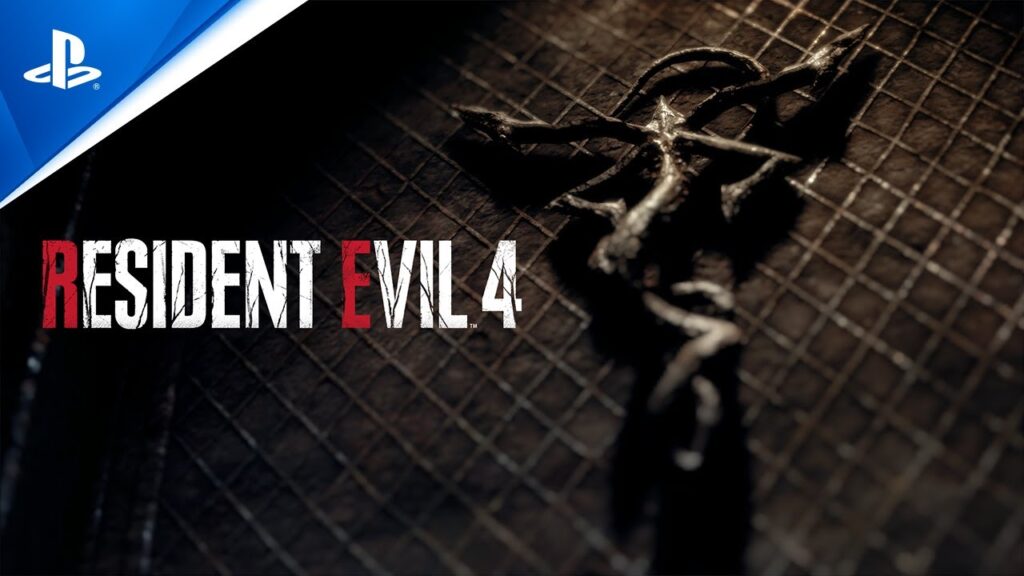
Resident Evil 4 Remake — Launch Trailer
Round 1 — Graphics and Presentation
The original Resident Evil 4 was a technical showcase for the GameCube era, with detailed character models, dramatic lighting and environments that looked unusually cinematic in 2005. Its art direction still holds together because Capcom built strong silhouettes, memorable locations and readable enemy animations rather than depending only on raw resolution.
The remake has the obvious hardware advantage. It rebuilds the game with modern lighting, denser environments, more detailed animation and redesigned audio. On PlayStation 5, players can prioritize frame rate or resolution, and ray tracing is supported. The result is not just a sharper version of the same game; the remake uses presentation to push the village, castle and later areas deeper into horror.
Round winner: Remake.
Round 2 — Controls and Movement
The 2005 controls are part of the original game’s identity. Leon turns and moves with a deliberate rhythm, and combat asks the player to commit to position before firing. That limitation creates tension and helps explain why the game felt so different from earlier fixed-camera Resident Evil titles while still remaining methodical.
The remake is substantially more fluid. Capcom’s modern design gives Leon greater freedom in combat and makes transitions between aiming, repositioning, melee attacks and defensive actions feel natural to players raised on contemporary third-person games.
Round winner: Remake for most players. The original remains worth learning because its restrictions are not simply flaws; they shape encounter design.
Round 3 — Combat
The original established the famous Resident Evil 4 combat loop: shoot an enemy in a vulnerable area, create an opening, move in for a melee attack, control the crowd, then reposition before the next wave closes in. That loop influenced years of third-person action design.
The remake preserves the targeting-and-melee foundation but layers more systems on top of it. The knife is now central enough to parry attacks, perform stealth kills and help Leon escape dangerous grabs. Capcom’s own Resident Evil Portal tracks parries as a core gameplay statistic, which shows how fundamental the mechanic became to the remake.
Round winner: Remake. The original created the blueprint; the remake gives the player more ways to survive inside it.
Round 4 — Horror and Atmosphere
The 2005 game mixes tension with pulpy action, bizarre villains and bursts of dark humor. That tonal mix is one reason it remains so replayable. It can be creepy without trying to maintain oppressive horror every minute.
The remake shifts the balance toward dread. Darker environments, heavier sound design and more grounded character performances make familiar sequences feel less like an action ride and more like survival horror, especially when the player does not already know what has been changed.
Round winner: Remake for horror; original for campier personality.
Round 5 — Pacing and Replayability
The original is remarkably easy to replay because its encounters are direct, readable and fast once the player understands the systems. The rhythm of village fights, treasure hunting, Merchant visits and weapon upgrades gives it an almost arcade-like momentum despite the long campaign.
The remake adds more side objectives, exploration opportunities and progression detail. That gives repeat runs more texture, but it also changes the feel from the original’s leaner forward momentum.
Round winner: Original for pure pacing.
Round 6 — Ashley Escort Design
Ashley is central to both versions because protecting her changes how the player approaches space, crowd control and escape routes. The original uses simple follow/wait commands that became one of the most discussed parts of the game.
The remake reworks the companion system around tighter and looser positioning rather than simply recreating the old logic. Capcom’s official remake interface even displays Ashley’s current command state as part of the normal HUD. Combined with expanded dialogue and characterization, she feels more integrated into the game rather than functioning only as an escort objective.
Round winner: Remake.
Round 7 — Inventory, Merchant and Upgrades
The attaché case is one area where Capcom knew not to replace a classic. Both games turn inventory management into a small spatial puzzle: weapons, ammunition, healing items and grenades compete for limited room.
The remake keeps that core satisfaction while adding auto-sort, attaché cases with different perks, charms and a broader trade system built around spinels. The Merchant remains the center of the weapon economy, but the remake gives players more reasons to explore before returning to him.
Round winner: Remake on features; tie on the core attaché-case concept.
Round 8 — Story and Characters
The 2005 story is direct, memorable and unapologetically of its era. Leon’s one-liners, the villains’ larger-than-life presentation and the constant escalation give the game a personality that no technical remake can literally replace.
The 2023 version keeps the basic mission but reimagines dialogue, cutscenes and several locations. Relationships are given more room to breathe, while familiar story beats are rearranged so returning players cannot rely entirely on memory.
Round winner: Tie. The remake is more grounded; the original has a tone that became part of gaming history.
Round 9 — Extra Modes and Modern Features
The original Resident Evil 4 has been ported across an unusually large number of platforms, which is one reason the classic remains easy to revisit. Later versions improved resolution, frame rate or control support without replacing the underlying 2005 design.
The remake has the stronger current feature set. Mercenaries returned as free DLC, Separate Ways expands Ada Wong’s side of the story, and the PS5 edition supports an optional PS VR2 mode. Current hardware also brings faster loading, modern controller features and graphics options unavailable to the original design.
Round winner: Remake.
Round 10 — Legacy and Influence
This is the round the remake cannot take away from the original. Resident Evil 4’s over-the-shoulder camera, aiming style and combat staging became reference points for third-person action games across the industry. Even Sony’s current page for the classic describes the 2005 design as a turning point for Resident Evil and notes its influence on other titles.
The remake is an excellent reinterpretation, but it exists because the original was important enough to rebuild nearly two decades later.
Round winner: Original.
Final Score: Original vs Remake
Resident Evil 4 Remake: 6 clear round wins
Resident Evil 4 (2005): 2 clear round wins
Ties / split decisions: 2
PCFix411 verdict: the remake is the stronger recommendation for a first playthrough in 2026, but the original remains essential for anyone who wants to understand why Resident Evil 4 mattered in the first place.
Which Resident Evil 4 Should You Play?
- You have never played Resident Evil 4: start with the 2023 remake.
- You care about gaming history: play the 2005 design before or after the remake.
- You prefer modern movement and defensive options: choose the remake.
- You like tighter, more arcade-like pacing: the original may surprise you.
- You want PS VR2 support: choose the remake on PS5.
- You want a version that runs on a wide range of older hardware: the classic HD ports remain practical.
How This Battle Fits the Resident Evil Series
This matchup is also a useful checkpoint in the larger franchise. The 2005 game marks the series’ shift toward over-the-shoulder action, while the 2023 remake shows how Capcom later blended that action foundation with the darker presentation and RE Engine-era design philosophy.
For the full chronology, platforms and modern ways to play each major entry, see our Resident Evil Games in Order guide.
Resident Evil 4 Original vs Remake FAQ
Is Resident Evil 4 Remake the same game as the 2005 original?
No. It keeps the same basic premise, characters and many famous locations, but Capcom rebuilt it from the ground up with modern controls, altered level layouts, expanded dialogue and reimagined story presentation.
Is the original Resident Evil 4 still worth playing?
Yes. The classic version is still worth playing because its pacing, control limitations, encounter design and tone are materially different from the remake. It also remains one of the most influential third-person action games ever made.
Does the remake still use the attaché case?
Yes. The attaché case returns, but the remake adds conveniences and customization such as auto-sort, different cases and attachable charms with gameplay perks.
Does Resident Evil 4 Remake include Mercenaries?
Yes. The Mercenaries mode returned as free DLC. Separate Ways is a separate expansion centered on Ada Wong and is also included with certain editions such as the Gold Edition.
Can I play both versions on modern hardware?
Yes. The classic game has later console and PC ports, while the remake is available on current PlayStation, Xbox Series and PC platforms, with additional supported devices listed by Capcom.
Bottom Line
Resident Evil 4 Remake is the version we would hand to most new players, but Resident Evil 4 (2005) is not a rough draft that the remake replaced. It is a different game with a different rhythm, tone and place in gaming history.
The best answer to “original or remake?” is therefore surprisingly simple: play the remake for the strongest modern experience, then play the original to see where the entire formula came from.
Verification note: Core release, platform and feature details were checked against current Capcom, Nintendo and PlayStation first-party sources on September 26, 2026. Store availability and supported hardware can change over time.